
Clorox Faces Class Action Over Recalled Mistolin and Lestoil Cleaners
October 6, 2026


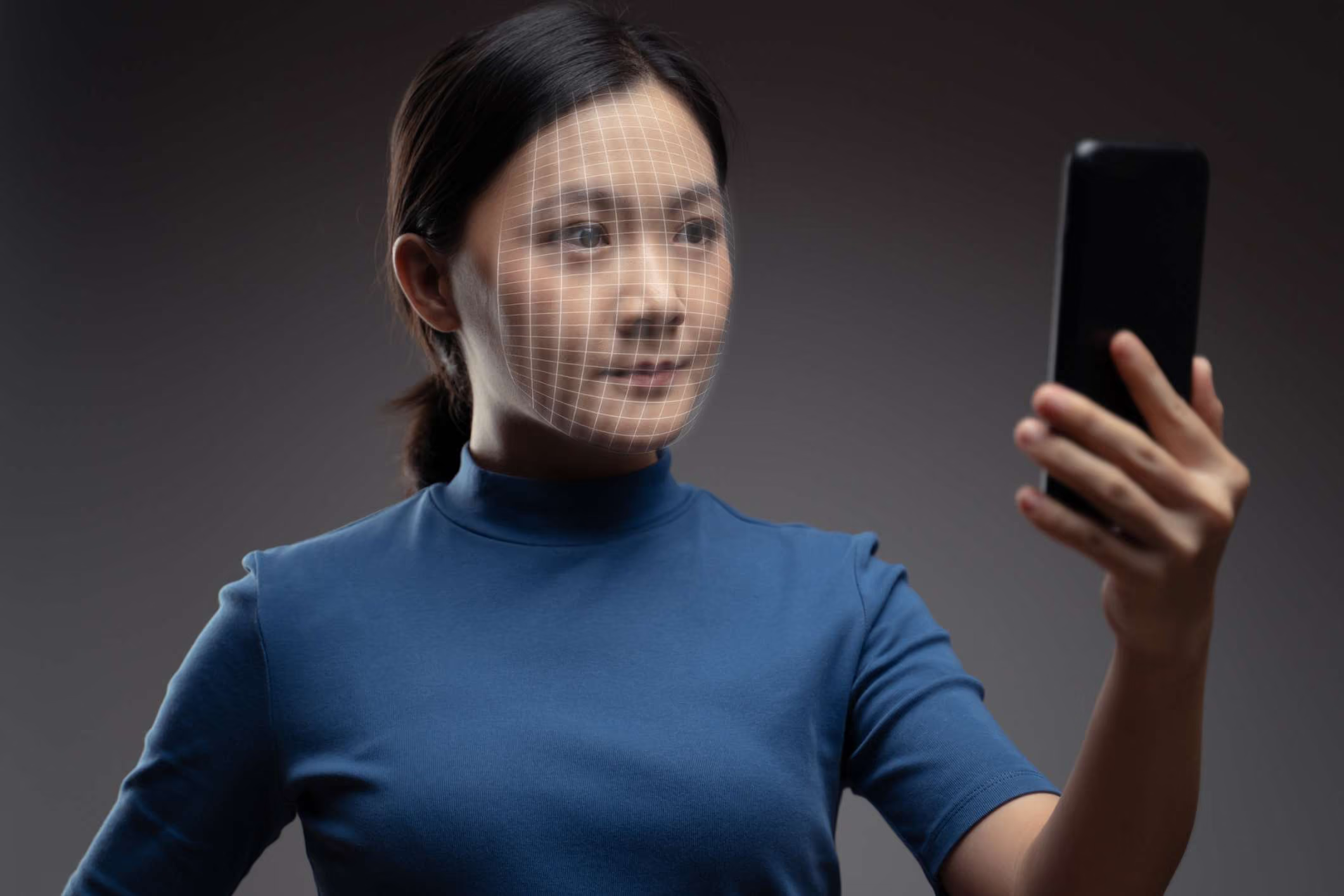
California employers have been urged to carefully review their hiring and employee assessment tools. Effective October 1, 2025, California implemented new regulations governing how employers use automated-decision systems (ADS) in hiring and other workplace decisions.
These changes, issued under amendments to the state’s Fair Employment and Housing Act (FEHA), place stricter requirements on employers that rely on artificial intelligence and digital tools in employment practices. The regulations show the state’s growing concern about the potential for algorithmic discrimination and the risks of using technology without appropriate safeguards.
The rules define ADS broadly, covering nearly any technology that influences job opportunities or employment actions. These systems range from simple resume-screening tools to advanced AI platforms that evaluate applicant behavior. Examples include keyword filters that screen resumes before a human reviews them and algorithms targeting job advertisements to specific demographics. Video interview software may also violate the state law.
AI-driven hiring tools like facial recognition systems often perform worse for individuals of color. Similarly, algorithms that direct ads may inadvertently exclude older workers or women from seeing job postings.
Because ADS can unintentionally embed prejudice, the amended FEHA rules hold employers accountable for identifying and preventing these outcomes.

These changes recognize that workplace technology is not always neutral and California’s amendments give employees stronger protections and force employers to take proactive measures before relying on digital decision-making tools.
The Lyon Firm has decades of experience representing individuals harmed by unlawful workplace practices, and we can investigate any claims linked to AI discrimination and automated hiring systems. We investigate whether employers or third-party vendors violated employment laws and pursue fair outcomes for workers.
Can I sue Workday or HireVue for rejecting me?
Active lawsuits including Mobley v. Workday have survived motions to dismiss and are proceeding as class actions. If you were rejected by an employer using these platforms and believe the system discriminated based on a protected characteristic, you may have a claim against the employer, the AI vendor, or both.
Do I have to prove intentional discrimination to win an AI hiring case?
Disparate impact claims allow plaintiffs to show that a neutral policy or tool produced discriminatory outcomes without proving intent. If an AI screening system disproportionately rejects candidates from a protected group and the employer cannot justify it as job-related, liability can follow.
What states have the strongest AI hiring protections?
California, New York, and Colorado currently have the most comprehensive state-level protections against AI hiring discrimination. Federal law through Title VII, the ADEA, and the ADA applies in all states.
How long do I have to file an AI discrimination claim?
EEOC charges for federal employment discrimination claims must generally be filed within 180 to 300 days of the discriminatory act. Contact an attorney as soon as possible to avoid missing the deadline.
The Lyon Firm is a Cincinnati, Ohio-based law firm, representing individuals nationwide in class action, product liability, and toxic exposure litigation.

Taking the first step doesn’t have to be complicated. In just a few minutes, you can share the basics of your case, and our team will guide you from there: