
Clorox Faces Class Action Over Recalled Mistolin and Lestoil Cleaners
October 6, 2026


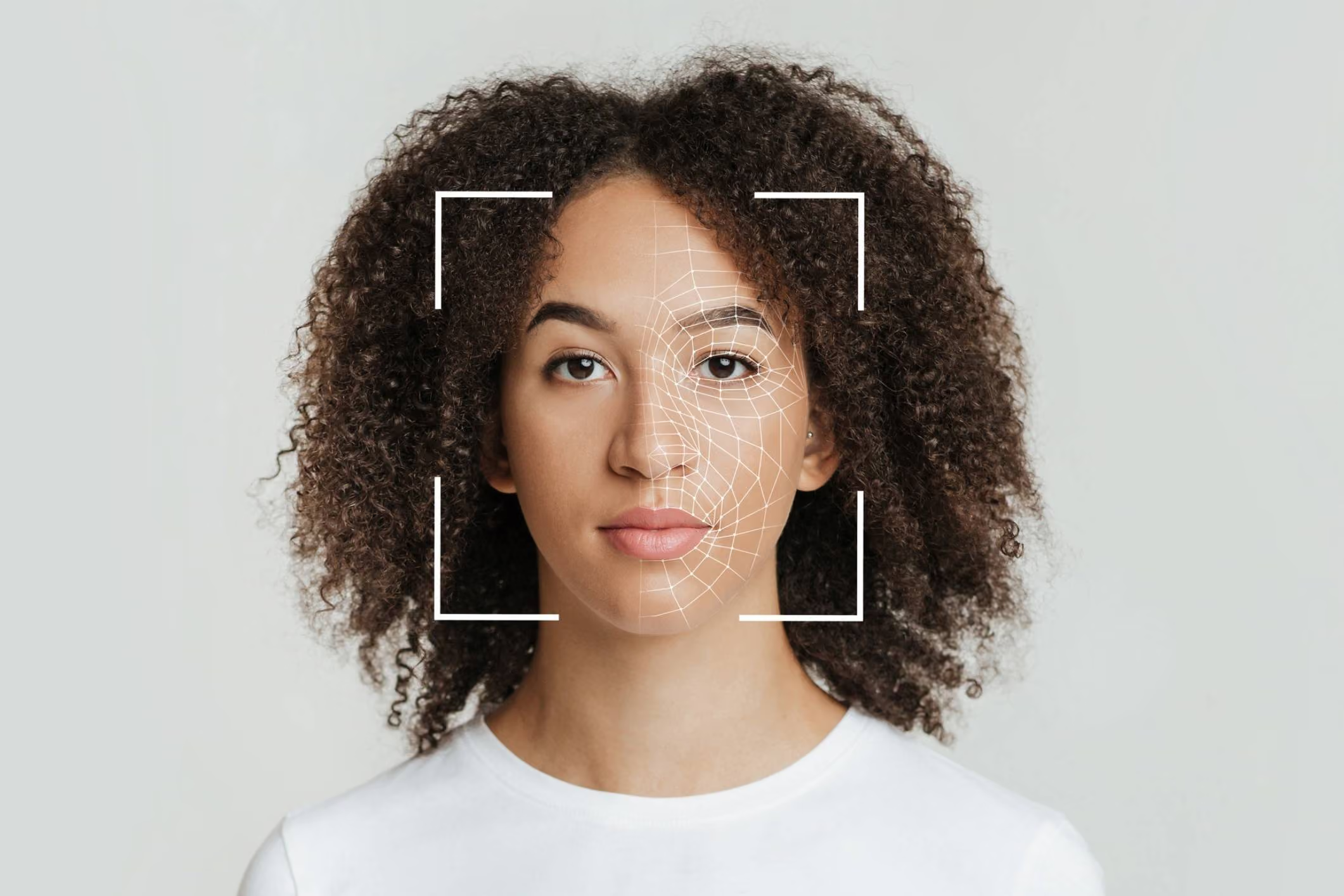
Artificial intelligence has spawned the rise of deepfake AI-generated videos or images that look and sound authentic but are entirely fabricated. These deepfakes are now used in scams and robocall harassment.
If you think you have fallen victim to this form of invasion of privacy, you may be able to pursue civil claims for fraud, defamation, misappropriation of likeness, and other torts. Contact our AI Privacy Lawyers to investigate your claim and to discuss taking legal action.
A deepfake is usually an image or audio recording created using artificial intelligence to realistically simulate a real person's voice or likeness without their consent. The technology has become widely accessible, and its misuse has grown rapidly.
Criminals use AI-generated voice or video deepfakes to impersonate executives or financial advisors to trick employees or clients into wiring money or sharing sensitive information. In January 2024, an engineering firm in Hong Kong lost $25 million when an employee was deceived by a deepfake video call that appeared to feature the company's CFO and several colleagues.
AI tools are being used to generate explicit sexual images of real individuals without their consent, targeting women and girls at a disproportionate rate. Sexualized deepfake content targeting coworkers is more common than most would like to think.
Because deepfakes look authentic, they can cause reputational and emotional harm. Therefore, many may seek legal recourse to right the course of the damage. Contact our lawyers to discuss your legal options. We offer free consultations for plaintiffs nationwide.
Depending on the legal theory and the jurisdiction, victims of deepfake harm may recover:
In 2025, federal law began catching up with deepfake technology. The TAKE IT DOWN Act, signed into law in May 2025, criminalized the knowing publication of nonconsensual intimate deepfakes and required platforms to remove that content within 48 hours of notice.
In January 2026, the U.S. Senate unanimously passed the DEFIANCE Act, which would give victims a federal civil right to sue creators and distributors of nonconsensual explicit deepfakes for $150,000 to $250,000 in statutory damages. That bill is now before the House.
Beyond nonconsensual intimate images, victims of deepfake fraud already have legal claims available under existing state and federal law in all fifty states.
If someone created or distributed a deepfake of you that caused financial harm or reputational damage, contact The Lyon Firm today for a free consultation. We represent deepfake victims nationwide.
We understand that deepfake fraud is not only a legal battle but also a personal and emotional crisis. Our firm is dedicated to helping victims restore their reputations, recover financial losses, and hold wrongdoers accountable.
Is making a deepfake of someone illegal? It depends on the content and the state. Nonconsensual intimate deepfakes are now a federal crime under the TAKE IT DOWN Act signed in May 2025. Many states have additional criminal and civil statutes. Beyond specific deepfake laws, creators can also face civil liability for fraud, defamation, and misappropriation of likeness depending on how the deepfake was used.
Can I sue someone for a deepfake that cost my business money? If a deepfake was used to impersonate you in a way that caused financial harm, you may have claims under fraud, as well as commercial defamation and business interference torts.
What does the DEFIANCE Act do? The DEFIANCE Act, which passed the U.S. Senate unanimously in January 2026 and is currently pending in the House, would give victims of nonconsensual sexually explicit deepfakes a federal civil right to sue for statutory damages of $150,000 to $250,000, plus attorneys' fees.
What if I don't know who made the deepfake? We can file suit against anonymous John Doe defendants and use court-ordered subpoenas to compel platforms to disclose identifying information about account holders. Digital forensic experts can also assist in tracing content origins.
Can I force a platform to remove a deepfake? The TAKE IT DOWN Act requires covered platforms to remove nonconsensual intimate deepfakes within 48 hours of notice. Courts can also issue injunctions ordering takedowns. We advise acting quickly because content spreads rapidly once published.
The Lyon Firm is a Cincinnati, Ohio-based law firm, representing individuals nationwide in class action, product liability, and toxic exposure litigation.

Taking the first step doesn’t have to be complicated. In just a few minutes, you can share the basics of your case, and our team will guide you from there: