
Clorox Faces Class Action Over Recalled Mistolin and Lestoil Cleaners
October 6, 2026



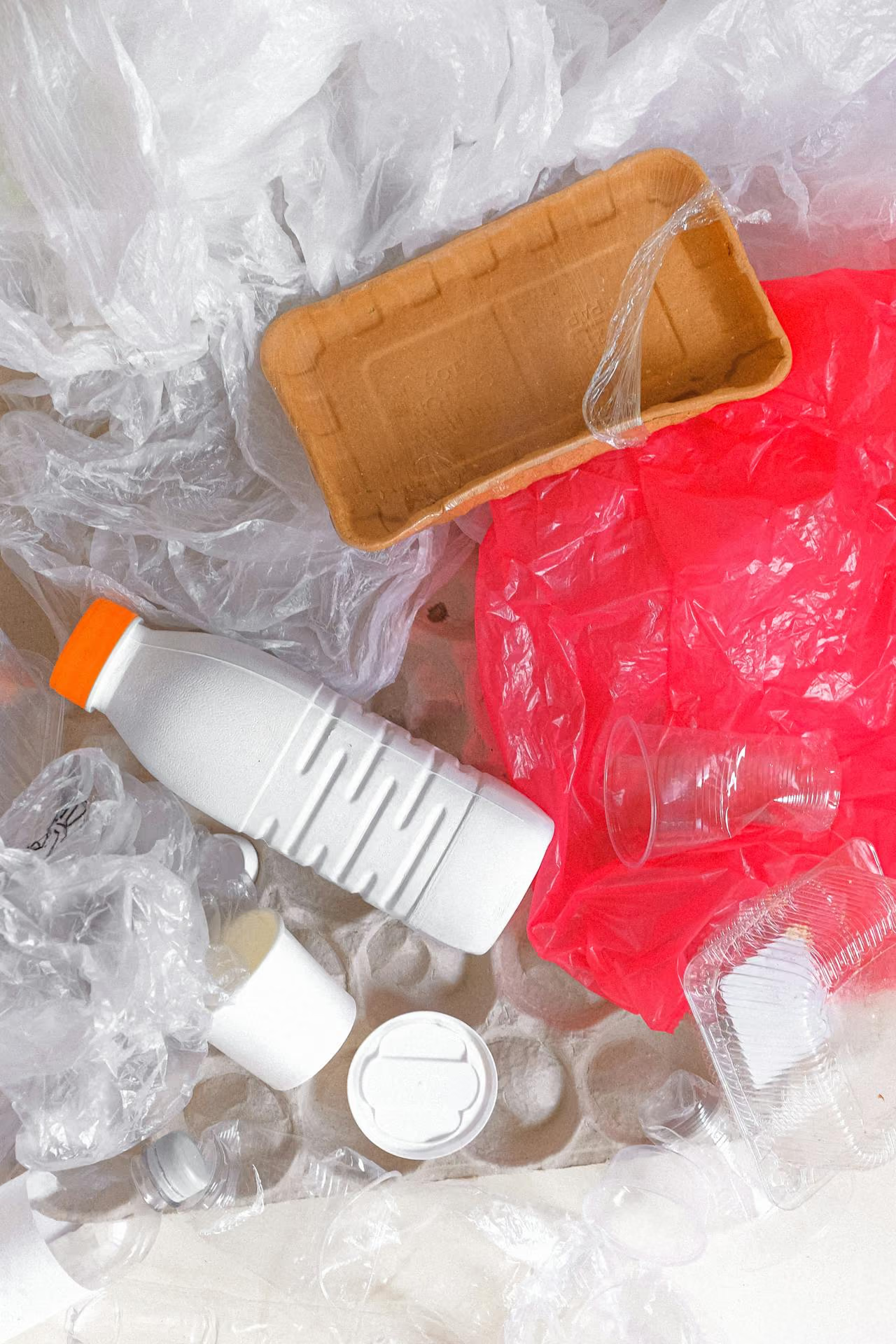
Countless pieces of plastic packaging move through American households and into the waste stream on a daily basis. Someone has to pay for its disposal and for decades, that someone was you and other taxpayers. Municipalities built and maintained the sorting facilities and taxpayers absorbed the cost of landfills. And the corporations that profited from all of that packaging bore almost none of the financial responsibility.
A new body of law called the Extended Producer Responsibility, or EPR, is an interesting new development in U.S. environmental law, and it is moving quickly from legislation to litigation.
The law assumes that if a company profits from selling products in packaging, it should bear the cost of what happens to that packaging after the consumer is done with it. Companies that sell covered materials in a given state are now required to report data on the volume and type of packaging they sell into that state and then pay fees that fund recycling infrastructure.
That is the gist of EPR laws, a welcome departure from how American environmental regulation has worked for most of the last half century.
Covered materials under most state EPR laws include plastic containers, paper packaging, cardboard, glass, and metal. Some states also cover printed paper and food serviceware.
As of early 2026, seven U.S. states have enacted packaging EPR laws. Each is at a different stage of implementation, and the timelines matter because producer obligations in some states are already active and enforceable.
Oregon's program launched in July 2025, and by the end of that same month, a federal lawsuit had been filed challenging whether the law is constitutional.
The National Association of Wholesaler-Distributors filed suit in the U.S. District Court for the District of Oregon, raising two primary arguments. First, that Oregon's law violates the Dormant Commerce Clause by placing disproportionate financial burdens on out-of-state producers while delegating regulatory authority to a private organization rather than a government agency. Second, that the fee structures and compliance obligations lack the clarity required by the Due Process Clause of the Fourteenth Amendment.
In February 2026, a federal judge granted a preliminary injunction, pausing enforcement of the law against the plaintiffs while the constitutional questions are resolved. Two claims remain active, and a trial has been scheduled.
One of the more legally nuanced features of EPR programs is something called eco-modulation. Rather than charging all producers the same flat fee, eco-modulation adjusts fees based on how environmentally burdensome a particular type of packaging is.
Producers using packaging that is widely recyclable or that incorporates post-consumer recycled content may qualify for fee reductions. Those using materials that are difficult to recycle, like multi-layer plastic films or certain pigmented containers, may face higher fees. Oregon and Colorado have both adopted eco-modulation frameworks. California's rulemaking is expected to follow suit.
In 2024, the Securities and Exchange Commission fined Keurig Dr Pepper $1.5 million after finding the company made inaccurate recyclability representations to investors, while internally withholding negative feedback it had received from major recycling facilities about its products. The SEC treated this as a disclosure failure, not just a marketing problem. That distinction matters because it dramatically expands the legal risk of making environmental compliance claims that are not grounded in accurate data.
In the food sector, JBS USA paid $1.1 million to resolve claims from the New York Attorney General that it misled consumers about climate commitments it had no credible plan to fulfill. Tyson Foods settled similar litigation over sustainability marketing for one of its product lines.
These cases share a common thread. Corporate environmental statements, whether about packaging programs or sustainability goals, now carry legal consequences when they are made without adequate substantiation. EPR compliance reporting creates a paper trail that can be used to evaluate whether those statements hold up.
For any company selling packaged goods in multiple states, the current EPR landscape requires operating through a patchwork of laws with different covered materials, different timelines, different fee structures, and different enforcement regimes. That complexity creates real legal exposure at several points.
Failing to register with a PRO in a state where obligations are already active can trigger daily civil penalties and, in some states, can result in a prohibition on selling covered products entirely. Inaccurate supply reporting affects fee calculations and can draw enforcement attention. Mischaracterizing packaging under eco-modulation frameworks to reduce fees creates fraud exposure.
The outcome of the Oregon constitutional challenge is the most immediate and consequential. If the court ultimately finds that Oregon improperly delegated regulatory authority to a private PRO, it will force restructuring of how these programs operate in every state with an enacted law and will almost certainly slow pending legislation elsewhere.
California's rulemaking under SB 54 is the second major development to watch. The California program, once operational, will cover the country's largest consumer market and is expected to drive the most significant compliance activity and enforcement of any state program.
At the federal level, there is no national EPR packaging law, but the momentum at the state level has raised the question in Congress. A federal framework could either preempt state laws or set a minimum floor above which states can continue to legislate.
The Lyon Firm represents individuals, consumers, and communities in complex environmental litigation and corporate accountability cases nationwide. Attorney Joe Lyon has spent decades litigating against large corporations in product liability and environmental contamination matters, representing thousands of clients from all fifty states in federal and state court.
If you are a consumer affected by a company's failure to meet its environmental obligations or in a community harmed by corporate environmental misrepresentation, contact The Lyon Firm today for a free and confidential consultation.
The Lyon Firm is a Cincinnati, Ohio-based law firm, representing individuals nationwide in class action, product liability, and toxic exposure litigation.

Taking the first step doesn’t have to be complicated. In just a few minutes, you can share the basics of your case, and our team will guide you from there: