
Clorox Faces Class Action Over Recalled Mistolin and Lestoil Cleaners
October 6, 2026


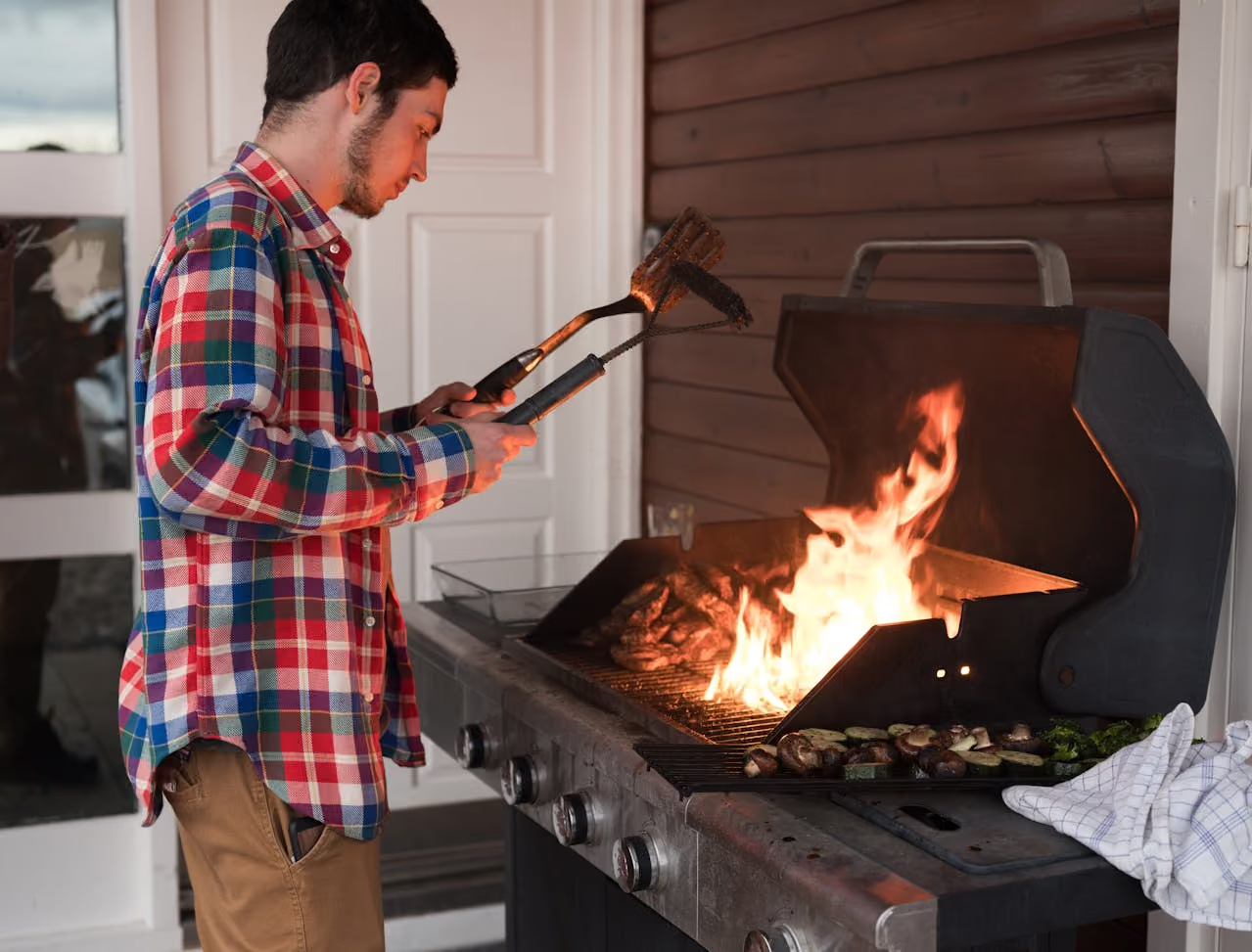
Metal wire bristle grill brushes are among the most common grilling accessories in American households. They are designed to scrub grease and debris from grill grates before cooking. But under the normal mechanical stress of scrubbing, individual metal filaments can loosen and detach from the brush head. After dozens of incident reports, Weber recalled millions of grill brushes. Currently, plaintiffs and consumers are filing injury claims due to allegedly defective grill brush products.
Our product recall attorneys dig into the evidence, including prior complaints to build the strongest possible case on your behalf.
Note: Over 10 Million Nexgrill brushes were also recalled only weeks after this particular recall.
If you were harmed by a defective product, you pay nothing unless we recover for you. Call The Lyon Firm today for a free consultation.
On February 26, 2026, the U.S. Consumer Product Safety Commission announced a recall of more than 3.2 million Weber-Stephen Products LLC metal wire bristle grill brushes.
The CPSC identified the hazard plainly: metal wire bristles can detach during use, stick to the grill or food, and pose a serious ingestion risk with potential for internal injuries requiring surgery.
Important: Weber's recall remedy is a replacement product, not financial compensation. If you suffered an injury or were misled into buying a defective product, you may have additional legal rights.
The recall came after years of publicly documented consumer complaints. Reviews on Amazon and Walmart, and incident reports submitted to the CPSC's SaferProducts.gov database, described bristles falling out, brushes disintegrating after minimal use, and consumers finding wire fragments on grill grates, and in some cases, in their mouths. The risk was not hidden from Weber. The question courts will examine is why it took so long to act, and why no warnings were ever issued in the interim.
Weber promoted the recalled brushes with language emphasizing durability and reliability. Product descriptions highlighted a three-sided bristle design and a two-year warranty. Third-party retailer listings described the bristles as thick stainless steel that resists wear and Weber's own website stated that the company proudly stands behind its grilling accessories and quality controls.
Nowhere in Weber's packaging or promotional materials was there any disclosure that the metal bristles could detach during ordinary use, remain on grill grates, adhere to food, and create a serious ingestion hazard.
Weber allegedly received 38 complaints and negative reviews from consumers reporting that bristles detached from the recalled brushes, including four consumers who swallowed metal bristles and needed medical treatment to remove the bristles from their digestive tract or throat.
Once free, these bristles can embed invisibly in grill grate surfaces. When food is placed on the grate, a bristle can adhere to it and be consumed without the person ever knowing. Medical reports document resulting injuries including puncture wounds to the mouth, throat, esophagus, stomach, and intestines. Some cases have required endoscopic procedures or surgery to remove embedded metal fragments.
A 2016 study published in the journal Otolaryngology-Head and Neck Surgery, based on the CPSC's National Electronic Injury Surveillance System database, estimated that approximately 1,700 individuals visited emergency rooms between 2002 and 2014 after ingesting a wire bristle in grilled food.
The danger is compounded by the difficulty of detection. The bristles are small enough to evade visual inspection, and ingestion may cause no immediate sensation. Symptoms may appear hours later and can be misattributed to other causes.
Safer alternatives, including bristle-free scrapers and coiled-wire systems, have been available on the market for years. Their existence demonstrates that the wire bristle design was a choice, not a necessity, and that the hazard was avoidable.
Consumers harmed by defective grill brushes, whether physically injured or simply misled into purchasing an unsafe product, may have grounds to pursue claims under several legal theories.
In a similar case, a Maine plaintiff sued Precision Brush Co. and M2M LLC after she swallowed a broken brush bristle from a corroded grill brush while eating a mushroom burger, experiencing severe pain when the bristle lodged in her esophagus.
The Lyon Firm represents clients in product liability cases nationwide. If you or a family member was harmed by a wire bristle grill brush, we want to hear from you. No fee unless we recover.
When a defective product injures you or your family, you need a law firm that knows how to take on large corporations and win. The Lyon Firm has spent years holding manufacturers accountable for putting unsafe products into the hands of consumers.
We handle complex product liability and consumer safety cases from investigation through trial, and we are not afraid to go to court when companies refuse to do right by the people they have harmed.
Q: How do I know if I swallowed a metal grill brush bristle? Symptoms of metal bristle ingestion include sudden sharp throat or mouth pain while eating, persistent abdominal pain after grilled food, difficulty swallowing, or unexplained gastrointestinal distress. Because the bristles are very fine, ingestion may cause no immediate sensation.
Q: Does the Weber recall cover all grill brushes, or only specific models? The February 2026 CPSC recall specifically covers Weber metal wire bristle grill brush models 6277, 6278, 6463, 6464, 6493, and 6494. However, the bristle-detachment hazard is not unique to Weber. If you own a wire bristle grill brush from any manufacturer and have experienced bristle shedding or related health concerns, consult an attorney about your legal options even if your specific product has not been recalled.
Q: Can I file a lawsuit if I was not physically injured? Yes, potentially. Many product liability and consumer protection claims allow recovery for economic harm, even without a physical injury. Courts across the country have certified class actions on behalf of consumers who received less than what they paid for. An attorney can evaluate whether you have a viable claim based on your specific circumstances.
Q: What compensation could I receive in a grill brush lawsuit? Depending on your situation, you may be entitled to reimbursement of the purchase price, medical expenses related to bristle ingestion or injury, damages for pain and suffering where physical harm occurred, and potentially treble or punitive damages under applicable consumer protection laws.
Q: How long do I have to file a claim against Weber? Statutes of limitations vary by state and claim type, and they can range from one to six years. Many courts apply a discovery rule, meaning the clock may not start until you knew or reasonably should have known about the defect or your injury. The Weber recall in February 2026 may affect how this is calculated for many consumers.
The Lyon Firm is a Cincinnati, Ohio-based law firm, representing individuals nationwide in class action, product liability, and toxic exposure litigation.

Taking the first step doesn’t have to be complicated. In just a few minutes, you can share the basics of your case, and our team will guide you from there: