
Clorox Faces Class Action Over Recalled Mistolin and Lestoil Cleaners
October 6, 2026


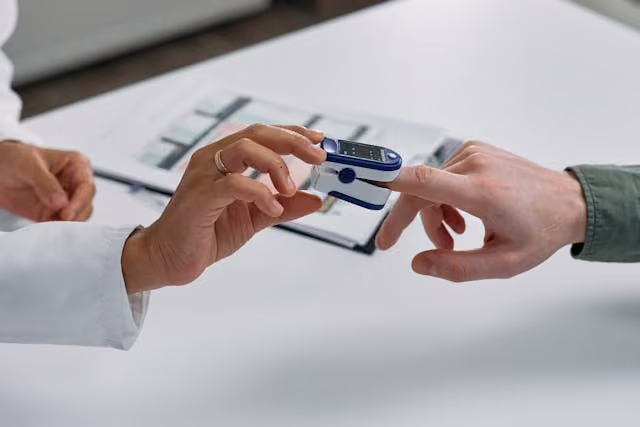
Medical devices may present a privacy risk for individuals, a problem we could have never dreamed about until recently. Patients still deserve both innovative medical care and secure handling of their personal information. And this is possible with the adoption of healthcare IoT devices, but only with strong cybersecurity and clear legal safeguards.
In such instances where medical devices violate privacy laws, lawsuits can play a vital role in ensuring that vendors uphold their responsibilities. Individuals affected by healthcare IoT data breaches can hold negligent parties accountable and push for safer, more transparent digital healthcare systems. Contact our data privacy attorneys to learn more.
Healthcare IoT refers to medical devices and platforms that communicate electronically, often transmitting patient information over wireless networks. Examples include:
Critics of their widespread use say these tools are expanding the attack surface for cybercriminals and create complex legal challenges regarding patient data rights.
Hackers target healthcare data because it contains PHI and also Social Security numbers and financial information. A compromised IoT device can serve as a gateway into entire hospital systems, leading to medical identity theft in the worst case scenarios.
Many IoT devices lack strong security architecture. Some cannot be patched or updated, leaving vulnerabilities open for years. All the while, these tools can transmit medical records to doctors and insurers and even third-party vendors.
Without strict legal safeguards and clear patient consent, sensitive data can be misused and misplaced. This makes is easier for ransomware groups, in facti connected hospital systems are hacked, attackers can lock providers out of critical medical devices, jeopardizing patient safety
In the U.S., HIPAA establishes privacy and security requirements for protected health information. HIPAA applies primarily to healthcare providers and insurers, so some consumer-oriented IoT devices, such as wearable fitness trackers, fall outside HIPAA’s scope.
State laws like the California Consumer Privacy Act (CCPA) impose stricter data privacy obligations than the FDA's general guidelines. When sensitive health information is exposed, we can help identify liability and untangle the web of responsible parties. Defendants may include device manufacturers and healthcare providers that fail to protect data.

At The Lyon Firm, we understand how new healthcare technology challenges the law. Our firm has extensive experience representing clients in cases involving medical device data breaches and patient privacy violations.
We investigate whether IoT manufacturers or vendors failed to protect sensitive health data and we seek compensation when negligent parties misuse or lose medical information.
1. What are the biggest data privacy risks with healthcare IoT devices?
IoT medical devices can be hacked and sometimes transmit sensitive health data without strong protections. This can lead to breaches and the misuse of personal medical information.
2. Are healthcare IoT devices covered by HIPAA?
Devices used by hospitals and providers often fall under HIPAA, but consumer wearables like fitness trackers may not.
3. Who can be held liable if my healthcare IoT device is hacked?
Liability may rest with device manufacturers or healthcare providers if data handling caused the breach. The Lyon Firm investigates all responsible parties to build strong legal claims.
4. What compensation is available in a healthcare IoT data breach lawsuit?
Victims may be entitled to damages for medical expenses and costs related to medical identity theft protection.
The Lyon Firm is a Cincinnati, Ohio-based law firm, representing individuals nationwide in class action, product liability, and toxic exposure litigation.

Taking the first step doesn’t have to be complicated. In just a few minutes, you can share the basics of your case, and our team will guide you from there: