
Clorox Faces Class Action Over Recalled Mistolin and Lestoil Cleaners
October 6, 2026

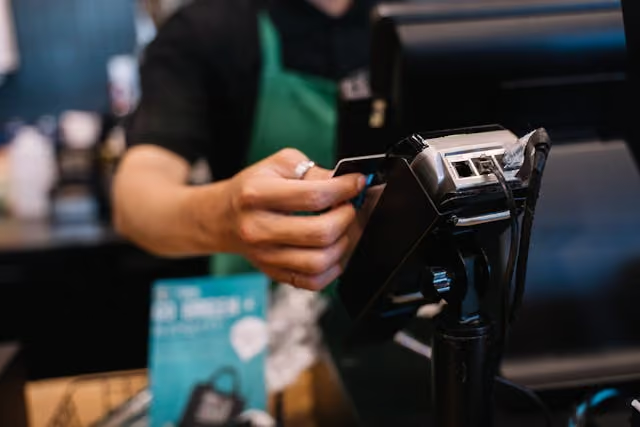
Loyalty programs have become a standard offering in modern retail, frequently offer discounts and reward points in exchange for consumer sign-ups. These programs always appear to benefit customers but loyalty programs are one of the most powerful tools for data tracking and consumer profiling.
The data collected in these schemes is often far more valuable to retailers than the rewards given to consumers. Shopping habits and even geolocation data can be tracked and sold to third parties for marketing and analytics. Learn more about the hidden risks of data tracking, and the growing wave of consumer protection lawsuits challenging these practices.
Loyalty programs are designed to capture as much consumer data as possible. When you sign up, you may provide:
The rewards consumers get are typically small discounts, while the personal data collected can be worth millions to corporations. By linking every purchase to a loyalty account, retailers create detailed profiles that reveal intimate details about consumers. Once this information is sold to data brokers, consumers lose control over how it is shared or repurposed.
Data Breaches add another layer of risk, as loyalty accounts are prime targets for hackers. Below are some of the benefits for any given retailer:

The Lyon Firm is committed to protecting consumers whose personal data has been exploited or mishandled by corporations. Loyalty program participants are often unaware of the extent of the tracking and data sales taking place, and many retailers fail to disclose these practices in a transparent way.
Our legal team investigates claims involving companies that misrepresent or conceal their data collection activities or sell consumer information without proper consent.
We also pursue claims under state and federal privacy laws, including the California Consumer Privacy Act (CCPA), when businesses violate consumer rights. By hiring The Lyon Firm, individuals can pursue compensation and take an active role in reshaping the way consumer data is collected and sold in the retail industry.
The Lyon Firm is a Cincinnati, Ohio-based law firm, representing individuals nationwide in class action, product liability, and toxic exposure litigation.

Taking the first step doesn’t have to be complicated. In just a few minutes, you can share the basics of your case, and our team will guide you from there: