
Clorox Faces Class Action Over Recalled Mistolin and Lestoil Cleaners
October 6, 2026


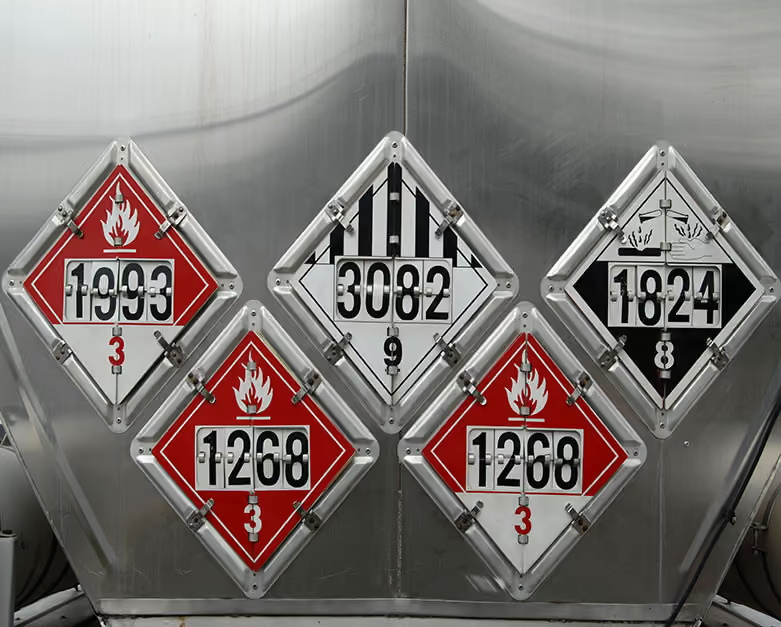
In late May 2026 in Garden Grove, California thousands of residents were forced from their homes after a storage tank containing thousands of gallons of methyl methacrylate, a volatile industrial chemical, began overheating at a GKN Aerospace manufacturing facility.
Evacuation orders eventually reached residents across six cities, and California Governor Gavin Newsom declared a state of emergency.
Contact our toxic exposure lawyers to learn more and to consider your legal options.
Methyl methacrylate, commonly referred to as MMA, is a colorless liquid monomer used in the production of acrylic plastics and specialty coatings. It is widely used in aerospace manufacturing and a commercially important chemical, classified as highly volatile and highly flammable, posing fire and explosion risks. The GKN Aerospace facility in Garden Grove held an estimated 6,000 to 7,000 gallons of the substance in the overheating tank.
The health consequences of MMA exposure vary depending on the concentration of vapors in the air and the length of time a person was exposed. The chemical can enter the body mainly through inhalation or skin contact. Medical authorities and regulatory agencies have documented the following effects:
Symptoms tied to respiratory and neurological systems can surface days or even weeks after the initial exposure, so affected residents should seek a medical evaluation as soon as possible, even if they feel well right now.
For vulnerable populations like children or elderly individuals, the risks associated with even moderate MMA vapor exposure can be more pronounced. Schools in the affected areas were closed, and several nursing homes and hospitals were inside the expanding evacuation zone.
This emergency affected an estimated 50,000 to 79,000 residents across Garden Grove, Cypress, Stanton, Anaheim, Buena Park, and Westminster. Evacuation centers were established at schools and community facilities throughout the region. Many families had to secure their own lodging after being denied re-entry to their neighborhoods as the situation continued to escalate and some returned home only to be told to evacuate again when the threat was re-evaluated.
Potential liability in a case like this can arise from several legal theories:
Individuals harmed by this type of industrial emergency may be entitled to seek compensation for:
Class action litigation is also a potential avenue in cases where thousands are impacted. A class action can provide access to justice for individuals who might not otherwise have the resources to pursue a claim on their own.
California law imposes statutes of limitations on personal injury and property damage. If you wait too long to consult an attorney, you may lose the right to seek compensation entirely. Any plaintiff should collect evidence like air quality monitoring data and medical records.
Keep a record of when you were evacuated and every expense you incurred. Save all correspondence related to the event, including government notices, insurance communications, and any statements from the facility.
The Lyon Firm has spent years representing individuals and families harmed by toxic exposures and industrial accidents across the country, and our toxic tort attorneys understand how these cases work, from identifying the responsible parties to working with toxicologists and medical experts who can connect your health outcomes to a specific chemical release.
We have handled class actions involving community-wide toxic exposure events and have pursued accountability against some of the largest industrial operators in the United States.
We work on a contingency fee basis, which means you pay nothing unless we recover on your behalf. Our consultations are free and confidential.
Contact The Lyon Firm today at (513) 381-2333 to schedule a free case review.
The Lyon Firm is a Cincinnati, Ohio-based law firm, representing individuals nationwide in class action, product liability, and toxic exposure litigation.

Taking the first step doesn’t have to be complicated. In just a few minutes, you can share the basics of your case, and our team will guide you from there: