

Defective Smoke Alarms
Product Liability Lawyer reviewing cases and lawsuits for injured clients and plaintiffs nationwide


.avif)


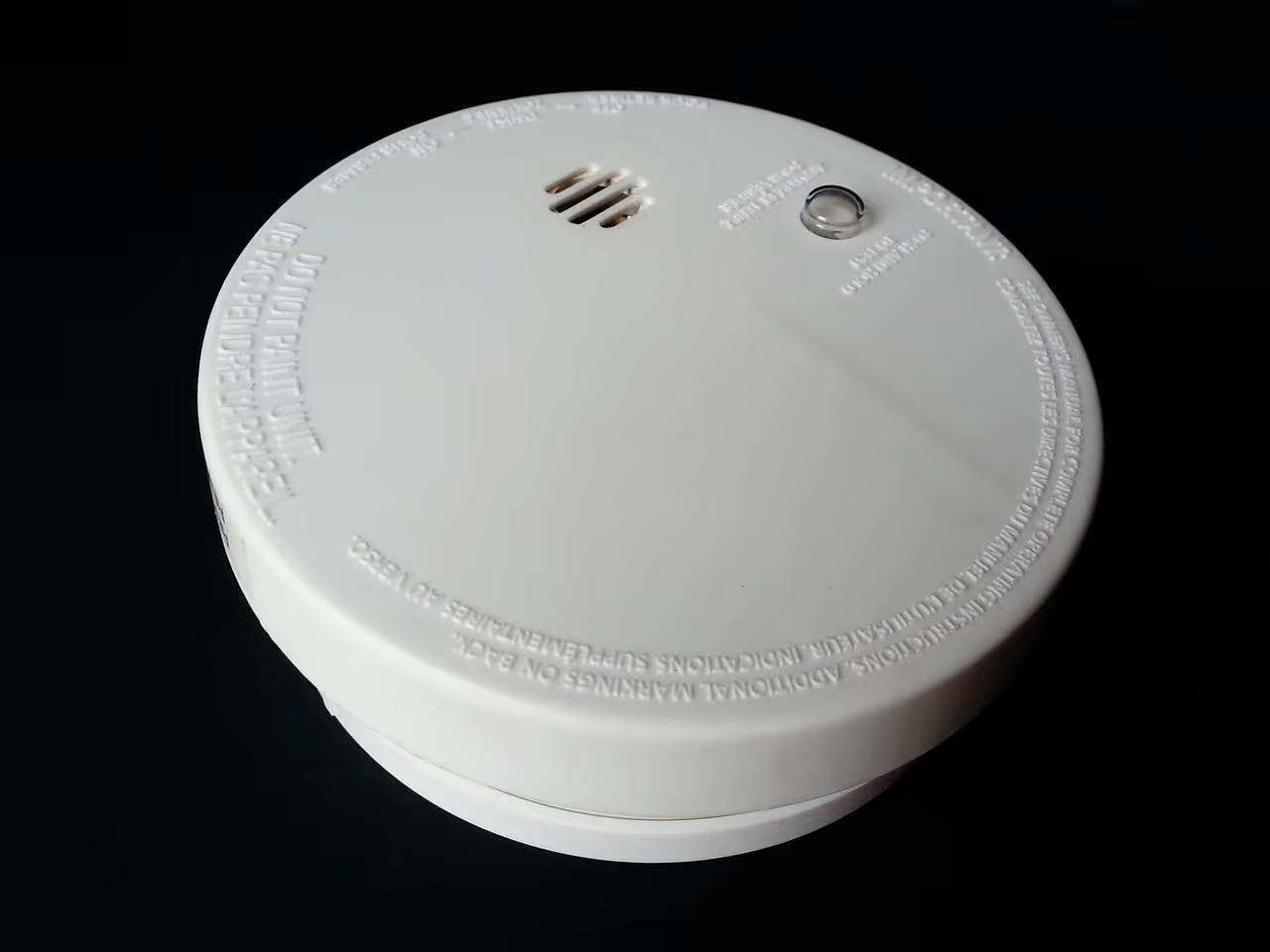
Smoke Alarm Malfunction
For individuals injured in fires or situations where the alarm did not activate as intended, defective smoke-alarm lawsuits are increasingly becoming an important avenue for seeking justice and compensation.
Why Smoke Alarm Failures Trigger Legal Issues
Smoke and carbon monoxide alarms are critical tools at home and the workplace to minimize fire risks and subsequent severe injuries and death. According to the National Fire Protection Association (NFPA), three of every five home fire deaths result from fires in homes with no smoke alarms or no working smoke alarms.
The death rate per 100 reported home fires is more than twice as high in homes that do not have any working smoke alarms compared to the rate in homes with working smoke alarms.
Smoke alarms and carbon monoxide sensors provide an early warning, giving people additional escape time. Product defects often cause a smoke alarm failure or do not correctly detect a fire. Carbon monoxide and smoke detectors can malfunction due to poor design, poor materials, or due to lack of battery power.
Problems can also arise when detectors are not installed correctly by homeowners, developers or landlords. Terrible burn injuries and death can result from such unfortunate incidents.
Joe Lyon is a highly-rated product liability attorney and defective smoke alarm lawyer representing plaintiffs nationwide in a wide variety of consumer product liability and preventable injury cases.
Defective Smoke Alarms: Landlords & Manufacturers Liable
If a smoke detector is defective and malfunctions, and leads to injuries or deaths, the manufacturer can be held liable for producing, marketing and selling a faulty device. Others may also be responsible when alarms or detectors do not function as intended.
Building contractors, for example, are required to follow federal building codes, and if the proper alarms are not installed or maintained, they may be held liable. Homebuilders have also been known to cut corners and fail to provide adequate training to employees who install smoke detectors and fire alarm systems.
A claim can be filed if it can be proved that a contractor, landlord, builder, or manufacturer provided defective smoke alarms. Responsible parties can be held legally accountable and made to pay financially for the damages they caused.
Recent Recalls of Smoke Alarms
Several recent recalls highlight how even life-safety products sometimes fail to perform:
- In January 2025, about 328,000 “Samurai” mini smoke-alarms (model SM1) sold through HSN were recalled after it was found that the alarm could fail to detect smoke and therefore not alert users.
- In June 2025, approximately 50,000 combination smoke and carbon-monoxide detectors (model 51000-600) sold by one company were recalled because the unit might not alert consumers in the event of fire or carbon monoxide exposure.
- In May 2024, nearly 6,800 detectors from a brand known as CHZHVAN (model JKD-512) were recalled after reports that the alarms could fail to activate when smoke was present.
Defective Kiddie Smoke Alarms Recalled
In March 2018, Kiddie issued a product recall for almost 500,000 units of PI2010 and PI9010 smoke alarms due to a manufacturing defect that inhibits their ability to detect smoke.
The United States Consumer Product Safety Commission announced the recall of the product, which was sold Menards, The Home Depot, Walmart and other department, home and hardware stores nationwide and online at Amazon.com, ShopKidde.com and other websites.
Other recalls of smoke and carbon monoxide detectors have been issued in recent years. The manufacturers of such important products has a duty to see that consumers are protected or they may be liable for the damages and injuries that result.
It is important to a case to preserve all detection systems involved in a fire accident. Following a fire alarm failure, the Lyon Firm can hire a team of investigators and experts to inspect the devices and preserve crucial evidence.
Detection alarms can be inspected even when damaged or burned to determine how the system was designed and installed. After a thorough investigation, it may be possible to file lawsuits against a manufacturer or contractor for negligence and product liability.
Potential Smoke Alarm Lawsuits
If your home had a smoke alarm that failed to sound and you suffered injury or loss as a result, you should consider whether a defective-product lawsuit is possible. Key steps and considerations include:
- Documenting the incident: Was there a fire or smoke event and did the alarm fail to respond? Photographs and records of the device may be valuable.
- Establishing the defect: Did the alarm make a recall or safety notice? Was the model known to be flawed? Evidence that the manufacturer or distributor knew of problems is important.
- Proving causation and harm: You must show that the defect caused or contributed to your loss, and that you suffered damage (burn injury, property loss, emotional trauma).
- Identifying responsible parties: Potential defendants include the alarm manufacturer, parts-supplier, installer, retailer, or even building manager if maintenance was suspect.
- Acting in time: Product-liability claims are subject to statutes of limitation which vary by state.
Experienced. Compassionate. Consumer Advocates
The Lyon Firm is a Cincinnati, Ohio-based law firm, representing individuals nationwide in class action, product liability, and toxic exposure litigation.

Handling Complex Data Privacy & Cyber Security Cases
Request A Free Consultation Now

.avif)
Why Hire The Lyon Firm?
The Lyon Firm specializes in product liability litigation, including cases involving smoke alarms and life-safety equipment. Our attorneys understand how to investigate complex defects and advocate for injured individuals across states.
If your smoke alarm failed to alert you during an emergency and you were harmed as a result, The Lyon Firm offers a free, confidential review of your case. We will evaluate whether you have a viable claim and help you pursue compensation without any upfront cost.
Questions about Smoke Alarm Defect Lawsuits

If you or a loved one suffered injuries or property damage because a smoke alarm failed, you may be eligible to file a defective product lawsuit. Claims often involve:
- Design defects, where the entire line of alarms was inherently unsafe.
- Manufacturing defects, in which only some units were faulty.
- Failure to warn, when companies didn’t adequately notify customers of known risks or recalls.
Compensation may include medical expenses, lost wages, property damage, and emotional distress. Evidence such as fire reports, photos, and device serial numbers can help strengthen a legal claim.
You can check the recall section of the U.S. Consumer Product Safety Commission website or review your product model and serial number against recent safety notices. If your device matches a recalled product, stop using it immediately and contact the manufacturer.
You may still have legal rights. Product registration helps with recall notifications, but it’s not required to file a lawsuit if a defect caused harm.
Many states allow claims as long as the product was defective when sold and the injury occurred within the statute of limitations. It’s best to consult an attorney promptly.
Not necessarily, but combination units involve more components and sensors, which can increase the chance of malfunction if quality control is poor. Regular testing and timely replacement are essential.
Defective Products Lawsuits
Request a Free Consultation
Taking the first step doesn’t have to be complicated. In just a few minutes, you can share the basics of your case, and our team will guide you from there:
- It begins with a few simple questions about your situation.
- From there, a member of our legal team reviews your case.
- Together, we’ll chart the path forward, helping you take the next step toward resolution.
