

Crane Accidents | Industrial Injury
Personal Injury Lawyer Reviewing Construction Site Injury Cases Nationwide Request a No-Cost & Confidential Consultation


.avif)


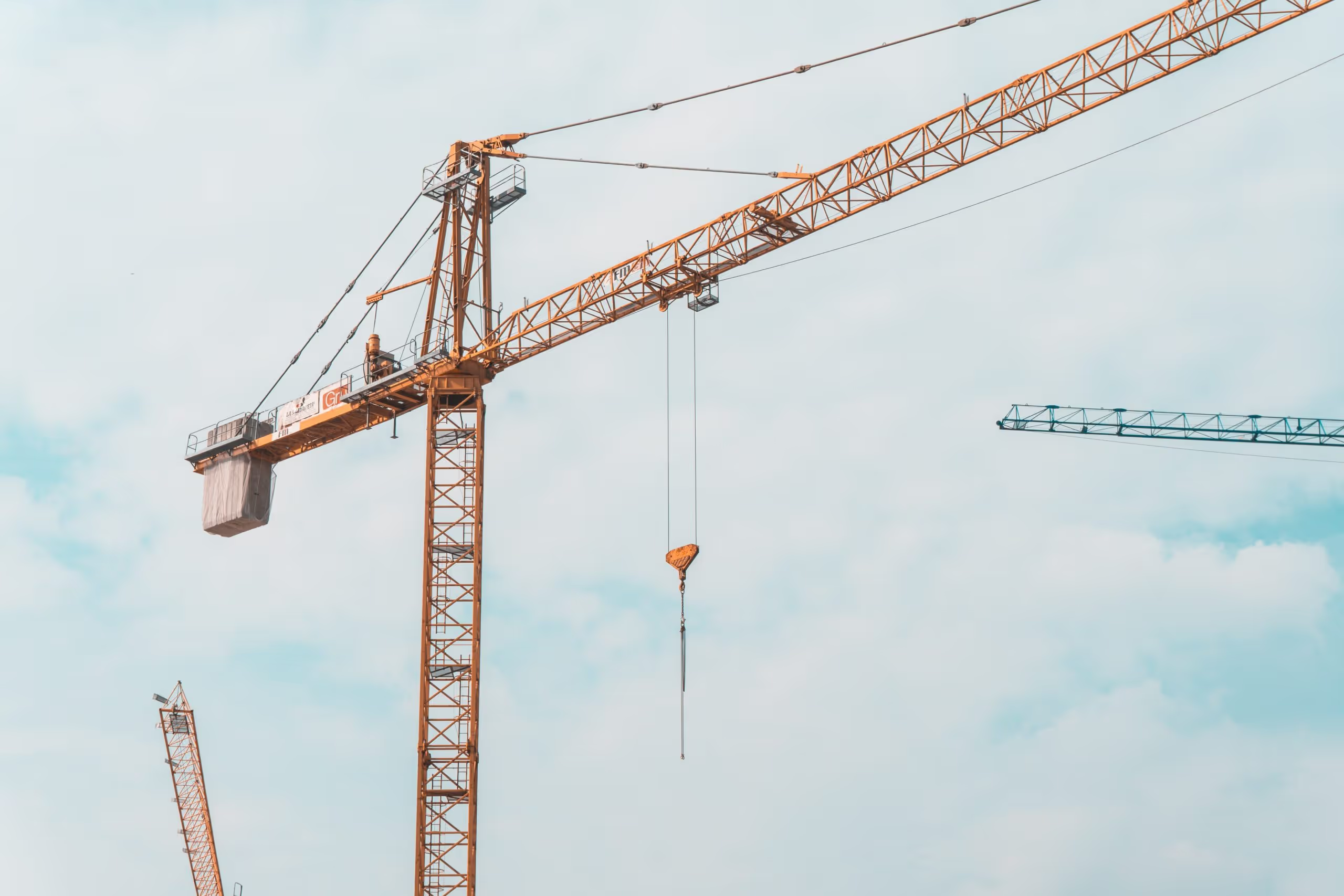
Crane Accident Lawsuits
If you or a loved one has been injured in a crane collapse or construction site accident, it’s crucial to understand your legal options.
Victims may be entitled to compensation through a crane collapse lawsuit or third-party negligence case. Speaking with a qualified crane accident lawyer ensures your rights are protected and your claim is handled properly.
Understanding Crane Accidents
According to the U.S. Bureau of Labor Statistics (BLS), hundreds of construction workers are killed or seriously injured in crane-related incidents each year.
Common types of crane accidents include:
- Crane collapses or tip-overs from overloading or unstable terrain
- Falling loads caused by rigging failures or cable defects
- Electrocutions from crane contact with power lines
- Struck-by accidents from swinging or dropped materials
- Mechanical malfunctions due to poor maintenance or design defects
Each year, hundreds of U.S. construction workers die on job sites. Many injuries and deaths involve crane accidents and contact with electrical wires.
According to the U.S. Occupational Safety and Health Administration (OSHA), factors such as improper use of equipment and simple inattention often lead to severe injuries and death.
Electrocutions cause one of every ten construction worker deaths, the third leading cause of work-site fatalities. According to the Bureau of Labor Statistics’ Census of Fatal Occupational Injuries, crane accidents in general industry and construction account for an average of 71 deaths each year.
Data from the NIOSH National Traumatic Occupational Fatalities (NTOF) Surveillance System indicate that approximately 450 work-related electrocution deaths occur annually in the United States.
Joe Lyon is a highly-rated Work injury lawyer and Occupational Negligence Attorney representing plaintiffs nationwide in a wide variety of civil litigation claims.
If you or a loved one suffered injuries in a crane accident, The Lyon Firm is here to help. Our experienced crane accident lawyers represent workers harmed by negligence and defective equipment.
Common Causes of Crane Accidents
Mobile cranes are involved in most overhead power line fatal incidents. Almost 50 percent of mobile crane accidents involve electrocution, resulting from cranes touching power sources during operation.
The Center for Construction Research and Training conducted a study that identified common causes of crane accidents. The incidents most commonly occurred due to the following:
- Accidental Contact with Power Lines: The majority of crane accidents are caused by contact with overhead power lines. Crane booms hit live power lines, electrocuting the crane operators, and other workers nearby.
- Improper Crane Assembly/Disassembly: Before operating a crane, tests are meant to be performed to gauge the stability of heavy equipment. Accidents also occur with a lack of communication among the workers involved.
- Crane Boom Collapse: Overloading a crane beyond capacity can lead to failure of the structural components of the crane. Crane boom collapse accidents make up about 20 percent of crane-related injuries. Up to 80 percent of all crane collapses are attributed to operators exceeding the crane’s operational capacity.
- Improper operator training or certification
- Lack of regular inspections and maintenance
- Negligent site supervision or inadequate safety enforcement
- Defective machinery or poor crane design
- Unsafe site conditions, such as unstable ground or heavy wind
Determining Liability in Crane Accidents
An experienced crane accident lawyer can identify all liable parties and pursue compensation for medical expenses, lost income, pain and suffering, and future rehabilitation.
Cranes are involved in a large proportion of workplace accidents and construction site injuries and deaths throughout the country.
The U.S. National Institute for Occupational Safety and Health (NIOSH) notes in an industry report that about 50 percent of all heavy industry fatalities are at least partially caused by heavy equipment, resulting in legal action and crane accident lawsuits.
Hundreds of workers in the construction industry have suffered crush and fall accidents as a result of unsafe work environments involving cranes. Crane Accidents may also lead to fatal electrical injuries.
The U.S. Bureau of Labor Statistics (BLS) indicates that construction laborers are at the greatest risk for suffering crane-related injuries, electrocutions and deaths. Workers commonly involved in related accidents include the following:
- Crane and tower operators
- Supervisors and managers
- Tree care workers and landscapers
- Welders
- Truck Accidents
- Carpenters
- Electricians
- Cutters
- Solderers
- Brazers
Crane Accident Lawsuits
Overhead cranes are the type of crane involved in the majority of fatalities. Mobile cranes and rail-mounted cranes also create safety risks if not operated properly. In order to avoid such hazards from causing electrocution and even death, the Occupational Safety and Health Administration has established standards necessary for appropriate work to be completed at construction sites.
In regards to preventing crane accidents, the OSHA explains that unless lines have been “de-energized and visibly grounded” or standalone, unattached insulating barriers have been put up to prevent contact with the lines, certain criteria need to be established.
Recently, construction safety standards have been updated slightly to include more accurate specifications.
Construction Accident Prevention
The National Institute for Occupational Safety and Health (NIOSH) recommends that employers take several careful measures to protect workers and operators of cranes and other boomed vehicles from contacting energized overhead power lines.
The institute’s historical findings show a consistent lack of worker and supervisor training, and lack of proper investigation and reporting of crane accidents and fatalities.
Many workplace accidents are caused by malfunctioning cranes or missing safety components. Even the best crane operators can experience serious accidents as a result of defective crane components. Employers are required to maintain and inspect construction equipment like cranes regularly.
The Crane Manufacturers Association of America has standards for the designs of cranes and hoists. The safety regulations for commercial cranes and hoists include the following standards:
- Safety latches must be provided for all crane and hoist hooks
- An electrical disconnect switch must be provided for all cranes and hoists
- An electrical disconnect switch must be located in a labeled box with lock mechanisms in place
- An electrical disconnect switch must be provided for all crane pendants
- All hoist and hook blocks must carry maximum hook capacity labeling
- Cabs and bridge cranes must have motion alarms
- Cranes and hoist hooks must not be repainted
- The bridge underside must carry signs indicating NWSE directions
- Building cranes and hoists must have a slip clutch or an upper limit switch
- New cranes and hoists must undergo load testing to a capacity of 125% before they are put into working operation
- Nylon rigging and slings cannot have damaged stitching or fibers
- Wire rope slings should be free of cracks, broken wires, and twisted hooks
- All steel slings must be free of cracks
Unsafe Construction Site Lawsuits
Crane accidents are often the direct result of professional negligence, and up to 90 percent of crane accidents are due to human error.
With 130 million U.S. workers and only 2,200 OSHA inspectors, construction companies have a responsibility to create a safe workplace, provide adequate safety training and ensure that all equipment is in proper working order.
Unfortunately, some employers sacrifice the safety of their employees for profit and put people’s lives at risk.
Employers and construction site managers have a duty ensure a safe work environment and the safe use of crane operation. All workers must well-trained and protected, and all equipment must be up to code and maintained properly. Workplace safety precautions must be taken into consideration or an employer may be liable for any injury or death that occurs on site.
Electrocutions and other crane-related injuries can be very serious or fatal. However, the majority of heavy equipment accidents can be prevented with basic safety practice.
To find out the root cause of a workplace accident, contact a crane accident lawyer to investigate.
Legal Options for Victims
Crane accident victims and their families may have several legal avenues for recovery:
- Workers’ compensation claims – Covers medical treatment and partial wage replacement for employees injured on the job.
- Personal injury lawsuits – If third-party negligence or defective equipment caused the accident, a crane collapse lawsuit may provide additional compensation.
- Wrongful death claims – Families who lose loved ones in crane accidents may recover damages for funeral costs, loss of income, and emotional distress.
Our Construction Case Settlements
Joe Lyon settled a case as Co-Lead Counsel in an employee intentional tort action involving a catastrophic amputation of the Plaintiffs leg. Mr. Lyon represented the construction flagger who lost his leg when excavator rolled over him while he was performing flagging duties. Extensive litigation proved that the accident occurred due to negligent design of the construction site—Including a lack of signs, organization—negligent training of the driver of the machine, and negligent operation of the machine.
Joe Lyon obtained a $1,200,000.00 settlement in addition to Worker’s Compensation benefit that provided money to assist the family with additional home structural changes for handicap access and provided for loss of income due to permanent disfigurement and disability.
Experienced. Compassionate. Consumer Advocates
The Lyon Firm is a Cincinnati, Ohio-based law firm, representing individuals nationwide in class action, product liability, and toxic exposure litigation.

Handling Complex Data Privacy & Cyber Security Cases
Request A Free Consultation Now

.avif)
Why Hire The Lyon Firm?
The Lyon Firm is a nationally recognized personal injury and product liability law firm with extensive experience representing victims of industrial and construction accidents.
FAQs about Crane Accident Injury Lawsuits

Each year, crane accidents generate millions in settlements and verdicts for victims. Product liability issues cannot be discounted. In many past incidents, industrial equipment has been found to be inherently flawed. If machinery is found to have a faulty design or missing safety components, victims and their attorneys can file suit against large industrial manufacturers.
The legal options will depend on what caused the industrial accident and injury. Crane accident injuries are usually permanent and should be addressed by a lawyer qualified in complex personal injury matters.
Mr. Lyon has successfully litigated numerous industrial injury cases and obtained settlements for workers, over and beyond their workers comp.
Common causes include boom collapse, crush injury, contact with energized power lines, dropped loads, overturned cranes, and counterweight failures.
OSHA has issued standards covering the use of cranes in construction. The large number of fatalities associated with the use of cranes in construction and the technological advances in equipment since the publication of the old rule, issued in 1971, led to new standards. Some basic precautions include:
- Cranes must be operated only by qualified and trained personnel.
- The crane and crane controls must be inspected by a designated competent person before use.
- Cranes must be on a firm, stable surface and must be level.
- During crane assembly and disassembly do not unlock or remove pins unless sections are blocked, secure and stable.
- Fully extend outriggers. Barricade all accessible areas inside the crane’s swing radius.
- Watch for overhead electric power lines. Maintain at least a 10-foot safe working clearance from all power lines.
- Inspect all rigging prior to use. Do not wrap hoist lines around the load.
- Be sure to use the correct load chart for the crane’s configuration and setup, the load weight, and the lift path.
- Do not exceed the load chart capacity while making lifts.
- Raise a load a few inches, hold, verify capacity and balance, and test the brake system before delivering load.
- Do not move loads over workers.
- Be sure to follow signals, and the manufacturer instructions, while operating a crane.
Quite common. An OSHA analysis of crane accidents in general industry and construction estimates an average of 71 fatalities each year, and hundreds more serious injuries.
Workers’ compensation typically prevents suing your employer directly. However, a crane collapse lawsuit may be filed against negligent third parties such as contractors or equipment suppliers.
Wire failures are the most common cause of crane incidents. Wires can fail due to overloading, fatigue, having a pre-existing defect, or deterioration. This type of accident can cause serious damage, with loads and cargo being dropped unexpectedly from height.
Compensation may include medical expenses, lost wages, pain and suffering, rehabilitation costs, and loss of earning capacity. Wrongful death claims may cover funeral expenses and loss of companionship.
Industrial Injury Lawsuits
Request a Free Consultation
Taking the first step doesn’t have to be complicated. In just a few minutes, you can share the basics of your case, and our team will guide you from there:
- It begins with a few simple questions about your situation.
- From there, a member of our legal team reviews your case.
- Together, we’ll chart the path forward, helping you take the next step toward resolution.
