

Welding Accidents | Workplace Injury
Reviewing Workplace Injury Cases Nationwide


.avif)


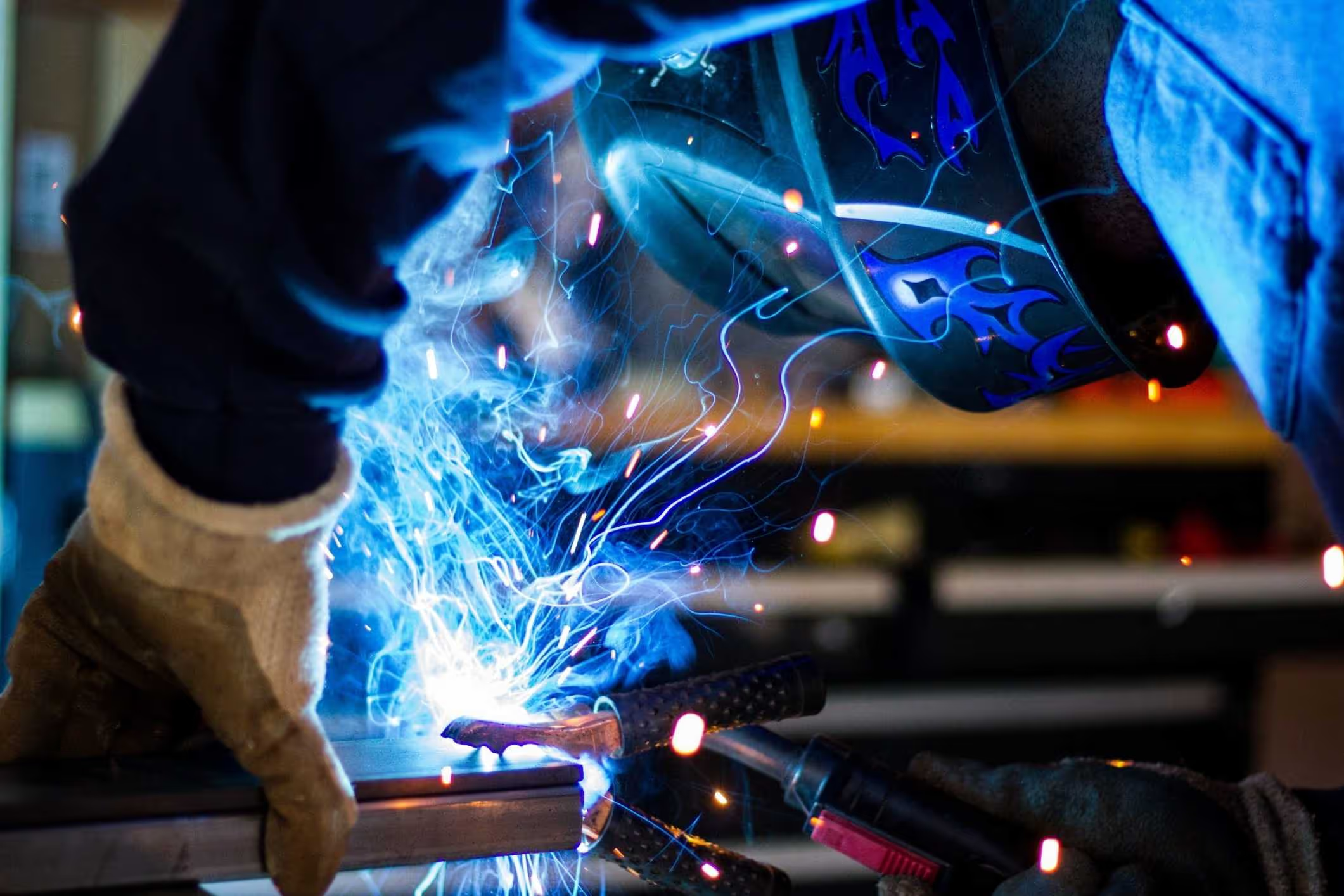
Welding Lung Cancer Lawsuits
Welding operations generate an invisible cocktail of toxic metal fumes and gases that pose serious health risks to millions of American workers.
Many employers fail to implement adequate safety measures to protect welders from dangerous inhalation exposures across the construction, manufacturing, shipbuilding, and automotive industries
If workers develop serious health conditions from welding-related toxic exposure, legal action may be the only path to securing proper medical care and compensation for injuries.
Welding is also one of the most dangerous occupations because of the likelihood of workplace injury from toxic fumes and burns. According to the Occupational Safety and Health Administration (OSHA), welding, cutting, and brazing pose safety and health risks to over 500,000 American workers in a wide variety of industries.
The Hidden Dangers of Welding Fume Exposure
Welding processes create complex mixtures of metallic particles and gases that become airborne during high-temperature metal joining operations. These microscopic particles penetrate deep into lung tissue, where they can accumulate over time and cause devastating respiratory and neurological conditions. The specific composition of welding fumes varies depending on base metals, electrodes, coatings, and welding techniques employed.
Manganese exposure represents one of the most serious welding-related health risks, particularly in workers who weld steel containing manganese or use manganese-containing electrodes. Chronic manganese inhalation can lead to manganism, a Parkinson’s-like neurological condition characterized by tremors, difficulty walking, cognitive impairment, and psychiatric symptoms. Unlike typical Parkinson’s disease, manganism often affects younger workers and may not respond to standard treatments.
Hexavalent chromium exposure occurs when welding stainless steel or chromium-containing alloys, creating carcinogenic particles that increase lung cancer risks. Workers may also encounter nickel, lead, cadmium, and zinc oxide exposure depending on the specific materials and processes involved in their welding operations.
Iron oxide exposure, while less immediately dangerous than other metals, can cause siderosis, a lung condition that impairs respiratory function and increases susceptibility to other lung diseases. Welders often experience “metal fume fever,” acute flu-like symptoms caused by zinc oxide inhalation that can mask more serious long-term health effects.
Each year, several deaths from welding and cutting incidents are reported, including deaths related to explosions, electrocutions, asphyxiation, and fall injuries.
The occurrence of eye-related traumas leads all occupational injuries in the American workplace, many of which are due to welding accidents. Other than eye injuries, the health hazards associated with welding accidents include burns, brain damage and respiratory illnesses like pulmonary fibrosis from exposure to fumes, gases and ionizing radiation.
Recent studies have shown that toxic chemicals released from welding rods put welders at risk for serious conditions like manganism, or Welders’ Parkinson’s disease.
Joe Lyon is a highly-rated Occupational Negligence Attorney and catastrophic injury lawyer representing plaintiffs nationwide in a wide variety of civil litigation claims.
Industries with Most Welding Accidents & Injuries
- Construction
- Oil & Gas—Fracking and operations
- Mining
- Shipbuilding
- Railways
Common Welding Injuries
- Electric Shock: this is one of the most common welding accidents welders face, typically caused when two metal parts that have a voltage touch, or by secondary voltage shock where a welder touches part of the welding or electrical circuit while his body touches a part of the metal he is welding.
- Hearing loss: Welders can be exposed to excessive noise—above 85 decibels on average throughout a workday without proper ear protection can result in permanent hearing loss.
- Respiratory Illness: Due to a likely exposure to toxic metal welding fumes and gases, including harmful metal oxide compounds, base metals, base coatings, beryllium, and manganese, toxins may accumulate in the lungs and lead to a range of adverse effects and long-term conditions like pulmonary fibrosis.
- Chemical, Electrical & Contact Burns: Because of the high heat of a welding arc and the hazardous fumes, gases, and chemicals welders work with, they face a serious risk of being injured in a fire or explosion. Welders are exposed to extremely hot materials.
- Optical hazards: Eye injuries make up around a quarter of all welding injuries, and can be serious permanent injuries that result from welding sparks, chemical vapors, and “arc eye,” ultraviolet and infrared radiation from the welding electrical arc. “Welder’s flash,” a burn to the eyes accounts for a great deal of construction eye injuries. Arc radiation can penetrate the retina and cause permanent retinal damage, including cataracts, diminished vision, and higher sensitivity to light.
- Manganism (Welders’ Parkinson’s Disease): the manganese in welding rods can destroy brain cells and cause nerve damage. Welding releases toxic manganese molecules which can be inhaled and deeply affect the nervous system.
Welding Safety & Accident Prevention
In any welding situation, it is a manager’s responsibility to explain workplace hazards to welders and to make sure that at least the minimum safety standards and OSHA welding regulations are met to prevent welding accidents and injuries.
Secondary injures often occur as lightheadedness due to inhalation of fumes leads to a risk of falling, and other injuries are linked to excessive fatigue because of overworking.
Common risk factors of welding toxic exposure include poor work conditions and practices, welding in confined spaces, long exposure periods, dangerous types of welding, and appropriate use of personal protective equipment. Welders are usually required to wear welding helmets and shields, safety goggles and protective clothing to guard against optical radiation to the eyes and skin.
Workplace Ventilation Risks and respiratory masks are required to protect welders from harmful fumes produced during the process. Radiation, however, may be reflected into welding helmets and penetrate from the tops and the sides, causing exposure even when preventive measures are taken.
Proving Causation in Welding Exposure Cases
Establishing medical causation in welding-related toxic exposure cases requires comprehensive documentation of exposure history, medical records showing disease progression, and expert testimony linking specific workplace exposures to diagnosed conditions. Industrial hygienists may reconstruct historical workplace conditions, while medical experts explain how particular exposures caused specific health problems.
Latency periods between initial exposure and symptom onset can span years or decades, making detailed work history documentation critically important. Employment records, safety inspection reports, air monitoring data, and witness testimony help establish exposure patterns and employer knowledge of hazardous conditions.
Experienced. Compassionate. Consumer Advocates
The Lyon Firm is a Cincinnati, Ohio-based law firm, representing individuals nationwide in class action, product liability, and toxic exposure litigation.

Handling Complex Data Privacy & Cyber Security Cases
Request A Free Consultation Now

.avif)
Why Hire The Lyon Firm?
The Lyon Firm has experience representing welders and other industrial workers in complex toxic exposure litigation. Our legal team understands the technical aspects of hazardous industrial operations and the medical complexities of metal-induced diseases.
We maintain relationships with leading occupational medicine specialists and safety engineers who can analyze workplace conditions, and demonstrate how proper safety measures could have prevented worker injuries.
The Lyon Firm recognizes that welding-related health conditions often progress gradually, requiring long-term medical care and potentially forcing early retirement from physically demanding careers.
FAQS About Welding Toxic Exposure

Welding-related health conditions can manifest anywhere from months to decades after initial exposure. Acute conditions like metal fume fever appear within hours, while chronic diseases such as manganism or lung cancer may not develop for 10-30 years.
Workers’ compensation typically prevents lawsuits against direct employers, but you may have claims against third parties such as equipment manufacturers or contractors.
Additionally, if your employer intentionally concealed health risks or acted with deliberate indifference to worker safety, exceptions to workers’ compensation exclusivity may apply.
Our legal team works with medical experts to establish causation based on your overall exposure profile and work history. While specific chemical identification helps, courts recognize that welding creates complex mixtures making precise identification difficult.
Settlement amounts vary significantly based on injury severity, age, earning capacity, and available defendants. Successful cases may recover hundreds of thousands to millions of dollars for medical expenses, lost wages, disability, and pain and suffering. Our attorneys thoroughly evaluate all damages to pursue maximum compensation.
Industrial Injury Lawsuits
Request a Free Consultation
Taking the first step doesn’t have to be complicated. In just a few minutes, you can share the basics of your case, and our team will guide you from there:
- It begins with a few simple questions about your situation.
- From there, a member of our legal team reviews your case.
- Together, we’ll chart the path forward, helping you take the next step toward resolution.
