

California Railroad Workers Cancer Lawsuit
From diagnosis to justice, we stand with injured California railroad workers.


.avif)


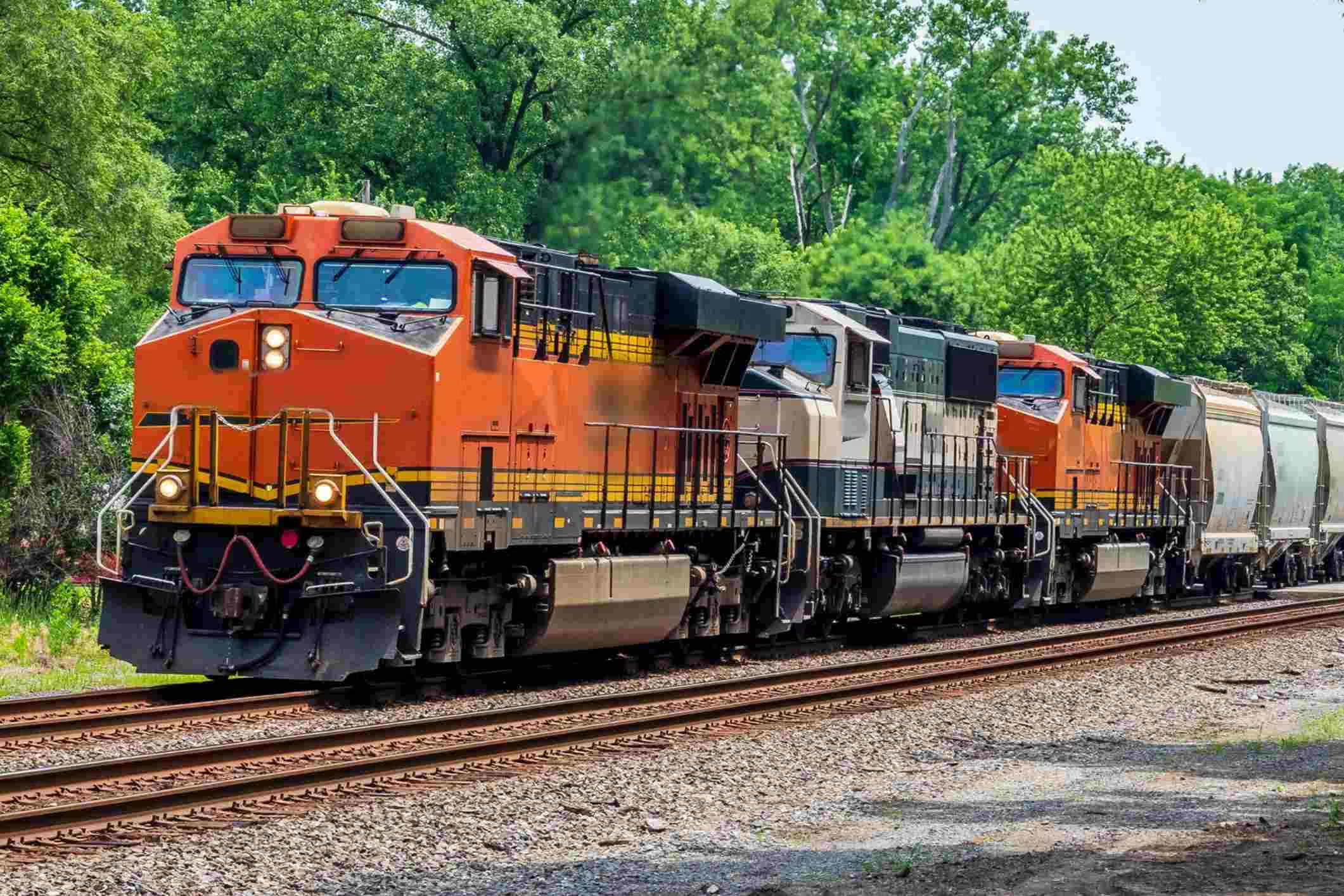
Rail Workers Helped Build California’s Economy. They Deserve Protection and Justice.
“We’ve talked to retired California railroaders who spent 30 years breathing diesel exhaust or cutting asbestos-wrapped pipe, and they were never warned. The companies were aware of the risks, and they made a deliberate choice. Now those workers are sick, and it’s time they were heard.”
Joe Lyon, California Railroad Injury FELA Lawyer
California’s Rail Legacy and Its Hidden Health Cost
From the ports of Long Beach and San Diego to the switching yards of Stockton and the diesel shops of Colton, California has always been a logistical powerhouse for rail freight. For over a century, workers at Union Pacific, BNSF, Amtrak, and other carriers helped move the state’s economy—laying track, maintaining engines, loading trains, and working 10- to 12-hour shifts in dusty, poorly ventilated yards.
But, over time, many California railroaders were unknowingly exposed to hazardous levels of diesel exhaust, asbestos insulation, silica dust, petroleum solvents, and tar-based chemicals, such as creosote.
Now, years—even decades—later, countless workers and retirees are facing devastating diagnoses: lung disease, blood cancer, mesothelioma, and more.
If this has happened to you or someone in your family, you are not alone, and you have legal rights under FELA (Federal Employers Liability Act) to seek justice and compensation.
Call The Lyon Firm today at (513) 381-2333 to speak with a California railroad cancer lawyer or request a free case review.
Toxins Linked to Cancer at California Railyards
Most of California’s major rail sites were never designed with long-term health or worker safety in mind. The industry focused on moving freight, not on ventilation, air filtration, or hazard warnings.
As a result, many trades—engineers, mechanics, electricians, and track laborers—spent years in enclosed engine cabs, diesel sheds, underground tunnels, and open-air yards filled with chemical-laden dust and fumes.
Key cancer-causing substances present in rail work environments:
Diesel Exhaust
Rail yards emitted diesel particulate matter around the clock, and in enclosed cabs or shops, fumes could linger for hours. This is now classified as a Group 1 carcinogen by the World Health Organization, meaning it is known to cause cancer in humans.
Asbestos
Used extensively in brake shoes, gaskets, pipe insulation, boilers, and engine compartments. Asbestos diseases have a long latency period—often 20 to 40 years—and include lung cancer, mesothelioma, and severe lung scarring.
Benzene
Found in fuels, degreasers, adhesives, and cleaning solvents. Benzene breaks down red and white blood cells in the bone marrow, leading to leukemia, myelodysplastic syndrome (MDS), and other hematologic cancers.
Silica Dust
Disturbed gravel (ballast), concrete, and untreated earth emit respirable crystalline silica. Even small amounts, when inhaled over time, can lead to silicosis, lung cancer, and fibrosis.
Creosote
A coal-tar wood preservative used to treat railroad ties and timbers. It contains PAHs (polycyclic aromatic hydrocarbons), which penetrate skin, lungs, and mucous membranes. Prolonged exposure is linked to bladder, kidney, and skin cancers.
Welding Fumes and Industrial Smoke
Welders, grinders, and rebuilders worked amid metal particulates, manganese fumes, and solvent vapors, particularly in older buildings with no local exhaust systems.
Exposure didn’t require direct handling. For many workers, simply breathing in a confined yard or engine room for 8+ hours a day was enough to be at risk.
What Kinds of Cancer Are Being Diagnosed in California Rail Workers?
The Lyon Firm works closely with occupational medical experts, pathologists, and industrial hygienists to uncover links between railroad exposure and illness. Many conditions present decades after the original exposure, but that does not disqualify a case.
Diagnosed conditions we commonly see:
- Lung cancer;
- Leukemia (AML, ALL, CLL, MDS);
- Bladder, kidney, colorectal, and esophageal cancer;
- Mesothelioma and asbestosis;
- Non-Hodgkin’s lymphoma and other immunologic cancers;
- Chronic Obstructive Pulmonary Disease (COPD);
- Pulmonary fibrosis and interstitial lung disease;
- Multiple myeloma; and
- Aplastic anemia and related bone marrow failure.
These illnesses are devastating—not only physically but financially and emotionally for families who must now manage long-term treatment, job loss, and caregiver demands.
Legal cases involving toxic railroad exposures are complex, but you’re not in this alone. At The Lyon Firm, we’ve helped sick and injured workers across the country recover compensation for diesel exhaust exposure, asbestos-related cancer, and chemical-related illnesses.
Call (513) 381-2333 or fill out our confidential intake form to speak with California diesel exhaust exposure attorney Joe Lyon and his team.
Which Jobs Faced the Greatest Risks?
While nearly all rail yard workers faced some degree of exposure, certain roles had dangerously high contact levels with carcinogens, often in poorly monitored or confined spaces.
California railroad roles most linked to illness:
Conductors and Engineers
Worked in unventilated cabs with diesel wreckage, fuel odor, and heat exposure. Many reported chronic coughing, diesel headaches, and abnormal blood cell counts long before diagnosis.
Welders and Machinists
Constant exposure to metal dust, welding smoke, diesel fumes, adhesives, and degreasers in small, cramped repair spaces.
Diesel Mechanics and Laborers
Often worked hands-on with fuel processors, asbestos brake parts, electricians’ grease, and creosoted ties.
MOW Crews (Maintenance-of-Way)
Regularly tasked with breaking and laying ballast, replacing wood ties, and cleaning contaminated debris with little PPE or training.
Pipefitters and Steam Line Workers
Repaired pipes, joints, and valves wrapped in aged, friable asbestos, typically working near thermal and chemical stress zones.
Most of these men and women did this work for years—without complaints—because they were proud to serve. Now, they deserve the truth and a voice through a California railroad workers cancer lawsuit.
Where Were the Most Hazardous Sites in California?
California has been home to some of the busiest and most expansive rail yards in North America, often tied to port operations and logistics hubs.
Here are California railroad yard sites under current investigation:
- Los Angeles: LATC, East Yard, Watson Yard, Central Maintenance
- Long Beach: Intermodal Container Transfer Facility (ICTF)
- San Bernardino: San Bernardino Yard
- Stockton: Mormon Yard, Mariposa Yard, Stockton Yard
- Colton: West Colton Yard
- City of Industry: Industry Yard
- Bakersfield: Bakersfield Yard
- Richmond: Richmond Yard
- San Jose: Caltrain Centralized Ops Facility
- San Diego: San Diego Yard
- Lathrop: Lathrop Yard
- Yermo: Yermo Yard
Don’t see your railroad yard listed? That’s okay. We collaborate with industry veterans, safety history archives, and chemical databases to establish exposure, even at shuttered or previously unlisted sites.
How Long Do I Have to File a Railroad Cancer Claim in California?
Under FELA, you generally have 3 years from the date of diagnosis (or your awareness that the diagnosis was likely caused by work exposure) to file a claim.
This falls under the discovery rule, confirmed by the U.S. Supreme Court in Urie v. Thompson (1949), stating that legal deadlines begin only once you become aware of the work-related nature of your illness, not at the time of exposure.
That means even if you retired 10 or 20 years ago, your California railroad cancer lawsuit may still be valid based on when the illness was detected.
How Much Is a Railroad Cancer Case Worth?
According to Martindale-Nolo legal research:
- Occupational injury settlements range between $91,000–$200,000.
- Serious illness or terminal cancer cases may reach $500,000–$1,000,000+, especially involving wrongful death or permanent disability.
Settlements are based on:
- Your diagnosis and prognosis;
- Length of exposure and employer liability;
- Medical costs now and for the future;
- Lost income and reduced ability to work; and
- Pain, suffering, and emotional distress.
At The Lyon Firm, we have recovered six- and seven-figure awards for rail employees, mechanics, and transportation workers across California and the U.S. Most cases settle confidentially and without needing to go to trial.
Why Clients Trust The Lyon Firm
- Over 20 years of winning toxic exposure and railroad litigation.
- Millions recovered for working families.
- Personal case handling from an experienced California railroad diesel fume lawyer.
- Nationwide FELA cancer team and expert network.
- You pay nothing unless we recover for you.
Joe Lyon is a nationally recognized FELA and mass tort lawyer. He has taken on large corporations over worker health and has helped secure justice for families across the United States.
If you’re a California railroad worker who gave your life to this job and now you’re sick from exposure, we will work just as hard for you.
Experienced. Compassionate. Consumer Advocates
The Lyon Firm is a Cincinnati, Ohio-based law firm, representing individuals nationwide in class action, product liability, and toxic exposure litigation.

Handling Complex Data Privacy & Cyber Security Cases
Request A Free Consultation Now

.avif)
Take Action: Start Your California Railroad Workers Cancer Lawsuit Today
If you or your loved one worked in the railroad industry and are now facing a serious illness or cancer that may be linked to job exposure, don’t wait.
Call us at (513) 381-2333 or message us online now.
Your case could help cover:
- Surgery, chemo, and long-term treatment;
- Lost wages and income;
- Housing or lifestyle adjustments;
- Funeral and survivor benefits; and
- Holding a negligent company accountable.
This is about justice and making sure rail workers in California—many of whom were never warned about the risks—can finally get answers.
FAQ California Railroad Exposure Claims

Anyone who worked in or around toxic rail environments, whether in direct roles (like mechanics and conductors) or indirect ones (cleaners, shop laborers), may be eligible under FELA with a qualifying diagnosis.
Not necessarily. Under the FELA “discovery rule,” what matters is when you first knew (or reasonably should have known) your illness was linked to work, not when the exposure actually happened.
That’s normal. We can still build a strong claim using:
- Job titles and years served,
- Coworker or union testimony,
- Site maps and industry documentation, and
- Chemical inventories and MSDS data archives.
No. Most are handled privately, and we only pursue a claim if there’s a clear medical and legal basis for it. You won’t owe anything unless we secure compensation.
Railroad Lung Cancer Lawsuits
Request a Free Consultation
Taking the first step doesn’t have to be complicated. In just a few minutes, you can share the basics of your case, and our team will guide you from there:
- It begins with a few simple questions about your situation.
- From there, a member of our legal team reviews your case.
- Together, we’ll chart the path forward, helping you take the next step toward resolution.
