

Elgin, Joliet & Eastern Diesel Exposure | Railroad Cancer Lawsuits
Representing Former Elgin, Joliet & Eastern Workers at East Joliet Yard


.avif)


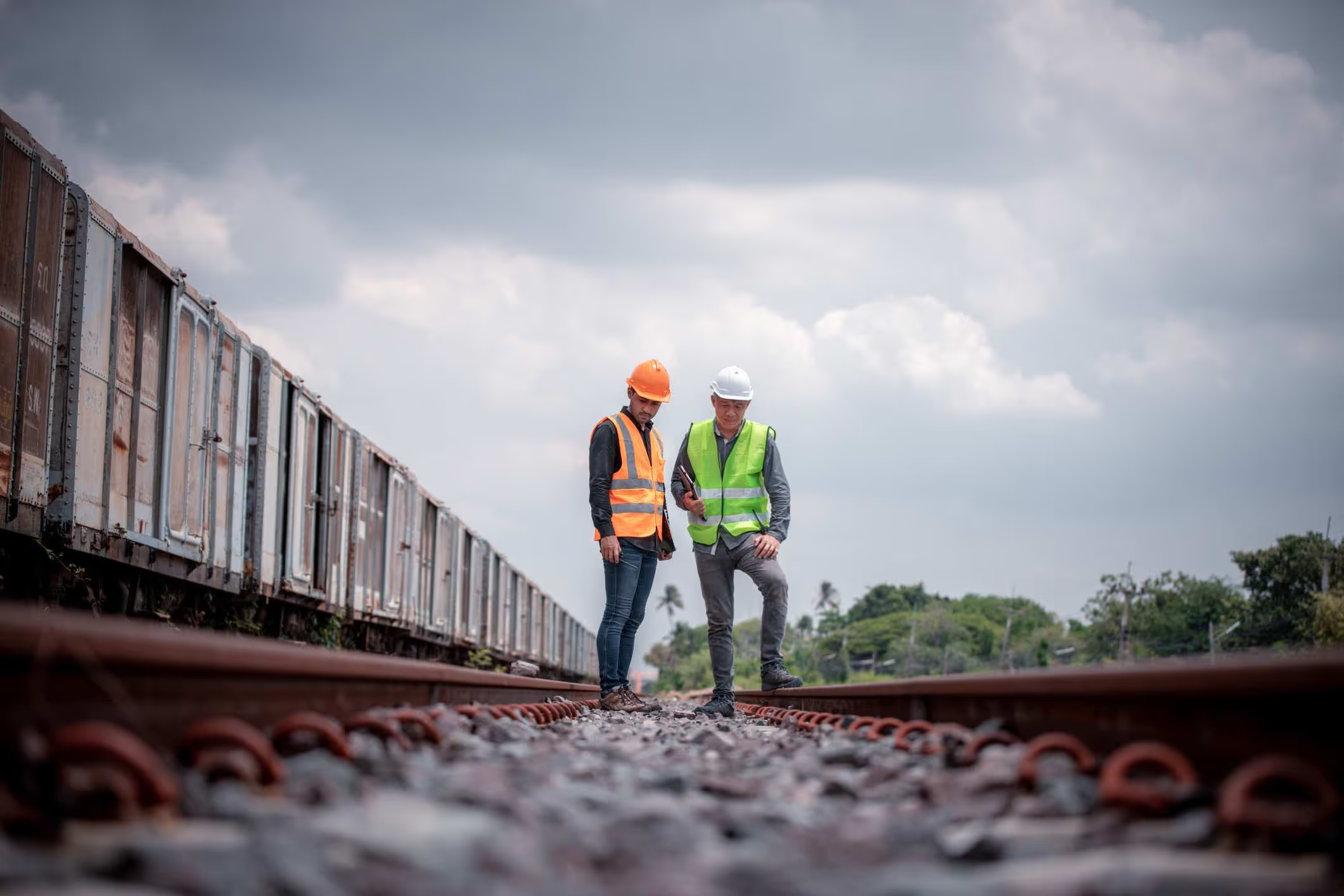
Railroad Diesel Exposure Lawsuits
The railroad industry has struggled to keep staff safe from injury and occupational illnesses for the last 100 years. Employers have known about the health and safety risks of many toxic materials used in rail yards, and still have not properly warned workers, provided the best safety gear or trained employees to avoid toxic exposure.
Investigating Elgin Joliet and Eastern lung cancer claims following diesel fumes exposure
The Lyon Firm is reviewing occupational cancer cases linked to chronic rail yard exposures to industrial solvents, silica dust, asbestos, diesel fumes, welding fumes, creosote and other carcinogens. Gather your work history documentation and medical records and contact an attorney to begin building a case against a former employer. Compensation packages may be available to ensure a better financial future for you and your family.
Can I File a Railroad Cancer Lawsuit?
Any worker who spent years in a rail yard and later falls ill with a related cancer or lung disease can consider taking legal action. We believe that every company has a duty to protect workers, and if they fail to do so, they can be liable for damages. The following can be sought in a personal injury occupational cancer claim:
- Lost Wages related to leaving a position after a cancer diagnosis
- Lost future earnings if a worker cannot return to the job due to serious illness
- Long-term disability
- Compensation for medical expenses that can include treatment, consultations, medications, surgery, rehab and anything else that may not be covered by your insurance
- Damages that may not be covered by FELA and workers compensation claims
- Compensation for reduced quality of life, pain and suffering, emotional distress and possible loss of companionship
About Elgin Joliet and Eastern
The Elgin, Joliet and Eastern was originally created when several local railroads in Illinois and Indiana merged throughout the end of the 19th century. The full network that would make up the EJ&E included the Joliet, Aurora & Northern Railway and Elgin, Joliet & Eastern Railway Company of Illinois.
The Elgin, Joliet and Eastern Railway was a Class II railroad that formed circular path between Waukegan, Illinois and Gary, Indiana. The EJE railroad served as a link between Class I railroads traveling to and from Chicago, only entering Chicago near the Gary, Indiana boundary, running to Kirk Yard at the US Steel Gary Works. The railroad was often referred to as “The J,” “EJ&E” and “The Chicago Outer Belt Line.”
In 2007, the Canadian National Railway announced that the company would purchase a majority of the EJ&E, leaving a small portion of the line in Indiana to later be reorganized as the Gary Railway. In 2012, Canadian National announced a merger of the EJ&E into Wisconsin Central Ltd.
What Cancers Are Linked to Rail Yard Toxic Exposure?
Numerous lung diseases, illnesses and cancers have been reportedly linked to exposure to silica dust, welding fumes, asbestos, diesel fumes, solvents and creosote, including the following :
- Lung Cancer
- Bladder Cancer
- Esophageal Cancer
- Nasopharyngeal Cancer
- Stomach Cancer
- Kidney Cancer
- Acute Myeloid Leukemia (AML)
- Myelodysplastic Syndrome (MDS)
- Acute Lymphocytic Leukemia (ALL)
- Chronic Lymphocytic Leukemia (CLL)
- Non-Hodgkin’s Lymphoma
- Multiple Myeloma
- Aplastic Anemia
- COPD (Chronic Obstructive Pulmonary Disease)
- Emphysema
- RADS (Reactive Airways Dysfunction Syndrome)
- Interstitial Lung Disease
- Pulmonary Fibrosis
After a cancer diagnosis, former East Joliet Yard and Elgin Joliet and Eastern workers can contact a railroad cancer lawyer to discuss the legal process of filing a compensation claim. Injured workers can file workers compensation claims, FELA claims and a personal injury lawsuit if more compensation is necessary.
Experienced. Compassionate. Consumer Advocates
The Lyon Firm is a Cincinnati, Ohio-based law firm, representing individuals nationwide in class action, product liability, and toxic exposure litigation.

Handling Complex Data Privacy & Cyber Security Cases
Request A Free Consultation Now

.avif)
Which East Joilet Yard Workers Are at Cancer Risk?
Many rail yard workers have been at risk of developing lung cancer and other serious illnesses, especially if they spent a good deal of their career’s in a poorly ventilated workshop. Employees exposed to toxins in close quarters included the following: welders, pipefitters, electricians, maintenance staff, conductors, engineers, trackmen, signal operators, mechanics and machinists.
The Elgin, Joliet & Eastern line connected the following cities and large towns:
· Waukegan, Illinois
· Libertyville, Illinois
· Vernon Hills, Illinois
· Lake Zurich, Illinois
· Barrington, Illinois
· Hoffman Estates, Illinois
· Elgin, Illinois
· West Chicago, Illinois
· Aurora, Illinois
· Plainfield, Illinois
· Joliet, Illinois
· Minooka, Illinois
· Morris, Illinois
· New Lenox, Illinois
· Mokena, Illinois
· Frankfort, Illinois
· Richton Park, Illinois
· Chicago Heights, Illinois
· Park Forest, Illinois
· Griffith, Indiana
· Gary, Indiana
Elgin Joliet & Eastern FAQ

Joe Lyon has two decades of experience and our railroad diesel cancer lawyers have settled cases for six and seven figures on behalf of clients nationwide. We aim to negotiate for the best settlement terms possible and we work on a contingency fee basis, meaning that we assume all financial risks and allow you to focus on your health while we take the lead and build your case.
Contact us to learn more about your legal options and to assess your individual case.
Welding fumes, silica dust, creosote, asbestos, diesel exhaust, solvents and benzene have been a concern for many railroad workers nationwide.
Almost anyone in a rail yard was exposed to diesel fumes, and others may have also been exposed heavily to other carcinogens, including conductors, trackmen, carmen, brakemen, plumbers, welders, signal operators, engineers, mechanics and maintenance crews.
Railroad Lung Cancer Lawsuits
Request a Free Consultation
Taking the first step doesn’t have to be complicated. In just a few minutes, you can share the basics of your case, and our team will guide you from there:
- It begins with a few simple questions about your situation.
- From there, a member of our legal team reviews your case.
- Together, we’ll chart the path forward, helping you take the next step toward resolution.
