

New Jersey Railroad Workers Cancer Lawsuit
Diagnosed after railroad work? Learn your legal options and next steps.


.avif)


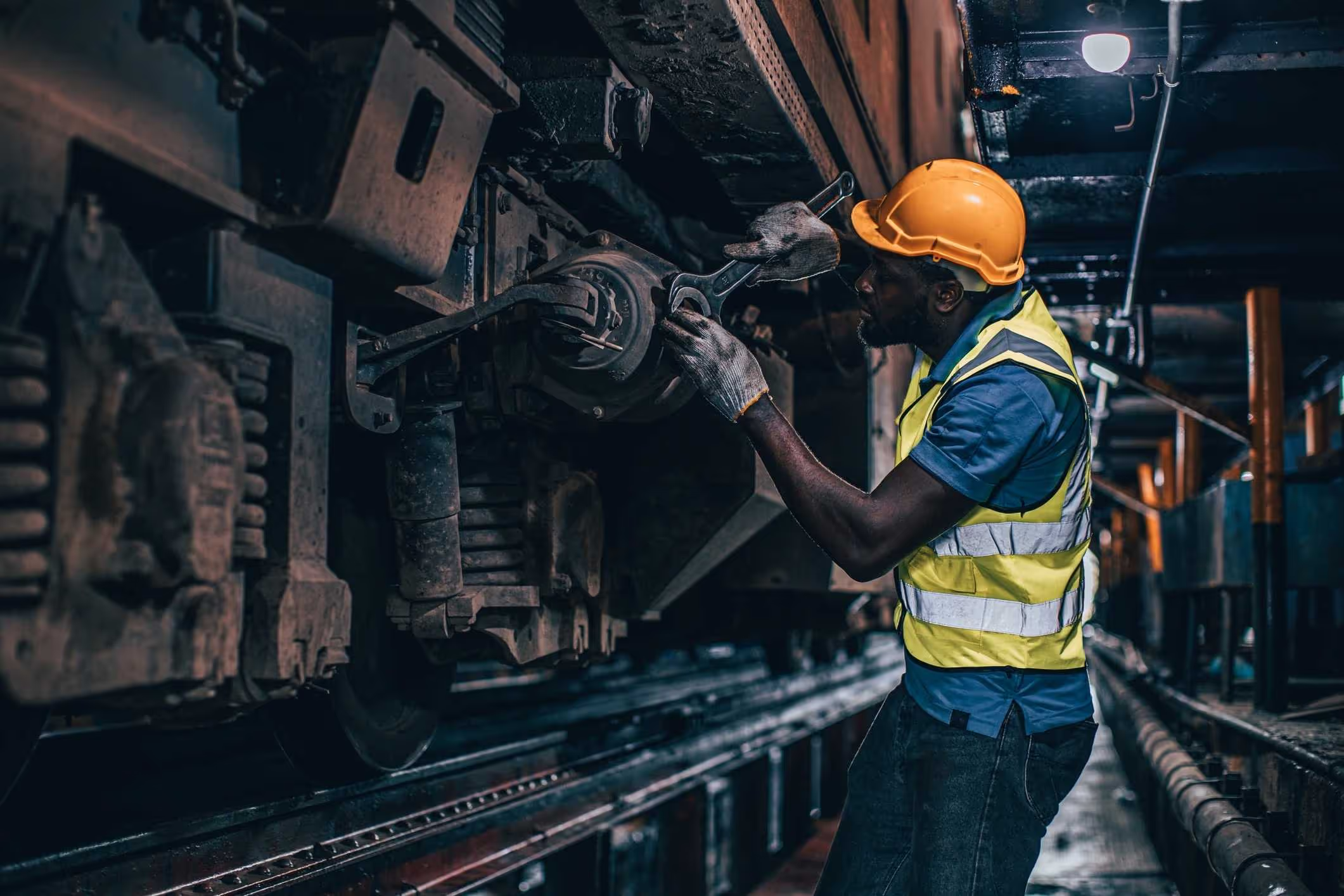
A cancer diagnosis changes everything in an instant. For many railroaders in New Jersey, that diagnosis also brings a specific kind of anger. You spent years working in the railroad industry, only to realize the air you breathed and the chemicals you handled were quietly making you sick.
At The Lyon Firm, we talk with people in your exact position every day. We take the time to understand your work history, diagnosis, and concerns, then help you figure out whether there may be a connection.
If you’re considering a New Jersey railroad cancer lawsuit, call us at (513) 381-2333 or fill out our online form today to speak directly with our team. Even if you’re unsure about your next step, we’ll meet you where you are and help you figure it out.
“Joe Lyon is a true professional in every sense of the word. He has been a pleasure to work with and know. I highly recommend The Lyon Firm!”
– Kaylie T. | Client
Do I Qualify for a New Jersey Railroad Cancer Lawsuit?
Unlike most workers who use “Workers’ Comp,” railroad employees are protected by a federal law called the Federal Employers’ Liability Act (FELA).
To qualify for a claim under FELA, we generally look for three things:
- You worked for a railroad: This includes Class I railroads like CSX Transportation or Norfolk Southern Railway, as well as smaller regional lines.
- You have a diagnosed illness: You must have a formal diagnosis of cancer or another serious respiratory disease.
- The railroad was negligent: FELA requires us to show that the railroad didn’t do enough to protect you. This could mean they didn’t provide respirators, didn’t ventilate shops properly, or didn’t warn you about the dangers of the chemicals you used.
The burden of proof in these cases is actually lower than in a typical personal injury case. We only need to show that the railroad’s negligence played any part, however small, in your illness.
Important Factors in a New Jersey Railroad Workers Cancer Lawsuit
Even if you meet the basic requirements for a lawsuit, every case is a little different. Some details can make your claim stronger or help explain how your illness developed over time.
Here are a few of the factors a New Jersey railroad cancer lawyer will look at:
- Your job duties: Mechanics, engineers, conductors, and yard workers often face different levels of exposure, leading to heavier contact with diesel fumes and chemicals.
- How long you were exposed: Years of daily exposure can build up in the body. Someone who worked around diesel exhaust for decades may have a different case than someone with shorter-term exposure, though both can still qualify.
- Your medical history: Your overall health can play a role, but it does not cancel out a valid claim. Even if you have other risk factors, the law still allows you to pursue a case if your railroad work contributed in any way.
- Your specific diagnosis: Certain cancers and illnesses have stronger links to diesel exhaust and chemical exposure. Lung cancer, bladder cancer, and some blood cancers are commonly seen in railroad workers, but other diagnoses may also qualify.
Railroad companies have lawyers whose only job is to pay out as little as they can. Without someone on your side, it’s easy to get lost in the process.
A study found that people who worked with a lawyer on personal injury claims recovered far more than those who didn’t. On average, claimants with an attorney received $77,600, while those without one got only $17,600. Even after paying legal fees, having a lawyer still meant nearly four times more money to cover medical bills, lost wages, and family needs.
But it’s not just about the money. A New Jersey railroad cancer lawyer can handle the paperwork, phone calls, and negotiations so you don’t have to. That means you can focus on your recovery while someone experienced is making sure your claim is strong and complete.
If this sounds like the support you need, reach out to our team today online or by calling (513) 381-2333.
What Compensation Can a New Jersey Railroad Injury FELA Lawyer Help Me Recover?
At The Lyon Firm, we are not looking to rush your claim to a settlement that won’t truly account for what you have suffered. We are looking at how your day-to-day life has changed and what it will take to move forward.
Here are some of the areas we focus on:
Past and Future Medical Treatment
- Hospital stays, surgeries, and specialist visits
- Chemotherapy, radiation, or immunotherapy
- Ongoing scans, testing, and follow-up care
- Prescription medications that may last for years
- In-home nursing care or help with daily tasks
Lost Income and Changes to Your Career
- Paychecks you missed during treatment
- Lost overtime, bonuses, or benefits
- Moving into a lower-paying or less physical role
Pain and Suffering You’ve Endured
- Ongoing pain from the illness or treatment
- Fatigue that changes how you get through the day
- The stress, anxiety, or depression that comes with a diagnosis
- Missing out on time with family, hobbies, or normal routines
Families That Have Lost a Loved One
- Funeral and burial expenses
- Loss of income your loved one would have provided
- Loss of guidance, support, and companionship
If you’re worried about piecing this together, going back through old jobs, old worksites, and wondering what really caused this, you don’t have to do this on your own. At The Lyon Firm, our lawyers do more than just look at these factors. We know how to turn them into evidence that actually supports your case.
Records are not always easy to track down, and the railroad is not going to connect your illness to your time on their job site for you. It takes experience to know where to look, what questions to ask, and how to turn your work history into something that actually supports your claim.
If you want to discuss whether you qualify, call us at (513) 381-2333 or fill out our quick online form. We will take the time to walk through your work history with you and help you understand whether it makes sense to move forward with a claim in a 100% free case review.
How New Jersey Railroad Workers Are Exposed to Harmful Toxins
In a busy rail hub, the air itself can carry risks that are easy to overlook while you are focused on getting the job done. Over time, those exposures can add up.
Most workers are exposed in ways that do not feel dangerous in the moment. You are not seeing thick smoke all day. Instead, it often comes down to what you breathe in and what settles on your skin shift after shift.
The most common form of exposure is inhalation. You could be exposed while:
- Sitting in a locomotive cab for hours at a time
- Working in repair shops with engines idling nearby
- Performing inspections near exhaust vents or fuel systems
- Switching railcars in yards where multiple engines are running
- Working in enclosed or poorly ventilated areas
However, exposure does not just come from standing next to an engine. It can happen through:
- Exhaust buildup in indoor workspaces
- Residue left on equipment, clothing, and tools
- Fuel vapors during refueling or maintenance
- Soot and particles that settle and get stirred back into the air
Other Toxic Substances Railroad Workers Encounter
Diesel is only part of the problem. Many railroad workers are exposed to a mix of chemicals over the course of their careers, oftentimes without realizing the dangers of these substances.
Some of the most common include:
- Benzene: Found in fuels, degreasers, and solvents, and linked to blood cancers like leukemia.
- Asbestos: Used in insulation, brake components, and engine parts, especially in older equipment.
- Silica dust: Released during track maintenance and ballast work.
- Creosote: Used to treat railroad ties, with repeated exposure posing health concerns.
- Welding fumes: Containing metals like manganese and other harmful particles.
- Lead: Present in older paint, pipes, and infrastructure.
- Industrial solvents: Including chemicals like toluene, xylene, and trichloroethylene (TCE).
- Herbicides: Such as glyphosate and paraquat used along tracks and rail corridors.
- Crude oil and petroleum products: Especially for workers handling or working near tank cars.

Health Conditions That Could Be Linked to Your Time on the Railroad
Your body can take years to show the impact of repeated exposure to diesel fumes, chemicals, and other hazardous substances on the job. Railroad workers, unfortunately, face higher risks of certain cancers and other illnesses, including:
- Lung Cancer
- Mesothelioma
- Leukemia and Lymphoma
- Bladder Cancer
- Colorectal Cancer
- Cardiovascular Disease (heart attacks and pulmonary embolism)
- Chronic Respiratory Disease (COPD, chronic bronchitis, and emphysema)
Major Railroads Operating in New Jersey
Class I railroads operating in New Jersey include:
CSX Transportation: CSX operates out of Pavonia Yard, South Kearney Terminal, Little Ferry Yard, Oak Island Yard, and North Bergen Yard.
Norfolk Southern Railway: Norfolk Southern’s New Jersey facilities include Pavonia Yard, Croxton Yard, and Oak Island Yard.
If you worked at any of these facilities, you may have been exposed to diesel fumes or other hazardous substances. And if your worksite isn’t listed here, that’s okay. Many workers in smaller yards, regional lines, or maintenance shops also have potential claims.
You can call The Lyon Firm at (513) 381-2333 or fill out our online form for a free case evaluation. There’s absolutely no obligation to move forward.
Experienced. Compassionate. Consumer Advocates
The Lyon Firm is a Cincinnati, Ohio-based law firm, representing individuals nationwide in class action, product liability, and toxic exposure litigation.

Handling Complex Data Privacy & Cyber Security Cases
Request A Free Consultation Now

.avif)
Why Partner With a New Jersey Railroad Diesel Fume Lawyer at The Lyon Firm
At The Lyon Firm, we bring the same dedication and hands-on approach we’ve used in complex toxic exposure cases to every railroad worker we represent. Over the years, our efforts have helped clients recover millions in compensation, and we bring that same focus to helping you.
We know it can be intimidating to decide whether to go through with a New Jersey railroad cancer lawsuit, and that’s why we can guide you through your options and what to expect when you reach out to our team at (513) 381-2333 or fill out our online form.
New Jersey Railroad Workers Cancer Lawsuit FAQs

Generally, you have three years from the time you knew (or should have known) that your cancer was related to your work. Because cancer can take years to develop, the clock doesn’t start when you were exposed, but rather when you were diagnosed and realized the railroad might be at fault.
Look for a firm with a track record in “toxic torts” or FELA cases. You want someone who isn’t afraid to go to trial against large railroad companies. Ask about their experience with diesel exhaust or asbestos claims specifically.
You don’t need to have every detail or document ready. But having some information on hand can make the first conversation much more productive. A good starting point includes medical records showing your diagnosis, any documents showing your employment history, and any insurance documents if you filed claims in the past.
We work on a “contingency fee” basis. This means we only get paid if we win your case. There are no up-front costs to you, so you can take legal action without worrying about more bills.
Even today, many locomotives on U.S. tracks are decades old, with some built as far back as the 1970s. These engines release a dangerous mix of diesel exhaust, including particulate matter and nitrogen oxides, which can increase the risk of cancer, lung disease, heart problems, and other serious health issues.
While newer engines meet stricter “Tier 4” standards and emit far less pollution, there is no requirement for older trains to be upgraded or replaced. Many railroads refurbish old locomotives instead of investing in cleaner alternatives, meaning workers are still exposed to harmful diesel fumes on the job.
Railroad Lung Cancer Lawsuits
Request a Free Consultation
Taking the first step doesn’t have to be complicated. In just a few minutes, you can share the basics of your case, and our team will guide you from there:
- It begins with a few simple questions about your situation.
- From there, a member of our legal team reviews your case.
- Together, we’ll chart the path forward, helping you take the next step toward resolution.
