

Pan Am Railways FELA Lawsuits | Diesel Exposure Cancer
Railroad Diesel Lawyer Filing Pan Am Occupational Cancer Claims


.avif)



Railroad Diesel Exposure Lawyer
Due to a wide range of toxic materials used in the railroad industry over the last 75 years, many former railroaders and Pan Am Railways workers have developed occupational cancers and serious lung diseases. As a result, victims have successfully filed FELA injury claims and toxic exposure lawsuits, naming former employers as defendants for failing to protect employees.
If you or a loved one has developed lung cancer, AML, MDS, multiple myeloma, or another related cancer following chronic exposure to serious toxins at the workplace, contact an attorney to discuss your legal options. We have settled numerous work injury and occupational cancer cases on behalf of plaintiffs nationwide.
How Were Pan Am Railways Workers at Cancer Risk?
Almost every worker at a rail yard has come into contact with some carcinogenic materials. Many railyards on the east coast have been seen thick with diesel exhaust, endangering staff of all varieties. Many conductors, engineers, brakemen, carmen and signal operators have reported chronic diesel exposure at Pan Am and other rail companies.
Despite an increased awareness of work safety guidelines and warnings from OSHA and other health agencies, many employers still failed to provide proper safety equipment, safety training, or seek alternatives to cancer-causing chemicals at the workplace. Employers have a duty to maintain safety gear and protect workers, and if they fail to do so, legal action can be taken by any worker who develops an occupational illness.
Benzene, a chemical known to cause several cancers and medical conditions, is ubiquitous in many industrial settings, including rail yards. Benzene is present in diesel fumes, solvents, adhesives, paint thinners, degreasers and other materials used regularly by Pan Am railroaders. Benzene has links to AML, other forms of leukemia and blood cancers.
Asbestos was also a serious concern for many years for Pan Am Railways staff as the material was used as an insulator in locomotive parts, roundhouses, workshops and other on-site buildings.
Silica exposure has also been a hard reality to cope with for many former maintenance of way workers at railroad companies. Track maintenance crews who built, maintained or removed ballast rock may have been exposed to creosote, pesticides, coal tar pitch and silica dust, leading to serious lung diseases.
Other Pan Am workers spent long days in poorly ventilated workspaces, increasing their risk of inhaling diesel fumes, welding fumes, solvents, asbestos fibers, benzene and other toxic chemicals.
More About Pan Am Railways
Pan Am Railways, Inc. (PAR), was once a standalone rail company, and is now a subsidiary of CSX. They still operate rail lines and regional railroads around New England from Maine to New York. Pan Am was comprised of former Class II regional railroads, which included Boston and Maine Corporation, Maine Central Railroad Company, Portland Terminal Company, and Springfield Terminal Railway Company. For a time it was known as Guilford Transportation Industries and Guilford Rail System. Rail yards operated by PAR and CSX include the following:
· Ayer: Hill Yard
· East Deerfield
· Fitchburg
· Gardner
· Lawrence
· Lowell
· Auburn: Danville Junction (PAR, St. Lawrence andAtlantic Railroad)
· Hartford: Hartford Yard (ConnecticutSouthern/Pan Am)
· Brunswick Yard (PAR, Amtrak, Maine Department ofTransportation)
· Hermon: Northern Maine Junction (PAR, CanadianPacific Railway)
· Mattawamkeag: Mattawamkeag Yard (PAR, EasternMaine Railway)
· Bangor Yard
Portland:
· Yard 3 (PAR, Turner’s Island Railroad)
· Yard 6
· Yard 8 (PAR, Maine International MarineTerminal)
· Yard 10 (PAR, Amtrak)
· Yard 11
· Rumford Yard
· Rigby Yard
· Waterville: Waterville Shops
· Westbrook Yard 12
What Can Plaintiffs Recover in Diesel Exposure Lawsuits?
Every case is unique, and every work history different, but The Lyon Firm has the ability to assess your individual case and determine what compensation and damages can be sought by former workers and their families. A typical compensation packages can include the following:
- Compensation for all medical expenses, including specialist consultations, hospital visits and treatment programs
- Coverage for related medication, surgeries and rehab
- All related medical costs not fully covered by your basic health insurance
- Expenses related to follow-up therapy and long-term disability
- Lost earnings if a worker has to stop working due to an occupational illness or injury
- Loss of future earnings if a worker cannot return to the same position in the same capacity.
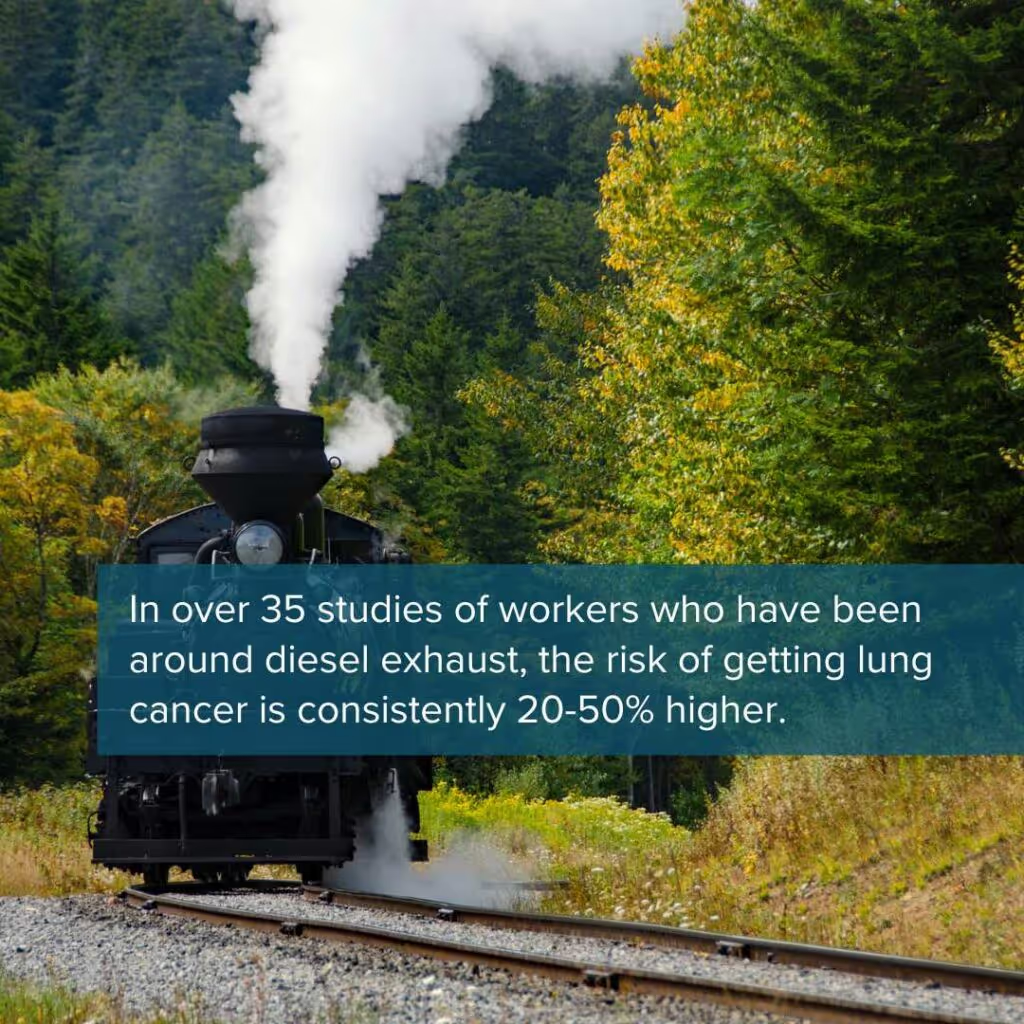
What Cancers Are Linked to Railroad Toxic Exposure?
There are numerous occupational cancers and lung diseases that have strong links to exposure to herbicides, solvents, silica dust, asbestos, diesel exhaust, benzene, creosote and welding fumes, including the following:
- Lung Cancer
- Bladder Cancer
- Esophageal Cancer
- Nasopharyngeal Cancer
- Stomach Cancer
- Kidney Cancer
- Acute Myeloid Leukemia (AML)
- Myelodysplastic Syndrome (MDS)
- Acute Lymphocytic Leukemia (ALL)
- Chronic Lymphocytic Leukemia (CLL)
- Non-Hodgkin’s Lymphoma
- Multiple Myeloma
- Aplastic Anemia
- COPD (Chronic Obstructive Pulmonary Disease)
- Emphysema
- RADS (Reactive Airways Dysfunction Syndrome)
- Interstitial Lung Disease
- Pulmonary Fibrosis
Experienced. Compassionate. Consumer Advocates
The Lyon Firm is a Cincinnati, Ohio-based law firm, representing individuals nationwide in class action, product liability, and toxic exposure litigation.

Handling Complex Data Privacy & Cyber Security Cases
Request A Free Consultation Now

.avif)
Why Hire The Lyon Firm?
Joe Lyon and the toxic exposure lawyers at The Lyon Firm have 20 years of experience in the field of toxic tort litigation and have filed numerous occupational cancer cases on behalf of plaintiffs nationwide. We have settled cases for six and seven figures and we negotiate for the best possible settlement packages available.
We have the experience, the resources and the willingness to file injury claims against any corporation that fails to properly protect its workers from exposures to diesel exhaust, asbestos, benzene, silica, welding fumes or any other industrial toxin.
Call our legal team to begin processing your claims. We only need your medical records and work history to get started on your case, and to discuss your legal options. We assume all financial risks involved with your case, and we can take the lead and guide you through the legal process.
Pan Am Railways Cancer FAQ

Railroad safety experts have noted that there are health concerns around exposure to solvents, silica dust, asbestos, welding fumes, creosote, diesel fumes and the following benzene-containing products:
- Varsol (mineral spirit)
- Liquid Wrench (penetrating solvent)
- Safety-Kleen Parts Washer
- Safety-Kleen Solvent
- Gasket adhesives and glues
- CRC Brake and Carb Cleaners
- Gasoline
- Cutting fluids
- Lubricants
- Paints and paint thinners
Many workers may think they knew the risks of working in the railroad industry, which has always had a spotty safety record. But if a company was negligent in safety training, and failed to provide basic safety equipment, they can be held accountable for any injury or illness that results. Families work hard to make ends meet and when an occupational illness makes it impossible to work any longer, compensation becomes necessary, perhaps with the help of a railroad cancer attorney.
· Ayer: Hill Yard
· East Deerfield
· Fitchburg
· Gardner
· Lawrence
· Lowell
· Auburn: Danville Junction (PAR, St. Lawrence andAtlantic Railroad)
· Hartford: Hartford Yard (ConnecticutSouthern/Pan Am)
· Brunswick Yard (PAR, Amtrak, Maine Department ofTransportation)
· Hermon: Northern Maine Junction (PAR, CanadianPacific Railway)
· Mattawamkeag: Mattawamkeag Yard (PAR, EasternMaine Railway)
· Bangor Yard
Portland:
· Yard 3 (PAR, Turner’s Island Railroad)
· Yard 6
· Yard 8 (PAR, Maine International MarineTerminal)
· Yard 10 (PAR, Amtrak)
· Yard 11
· Rumford Yard
· Rigby Yard
· Waterville: Waterville Shops
· Westbrook Yard 12
- Lung Cancer
- Bladder Cancer
- Esophageal Cancer
- Nasopharyngeal Cancer
- Stomach Cancer
- Kidney Cancer
- Acute Myeloid Leukemia (AML)
- Myelodysplastic Syndrome (MDS)
- Acute Lymphocytic Leukemia (ALL)
- Chronic Lymphocytic Leukemia (CLL)
- Non-Hodgkin’s Lymphoma
- Multiple Myeloma
- Aplastic Anemia
- COPD (Chronic Obstructive Pulmonary Disease)
- Emphysema
- RADS (Reactive Airways Dysfunction Syndrome)
- Interstitial Lung Disease
- Pulmonary Fibrosis
Railroad Lung Cancer Lawsuits
Request a Free Consultation
Taking the first step doesn’t have to be complicated. In just a few minutes, you can share the basics of your case, and our team will guide you from there:
- It begins with a few simple questions about your situation.
- From there, a member of our legal team reviews your case.
- Together, we’ll chart the path forward, helping you take the next step toward resolution.
