

Washington Railroad Workers Cancer Lawsuit
Washington rail workers are filing claims after toxic exposure. See if you can too.


.avif)


Legal Support for Sickened Rail Workers Across Washington State
“In reviewing hundreds of occupational exposure cases, we’ve seen the same trend: long-term rail workers developing serious illness due to preventable exposure. These were not isolated incidents; they were the result of systemic failure to enforce basic safety standards.”
Joe Lyon,
Washington Railroad Injury FELA Lawyer | The Lyon Firm
Railroad workers across Washington have operated under difficult conditions for decades. From the switching yards of Tacoma to the diesel shops in Spokane, these jobs have exposed generations to hazardous materials, often without proper protection, adequate warnings, or oversight
Now, former and retired employees are coming forward with serious diagnoses. Lung cancer. Mesothelioma. Blood disorders. Diseases with proven links to diesel fumes, asbestos, silica dust, and industrial chemicals were present throughout the worksite.
If you’ve worked in the rail industry in Washington and are now facing a cancer or chronic respiratory illness diagnosis, The Lyon Firm can help. We are currently investigating toxic exposure claims for railroad workers across the state, both under the Federal Employers’ Liability Act (FELA) and through a civil Washington railroad cancer lawsuit.
Call us directly at (513) 381-2333 or message a Washington railroad cancer lawyer online to discuss your legal options.
Chemical Exposures in Washington Rail Yards and Along the Tracks
Decades of industrial activity in Washington’s key rail hubs left behind more than track and freight. Persistent occupational hazards have been documented in nearly every yard environment, from busy mainline terminals to rural branch yards.
Regular exposure to the following substances has been linked to both cancer and long-lasting pulmonary conditions:
- Diesel exhaust and diesel particulate matter (DPM);
- Creosote from railroad ties and bridges;
- Crystalline silica dust from grinding and rocking ballast;
- Asbestos in brake linings, floor insulation, and older facility construction;
- Welding fumes and vapors containing manganese and hexavalent chromium;
- Chemical solvents such as benzene and toluene; and
- Herbicides and vegetation control agents applied along rights-of-way.
Most rail workers were never given respiratory protection, nor were they warned of the long-term effects. Exposure risk was not limited to maintenance buildings—trackside workers, engineers, mechanics, pipefitters, and others were equally vulnerable.
Even short, repeated exposure over many years has been linked to long-term health damage.
Job Classifications Most at Risk
The nature of rail work often placed employees in confined areas or directly beside operating machinery, increasing the likelihood of toxin inhalation and dermal exposure.
We’re evaluating claims from workers in roles such as:
- Locomotive engineers and conductors working in older, unventilated cabs;
- Diesel mechanics and electricians operating in repair shops across the state;
- Maintenance-of-Way workers exposed to ballast dust and chemical applications;
- Carmen and car shop workers who routinely handled asbestos components;
- Welders, pipefitters, and boilermakers dealing with high-temperature metal fumes; and
- Signal maintainers and utility personnel along chemically treated corridors.
In many of these roles, job conditions met the legal definition of a hazardous workplace—one where injury (or illness) was foreseeable, but protective measures were neglected or entirely absent.
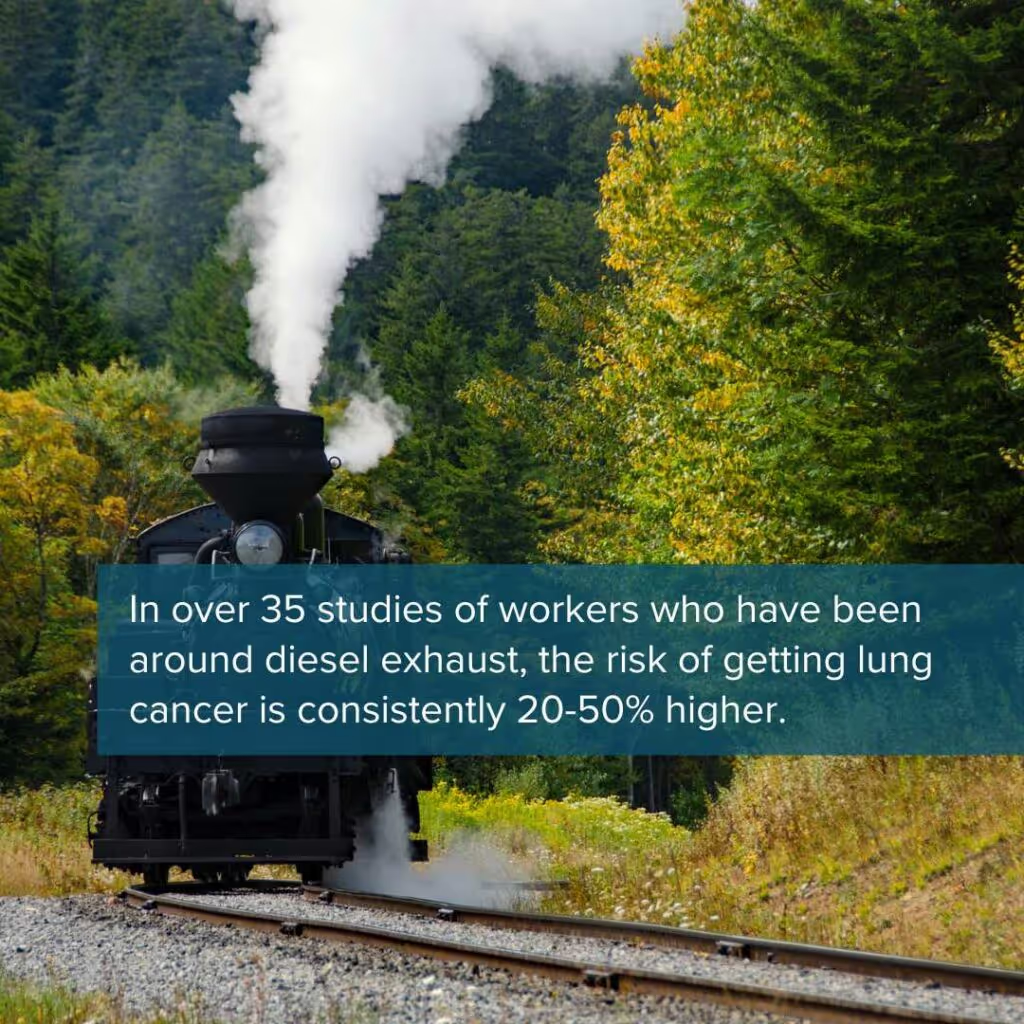
If you worked in one of these roles and have since faced a serious diagnosis, your exposure may be more than a coincidence. Many former railroad employees across Washington are now being evaluated for toxic exposure claims tied to their time on the job. Could your illness be linked to your railroad work? Call a Washington diesel exhaust exposure attorney at (513) 381-2333 or message us online.
Illnesses and Diagnoses We Are Investigating
Many Washington railroaders were diagnosed with long-term health issues long after retirement. For years, their symptoms were attributed to lifestyle or genetics when, in fact, they’re consistent with industrial chemical exposure.
The illnesses most often linked to rail exposure are:
- Lung Cancer
- Bladder Cancer
- Esophageal Cancer
- Nasopharyngeal Cancer
- Stomach Cancer
- Kidney Cancer
- Acute Myeloid Leukemia (AML)
- Myelodysplastic Syndrome (MDS)
- Acute Lymphocytic Leukemia (ALL)
- Chronic Lymphocytic Leukemia (CLL)
- Non-Hodgkin’s Lymphoma
- Multiple Myeloma
- Aplastic Anemia
- COPD (Chronic Obstructive Pulmonary Disease)
- Emphysema
- RADS (Reactive Airways Dysfunction Syndrome)
- Interstitial Lung Disease
- Pulmonary Fibrosis
These disease patterns appear most frequently in workers with 10 or more years in the rail industry, but we also represent clients with shorter careers if the intensity or location of exposure is proven.
Rail Yards in Washington With Documented Exposure Risk
We’re building case files for former rail workers employed in the following regions and facilities where documented use of hazardous material was prolonged and where illness clusters have been observed.
BNSF Railway Facilities
- Tacoma Yard
- Seattle Balmer Yard
- Pasco Yard
- Vancouver Yard
- Yardley/Hillyard (Spokane)
- Wishram Yard
- Everett Delta Yard
Union Pacific Sites
- Argo Yard (Seattle)
- East Spokane Yard
- Fife & Erie Street Yards
Short Line and Regional Operators
- Cheney / Reardan / Coulee City Yards (Washington Eastern Railroad)
- Longview Junction (LVSW)
- Usk / Newport Yards (Pend Oreille Valley Railroad)
- Tide Flats Terminal (Tacoma Rail Mountain Division)
- Kettle Falls Yard (STPP)
If you or a loved one worked at one of these yards or along nearby track and have since developed a qualifying illness, The Lyon Firm can assist in investigating your eligibility for a legal claim.
Understanding Your Legal Options: FELA and Civil Claims
Under the Federal Employers’ Liability Act (FELA), railroad workers who develop injury or illness as a result of their job conditions may be entitled to compensation.
FELA claims differ from traditional workers’ compensation in that they are fault-based. You must show that the railroad’s negligence—failure to warn, failure to provide protection, or failure to maintain a safe workplace—contributed to your illness.
In cases not covered under FELA, such as where the worker was employed by a contractor or exposed outside railroad property, a traditional Washington railroad cancer lawsuit or wrongful death claim may be appropriate.
The Lyon Firm can help clarify which path applies under your circumstances and collect the necessary medical and occupational evidence to support your claim.
There is a time limit to file. Most claims must be brought within three years of a known link between your diagnosis and your occupational exposure. Consult us to determine where your case falls.
Recoverable Damages in Railroad Cancer Claims
A Washington railroad workers cancer lawsuit can’t undo a diagnosis, but it can help cover costs and provide financial security for your family. Compensation may include:
- Medical bills—current and future;
- Lost wages and income you’ve missed out on;
- Pain, suffering, and reduced quality of life;
- Loss of spousal or family support; and
- Funeral expenses in wrongful death cases.
We’ve seen a wide range of settlements in railroad toxic exposure cases, depending on the illness and the strength of the evidence.
A national survey from Martindale-Nolo, one of the country’s most well-known legal publishers, found that personal injury cases involving long-term conditions often settle between $90,000 and $200,000. Some cases resolve for more.
Every case is different, but those numbers offer a general sense of what’s possible.
We’ve represented clients in Washington, including former workers in Spokane, Tacoma, and Pasco, and have helped families recover meaningful compensation. We’ll evaluate your case based on your diagnosis, your work history, and the exposure details.
Experienced. Compassionate. Consumer Advocates
The Lyon Firm is a Cincinnati, Ohio-based law firm, representing individuals nationwide in class action, product liability, and toxic exposure litigation.

Handling Complex Data Privacy & Cyber Security Cases
Request A Free Consultation Now

.avif)
If You Worked in the Railroad Industry and Were Diagnosed with Cancer, You Deserve Answers
Railroad workers were exposed for years to diesel exhaust, asbestos, silica, solvents, welding fumes, and other hazardous materials, often without proper warnings or protection. If you’ve been diagnosed with cancer or a serious illness, those exposures could be part of the reason.
The Lyon Firm has handled railroad toxic exposure cases nationwide, including for clients in Washington. We work closely with medical experts and former industry professionals to trace exposures, build cases, and pursue fair compensation under FELA and other laws.
If you’re ready to learn whether a claim is possible, we’ll review your case and explain your legal options clearly. There’s no charge to start the conversation.
Call (513) 381-2333 or send a message. You’ll speak directly with an experienced Washington railroad diesel fume lawyer.
Washington Railroad Cancer FAQ

In many cases, yes. FELA provides a three-year window that begins when you discover or are informed that your illness is job-related. That may be when a physician links your condition to workplace exposure, even years into retirement.
No. While your firsthand account is helpful, we rely on third-party documentation, historical OSHA records, railroad maintenance logs, and expert testimony. Exposure timelines and substance use can be reconstructed even decades later.
We’ll consult medical professionals and industrial hygienists to evaluate all possible causes. If your diagnosis lines up with known occupational risk and no other primary exposure source is identified, a strong case can still be made.
There is no upfront cost. We work on contingency, which means we are only compensated if we obtain a financial settlement or trial verdict on your behalf. All consultations with a Washington railroad cancer lawyer are free, with no obligation to move forward.
Railroad Lung Cancer Lawsuits
Request a Free Consultation
Taking the first step doesn’t have to be complicated. In just a few minutes, you can share the basics of your case, and our team will guide you from there:
- It begins with a few simple questions about your situation.
- From there, a member of our legal team reviews your case.
- Together, we’ll chart the path forward, helping you take the next step toward resolution.
