

Suspension Defect | Auto Defects
Auto Defects & Recalls


.avif)


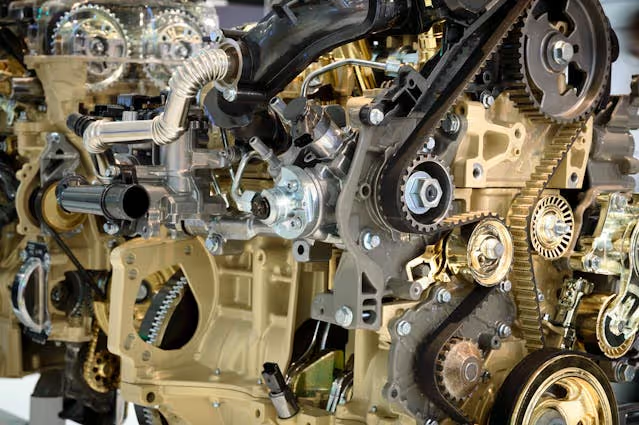
Automotive suspension failure can be caused by design defects, manufacturing defects, or poor vehicle maintenance. In recent years, a number of car manufacturers have recalled vehicles due to faulty suspension systems, which have led to serious accidents and injuries.
Many issues with auto suspension involve poor workmanship at auto plants, and others are attributed to poor design. Either way, a defective suspension component or system can lead to a failure on the roadway and increase the risk of collision and injury for drivers and passengers.
Anyone injured in a road accident that resulted from a defective automotive component may be able to file claims against a manufacturer, distributor, dealership or negligent mechanic.
- Pulling One Side While Drive
- Uneven Tire Pressure
- Uneven Tire Wear
- Poor Wheel Alignment
- Bad Tire Rods
- Bad Steering Rack
- Brake Caliper Sticking
- Control Arm Damage
Causes of Suspension Damage
- Potholes
- Defective Design
- Poor Maintenance
- Overloading of the Vehicle
- Rust
- Age
- Chemical Changes in the Metal
Following a serious car accident, victims should contact an experienced auto defect lawyer to investigate.
Joe Lyon is a highly-rated and experienced product liability attorney, well-versed in the science and economic impact such an injury or death has on the victim’s life and family.
Defective Suspension Recalls
- Land Rover and Range Rover units were recalled over a suspension issue which could lead drivers to lose control of their vehicle. The recall statement said if the vehicle is exposed to a heavy impact such as a deep pothole, the front suspension may fail. If the front suspension fails, the front wheel could separate from its lower joint and lead to a loss of vehicle control.
- Ford Motor recalled about 81,000 sport-utility vehicles to fix a suspension issue. The defect affected Ford Explorer and Ford Police Interceptor SUVs, and was linked to at least one injury. The vehicles’ rear suspension toe links were reportedly poorly welded and may fracture, resulting in loss of vehicle control.
- Mitsubishi recalled over 174,000 cars and SUVs over a corrosion issue. The recall included the Lancer, Lancer Wagon, Lancer Evolution, Outlander, and Outlander V-6. According to Mitsubishi, the front lower control arm might detach from other suspension components after being exposed to salt water, making road salt a danger to car owners.
- Toyota Motor recalled 337,000 vehicles—Toyota RAV4 SUV and the Lexus HS250h. Toyota first recalled these vehicles because of a wobbly rear suspension. The company recalled them because the nuts used to adjust the rear wheel alignment weren’t tightened properly. Toyota found that rust can form on the suspension arm threads if the nuts for the rear wheel alignment weren’t tightened correctly. In severe cases, the suspension arm may separate from the vehicle and cause the driver to lose control.
- Mazda issued two recalls for over 100,000 units of their RX-8 sports coupe. Mazda said there may be “inappropriate caulking” on the suspension’s front lower control arm’s ball joint, which may cause the socket to crack. If that occurs, and a heavy load is applied to the suspension, the ball joint may separate and make cause a loss of control. The second recall noted a problem with the fuel pump—heat from the engine and exhaust may cause the fuel pump’s pipe to deteriorate and cause a fuel leak.
- Kia recalled 14,000 Sedona units, noting road salt could corrode the front control arms, and ultimately lead to control arm failure. A suspension failure could result in a loss of vehicle control, increasing the risk of a crash.
- Hyundai recalled almost 15,000 Elantra and Sonata units because the front suspension coil springs may be susceptible to corrosion. The company said that over time corrosion could cause the springs to fail, potentially damaging front tires and causing rapid air loss or tire failure.
Experienced. Compassionate. Consumer Advocates
The Lyon Firm is a Cincinnati, Ohio-based law firm, representing individuals nationwide in class action, product liability, and toxic exposure litigation.

.avif)
Why are these cases important?
Serious injuries and accidents often result through no fault of the injured party, yet the injured victim suffers from life altering physical, mental and financial losses. Such economic and human losses can have devastating financial consequences on individuals and families if not properly compensated. Tort law allows those individuals to seek just legal recourse through personal injury lawsuits.
Questions about Suspension Defects & Recalls

Consumers can follow recall news or search for current and past recalls on the Web sites of the NHTSA, as well as on other car safety advocate outlets. Look on your car windshield for a 17-character Vehicle Identification Number. Your VIN is also located on your car’s registration card.
If your car has been recalled and you have suffered an injury, contact an auto defect attorney to investigate a potential claim
Auto defects have been known to cause accidents in tire failure, tread separation accidents, brake malfunction, suspension failure and sudden acceleration cases.
Auto defects may not cause every accident, but they can play an integral part in causing injury in the event of an accident. This is common in defective seat back collapse, seat belt defects and airbag defects. When these crucial safety features fail to function as they were intended.
Serious safety risks exist with suspension failure events, including losing control of a vehicle or even wheels detaching from the vehicle.
Auto manufacturers and car makers can be held liable in auto defect lawsuits. Many automakers outsource some of their production and may not always be aware of some defects. Honda, for example, purchased all their defective airbags from Takata.
Some defective auto part suits name other defendants like negligent auto dealerships or auto repair shops who alter car parts or fail to properly repair automobiles and leave a serious safety risk.
The list of defective automobiles changes each year, and it is more likely that certain components are defective rather than an entire brand name. Nowadays many car makers use the same third-party suppliers, which compounds safety issues when a defective auto part is produced.
A Cincinnati Auto Defect Lawyer can assist in not only reviewing your accident and injury case, but is able to hold large corporations accountable for the negligent actions in releasing unsafe products to the public.
Auto companies must be held liable in order to keep the roads safe in America. So not only can The Lyon Firm seek compensation for injured plaintiffs, but we can file lawsuits to punish car makers for failing to properly test their auto parts before they are sold to the public.
When car makers fail to produce reliable cars and fail to provide basic road safety features, the National Highway Traffic Safety Administration and product liability attorneys can hold them responsible and help mitigate injuries and future damages.
The majority of accidents and injuries on the road are preventable, but defective auto design and manufacturing defects may leave victims with huge medical costs, lost wages, pain and suffering, and, in many cases, permanent injuries.
Auto Defect Lawsuits
Request a Free Consultation
Taking the first step doesn’t have to be complicated. In just a few minutes, you can share the basics of your case, and our team will guide you from there:
- It begins with a few simple questions about your situation.
- From there, a member of our legal team reviews your case.
- Together, we’ll chart the path forward, helping you take the next step toward resolution.
