Clorox Faces Class Action Over Recalled Mistolin and Lestoil Cleaners
October 6, 2026


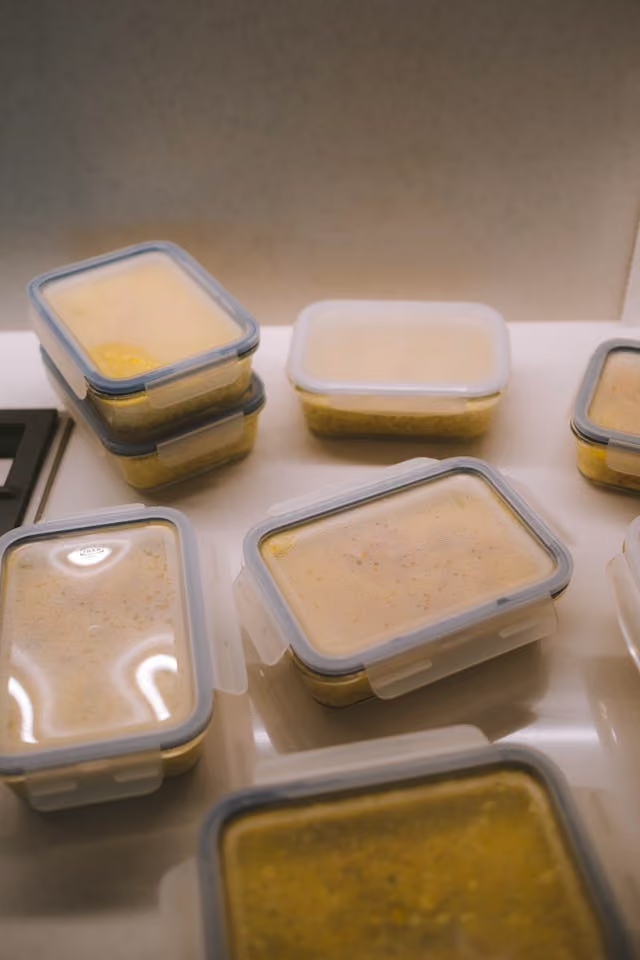
Marketed as health-conscious and eco-friendly alternatives to single-use plastic bags and carry-out Styrofoam, food prep storage containers are meant to reduce waste and protect the environment. Research indicates that these reusable food containers may be leaching microplastics into food and beverages, posing potential long-term health risks.
The defective product and toxic exposure lawyers at The Lyon Firm are launching a comprehensive investigation into this issue, seeking to uncover the truth for consumers and hold negligent manufacturers accountable.
If you own and use meal prep kitchenware and reusable food containers and are worried about microplastic exposure, contact our attorneys to learn more about potential legal action.
Some companies may have falsely labeled their plastic kitchen products as safe for reheating and freezing but could be leaking millions of plastic particles into the food.
Recent studies show that heat and freezing cause plastic kitchenware products to shed microplastics into our food and drink.
Once ingested, these particles can accumulate in the blood, liver, brain and other tissues, with research linking them to inflammation and potential carcinogenic effects.
Plastic food containers are often made from materials such as polypropylene or polyethylene. Over time, these plastics degrade, releasing microscopic fragments. When containers are microwaved or exposed to sunlight, the rate of microplastic release increases. These particles can then be ingested along with the food, entering the human digestive system.
For individuals experiencing health issues linked to microplastic exposure, legal options may exist to seek compensation and push for safer food packaging standards.
Plastic cutting boards, water bottles, Ziploc bags, spatulas, non-stick frying pans and food storage containers may all contribute to shedding microplastics into your food and drink.
There are alternatives to most of these items, however it is frustrating for consumers who purchased these products largely because manufacturers marketed them as “BPA-Free” and safe reheating and freezing purposes.
Even washing plastic containers in dishwashers can accelerate the release of microplastics. A 2023 study by the University of California found that widely used reusable containers shed up to 10 million microplastic particles per square centimeter when heated.
Plaintiffs have filed class action lawsuits, targeting companies who market their plastic kitchenware as safe even though they may pose potential health risks. The complaints allege that manufacturers misled consumers through deceptive labeling.
A California plaintiff sued Ziploc (S.C. Johnson & Son, Inc.) in April 2025, claiming Ziploc bags and containers, labeled as “microwave safe” and “freezer safe,” release microplastics when exposed to extreme heat and cold. These products are made from polyethylene and polypropylene, which allegedly shed microplastics into food, posing health risks.
The complaint ultimately accuses S.C. Johnson of engaging in “greenwashing” by implying the products are safe and eco-friendly. S.C. Johnson has disputed all claims, saying, “Ziploc products are safe when used as directed, and the claims in this lawsuit are without merit.”
Rubbermaid (Newell Brands) was sued in May 2025, alleging that Rubbermaid plastic containers, marketed as “microwave safe” and “freezer safe,” release microplastics into food when subjected to high heat or cold temperatures.
The complaint claims Newell Brands misrepresented the safety of these products, failing to disclose that polyethylene and polypropylene materials degrade under temperature stress, leaching food container microplastics.
Research shows that some plastic containers can release millions of microplastics and billions of nanoplastics per square centimeter when microwaved or frozen, with higher releases during heating.
Food container and plastic kitchenware manufacturers have a duty to produce safe products and inform consumers of potential hazards. If evidence shows that companies knowingly sold items that leach microplastics, they can be liable for damages. Our attorneys are exploring such claims, and we represent plaintiffs in all fifty states. Call now for a free case review and consultation.
The Lyon Firm is a Cincinnati, Ohio-based law firm, representing individuals nationwide in class action, product liability, and toxic exposure litigation.
Taking the first step doesn’t have to be complicated. In just a few minutes, you can share the basics of your case, and our team will guide you from there: