
Nuflos Complaints: What Consumers Should Know About Automatic Refills
October 7, 2026


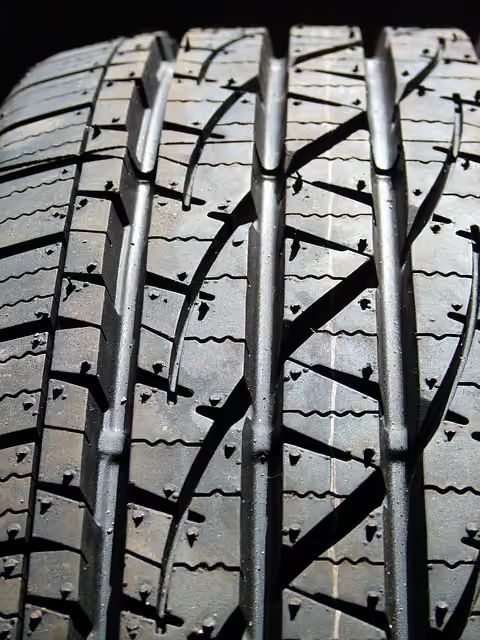
Kumho Tire Co., Inc. has announced a recall of its Solus TA11 tires in size 225/60R16 due to a tread separation defect. According to the recall notice, the tread on these tires may separate during use, creating a significant risk of losing vehicle control and causing a crash. Tread separation on a moving vehicle is one of the most dangerous tire failures a driver can experience, and it is the kind of defect that builds a good lawsuit.
At The Lyon Firm, we are investigating claims on behalf of drivers and passengers who were injured in accidents connected to this defect. If you or someone in your family was hurt, contact our attorneys.
Kumho Tire Co., Inc. is recalling specific units of the Solus TA11 tire in size 225/60R16. The company has acknowledged that the tread on these tires may separate, causing these products to fall out of compliance of new pneumatic radial tires for light vehicles.
KTCI has stated it will respond to the recall by either refunding the original tire purchase price or replacing the affected tires at no cost to the owner. Owner notification letters are expected to be mailed beginning May 3, 2026.
You can verify whether your tires are included in this recall and review the official NHTSA recall record at https://www.nhtsa.gov/vehicle/recalls. If you have not received a notification letter and believe you may have the affected tire size, do not wait for the letter to arrive. Check the database now.
The tread on a tire is bonded to an internal carcass through a manufacturing process that produces a unified and stable product. When that bond is defective, heat and stress from normal driving can cause the tread to peel away from the body of the tire.
When this happens at low speeds, a driver may be able to maintain some control, but when it happens at highway speeds, the outcome is often violent and sudden. The vehicle can pull sharply to one side and the structural collapse of the tire can cause the rim to contact the pavement. On SUVs and heavier passenger vehicles, the type of vehicle most commonly fitted with a 225/60R16 tire, the combination of height and weight dramatically increases the risk of a full rollover.
Strict liability is the foundation of most product defect cases and under this doctrine, a manufacturer can be held responsible for injuries caused by a defective product without the injured party needing to prove that the company was careless. The existence of the defect and its role in causing the injury are what matter. The Kumho recall notice itself is telling because it is an official acknowledgment that these tires may not meet federal safety standards.
Negligence claims examine what Kumho knew during the design and manufacturing process. Internal quality control data, consumer complaint records, communications with regulators, and engineering assessments can all become evidence in these cases. The NHTSA's enforcement division tracks defect investigations and manufacturer compliance history.
Victims of defective tire accidents may be entitled to recover a broad range of compensation. Economic damages cover the concrete financial losses: emergency medical treatment, hospitalization, surgery, physical therapy, future medical care, lost income during recovery, and reduced earning capacity if the injuries are permanent. In wrongful death cases, recoverable damages may include funeral expenses, loss of financial support, and loss of companionship.
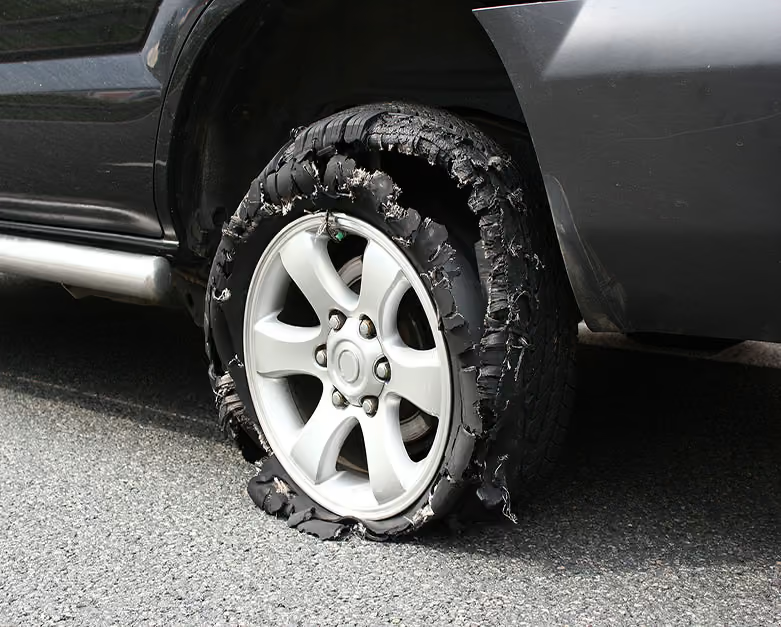
If you were in an accident that may be connected to a Kumho Solus TA11 tire, the actions you take in the coming days matter enormously.
Preserve the tire and all other physical evidence. Seek out counsel and prepare your medical records.
Product liability claims are governed by statutes of limitations that vary by state, typically ranging from two to four years from the date of the injury. Some states apply a discovery rule that may adjust this window depending on when the defect was known or reasonably discoverable.
The Lyon Firm represents people who have been seriously harmed by defective products, and we understand the weight of what our clients are carrying when they come to us. We take cases on a contingency fee basis, which means there are no upfront legal fees and you pay nothing unless we recover compensation on your behalf.
Contact us if you were injured in an accident involving a Kumho Solus TA11 tire or another auto defect.
The Lyon Firm is a Cincinnati, Ohio-based law firm, representing individuals nationwide in class action, product liability, and toxic exposure litigation.

Taking the first step doesn’t have to be complicated. In just a few minutes, you can share the basics of your case, and our team will guide you from there: