



.avif)


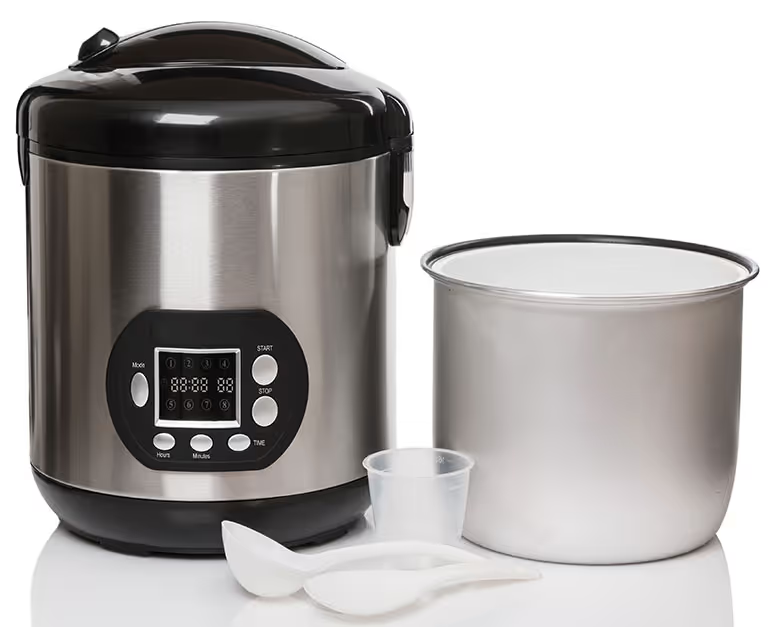
Slow cookers, commonly known by the brand name Crock-Pot, have been implicated in sudden lid explosions and electrical malfunctions, revealing serious safety vulnerabilities in these trusted kitchen devices.
The Hidden Dangers of Slow Cooker Design
Unlike traditional cookware requiring constant supervision, slow cookers operate for six to ten hours without monitoring. This extended unsupervised operation amplifies risks when safety mechanisms fail. Pressure buildup from steam accumulation can transform ceramic inserts into projectile weapons, showering users with boiling liquids and scalding food particles.
Recent investigations have uncovered troubling patterns in slow cooker incidents. Glass lids subjected to thermal stress may shatter without warning, sending razor-sharp fragments mixed with superheated contents toward anyone nearby. Temperature control failures cause internal temperatures to spike far beyond intended levels, creating explosive pressure conditions never anticipated in product design specifications.
The Food and Drug Administration regulates food safety standards but doesn’t directly oversee small appliance manufacturing, leaving gaps in oversight that some manufacturers exploit through inadequate testing protocols. When companies rush products to market without rigorous safety validation, consumers become unwitting test subjects for potentially lethal design flaws.
Electrical component failures present additional hazards. Faulty wiring can cause short circuits that ignite internal insulation materials or overheat exterior surfaces to temperatures causing contact burns.
Defective heating elements may create hot spots that crack ceramic vessels, spilling scalding liquids across countertops and floors. These electrical malfunctions frequently occur without advance warning signs, giving users no opportunity to prevent injury.
Catastrophic Injuries from Defective Slow Cookers
Thermal injuries from slow cooker accidents span the severity spectrum. Scalding liquid burns affect deeper tissue layers than dry heat injuries at equivalent temperatures. Water and food-based liquids retain heat longer than air, continuing to damage skin even after initial contact ends. Victims instinctively attempt to wipe away hot substances, inadvertently spreading burns across larger body surface areas.
Facial burns represent particularly devastating injuries from slow cooker explosions. Users leaning over units to check food progress position their faces directly in the blast zone when lids fail. Third-degree burns across facial features require extensive reconstructive surgery, often involving multiple procedures over several years. Survivors may lose vision if superheated liquid contacts eyes, resulting in permanent blindness that fundamentally alters life trajectories.
Hand and arm injuries occur when users reach toward malfunctioning devices attempting to prevent further damage. The instinct to grab falling lids or tilting cookers places hands directly into harm’s way. Burns across palms and fingers impair fine motor control essential for countless daily activities and professional tasks. Severe hand burns may necessitate amputation when tissue death extends beyond salvageable boundaries.
According to the American College of Emergency Physicians, kitchen-related burn injuries send thousands of patients to emergency departments annually, with thermal scalds from cooking appliances representing a significant portion of serious cases requiring specialized treatment.
Children suffer disproportionately from slow cooker accidents due to their height and natural curiosity. Countertop placement positions these devices at children’s eye level, making them attractive targets for exploration. Small hands pulling on electrical cords or reaching toward interesting smells lack the reflexes to avoid spilling boiling contents.
Pediatric burns carry heightened severity because children’s thinner skin sustains deeper damage at lower temperatures and for shorter exposure durations than adult tissue.
Joe Lyon is an experienced consumer product liability lawyer reviewing lawsuits related to Faulty Pressure Cookers and burn injury accidents.
Legal Foundations for Manufacturer Accountability
Product liability law provides multiple pathways for holding slow cooker manufacturers responsible for defective designs causing injuries. Strict liability doctrine eliminates the need to prove negligence, requiring only demonstration that a product defect existed during normal use and directly caused harm. This legal framework recognizes that manufacturers possess superior knowledge about their products and should bear responsibility when those products injure consumers.
Design defect claims challenge fundamental product conception rather than manufacturing errors affecting individual units. Arguments center on whether alternative safer designs were technologically and economically feasible at the time of manufacture. Expert testimony from industrial designers and mechanical engineers establishes that modifications like improved pressure relief valves, reinforced lid attachments, or enhanced temperature monitoring systems could have prevented injuries without substantially increasing production costs.
Manufacturing defects involve deviations from intended specifications during production processes. Quality control failures may allow substandard components to reach consumers—thermostats calibrated incorrectly, lids manufactured from inadequate materials, or heating elements lacking proper insulation.
These defects affect specific units rather than entire product lines but create identical liability exposure for manufacturers who failed to detect problems before distribution.
Crock Pot Burn Injury Lawsuits
Crock pot and pressure cooker manufacturers have a duty to properly test their products before they are released to the public. If defective crock pots and resulting pressure cooker accidents cause burn injuries, consumers and plaintiffs may consider legal action.
Burn injury settlements in kitchen appliance accidents can compensate injured plaintiffs and force negligent and unscrupulous companies to properly warn consumers of their product risks in the future.
Compensation for Burn Injuries
Economic damages in slow cooker burn cases encompass the full spectrum of financial consequences flowing from injuries. Immediate medical expenses include emergency transport, trauma center admission, surgical debridement, skin grafting procedures, and intensive care monitoring. Severe burns require treatment at specialized facilities equipped with advanced wound care technologies and staffed by burn-trained personnel.
Long-term medical costs often exceed initial treatment expenses. Scar revision surgeries, contracture releases, and reconstructive procedures continue for years after initial healing. Physical therapy addresses range-of-motion limitations from scar tissue formation. Occupational therapy helps patients relearn daily living skills compromised by permanent impairments. Psychological counseling treats post-traumatic stress disorder, depression, and anxiety disorders common among burn survivors.
Lost earning capacity calculations consider both immediate work absences and permanent disability impacts. Severe burns may prevent returning to previous occupations requiring manual dexterity, physical stamina, or public interaction. Vocational experts assess transferable skills and project reduced lifetime earnings accounting for career limitations imposed by permanent injuries.
Experienced. Compassionate. Consumer Advocates
The Lyon Firm is a Cincinnati, Ohio-based law firm, representing individuals nationwide in class action, product liability, and toxic exposure litigation.

.avif)
Why Choose The Lyon Firm for Your Burn Injury Case
Our attorneys have successfully represented numerous clients injured by defective consumer products, securing substantial settlements and verdicts that fully compensate victims while holding negligent manufacturers accountable.
We maintain relationships with leading experts across disciplines essential for building compelling slow cooker injury cases. Our mechanical engineering consultants possess decades of experience analyzing appliance failures and designing safer alternatives. Our medical network includes internationally recognized burn specialists whose testimony commands respect in settlement negotiations and courtroom proceedings.
The Lyon Firm offers free consultations to evaluate your case and explain available legal options without obligation. Contact us today to protect your rights and begin pursuing the justice and compensation you deserve.
Burn Hazards Lawsuits
Request a Free Consultation
Taking the first step doesn’t have to be complicated. In just a few minutes, you can share the basics of your case, and our team will guide you from there:
- It begins with a few simple questions about your situation.
- From there, a member of our legal team reviews your case.
- Together, we’ll chart the path forward, helping you take the next step toward resolution.
