

Spermatex Hernia Mesh Injury
Ohio Medical Device Lawyer investigates defective mesh products for injured plaintiffs nationwide


.avif)


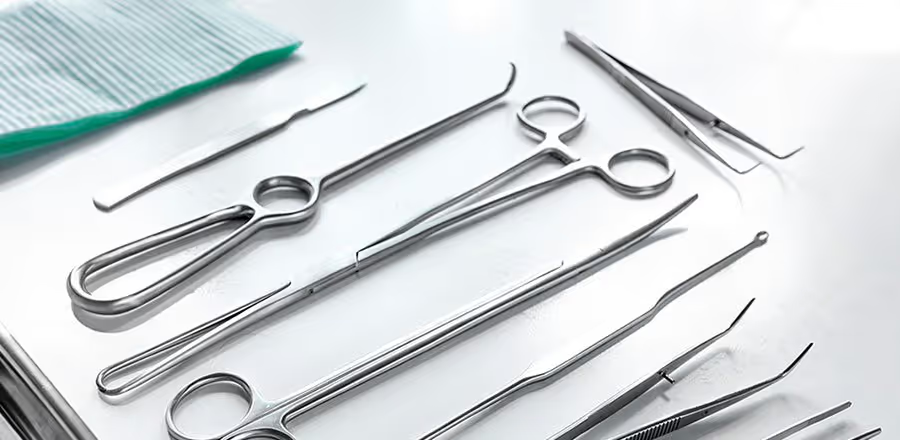
Spermatex Hernia Mesh Lawsuits
Thank you for considering The Lyon Firm. At this time, we are not accepting plaintiffs related to this specific consumer issue. However, if you would like to be contacted in the future, please complete the contact form. By completing the form you will be contacted if the Firm begins accepting new cases on this matter, and you will also be included in firm news alerts related to important consumer safety and privacy issues to help keep you informed about related issues.
Bard is one of the largest manufacturers of surgical hernia mesh medical device implants. The company produces several models of hernia mesh, including Spermatex, 3D Max Mesh, Composix Mesh, PerFix Plug, Sepramesh, and the Ventralex Hernia Patch.
Some of the above models have been recalled for various quality issues, and many patients have reported injury from mesh products. The U.S. Food and Drug Administration (FDA) fast tracked most of the Bard hernia mesh devices in a 510k pre-market notification process, which doesn’t require clinical trials, though could present more dangers to consumers.
Patients and consumers have complained about Bard mesh complications which have in turn led to hernia mesh lawsuits.
Joe Lyon is a highly-rated Cincinnati, Ohio medical device and product liability attorney representing plaintiffs nationwide in a wide variety of defective medical device claims following Spermatex hernia mesh injury.
Spermatex Mesh Injury
A study published in 2017 reports that synthetic mesh used to repair some hernias may be more likely to lead to failure than other mesh products. Synthetic hernia mesh devices, like those made by Bard and others like Gore, Ethicon and Aspide are commonly made of polypropylene. Injuries caused by Spermatex and other mesh products have included the following:
- Infection
- Fistula
- Granuloma
- Chronic pain
- Revision Surgery
- Seroma
- Abscesses
- Nerve damage
- Allergic Reactions
- Adhesion
- Bowel perforation
Spermatex Hernia Mesh Lawsuits
In most cases hernia repair and mesh products are safe and help patients recover. But when defective products are used, it may lead to serious health issues and lawsuits are likely to follow. Recalls in the medical device industry are hardly rare with hundreds of thousands of devices recalled each year.
Device makers and mesh producers like Bard, Covidien, Ethicon, Gore, Aspide and Atrium have been targets in lawsuits due to the serious health risks associated with hernia mesh products. Recipients of defective hernia mesh products have had to undergo revision surgery due to complications, infection and injury. The FDA has warned consumers and patients after complaints about various hernia mesh devices
Plaintiffs have argued that a defective design in some mesh prevents proper fluid drainage, leading to the development of bacteria and infection. This can then cause nerve damage, mesh migration, bowel perforation, adhesion and other injuries.
Experienced. Compassionate. Consumer Advocates
The Lyon Firm is a Cincinnati, Ohio-based law firm, representing individuals nationwide in class action, product liability, and toxic exposure litigation.

Handling Complex Data Privacy & Cyber Security Cases
Request A Free Consultation Now

.avif)
Why are these cases important?
Defective medical device litigation helps to improve patient safety and holds medical device companies accountable when defective products injure plaintiffs and clients.
Questions about Defective Medical Device Litigation

Attorneys claim several hernia mesh devices were not properly tested before they were marketed and distributed as safe medical instruments.
The companies currently face thousands of pending hernia mesh injury lawsuits. If you have had surgery to treat a hernia using a device and you experience any signs or symptoms of recurrence of the hernia, please consult with a medical and legal expert. The Lyon Firm has experience litigating cases against medical device manufacturers.
Attorneys contend that some hernia mesh devices are not properly tested before they are distributed to the public as safe products. Device companies like Gore, Aspide, Ethicon, Bard, Covidien and Atrium have settled hundreds of lawsuits and currently face countless more injury claims.
If you are unsure about the mesh manufacturer and product used in your surgery and have questions about your hernia repair, contact your Ohio surgeon to obtain medical records. Contact a Cincinnati hernia mesh lawyer to discuss potential hernia mesh injury lawsuits and settlement.
- Gore DualMesh
- Aspide Surgimesh
- Ethicon
- Physiomesh
- Proceed
- Prolene
- Covidien
- Parietex
- Parietene
- Permacol
- Surgipro
- Atrium
- C-Qur
- ProLoop
- Bard/ Davol
- Visilex
- Composix
- Marlex
- Ventralight
- Spermatex
- 3D Max
- Sepramesh
- PerFix Plug
- Ventralex
- Kugel
Regardless of treatment, hernias have a high rate of recurrence, and surgeons often use surgical mesh to strengthen the hernia repair recurrence rate. The use of meshes is thought to reduce dramatically the incidence of hernia recurrence.
However, up to 50 percent of hernias may reoccur with an implanted device. This is commonly due to inadequate fixation during the original operation or shrinkage of the mesh. Light-weight meshes may have a higher risk due to their increased flexibility and movement.
Two-thirds of recurrences occur after three years. It is not clear if the type of mesh used has any effect on durability. All mesh products appear equally limited in effectiveness.
Hernia mesh adhesions are scar tissue resulting from hernia mesh operations and the healing process. Following hernia repair surgeries, adhesions may form in the abdomen or peritoneum. The mesh repairs usually heal quickly but when adhesions form, organs connected by the scar tissue may not function properly.
The popularity of hernia mesh operations has led to increasing concern regarding mesh-related adhesions. Adhesions result from the fibrin exudates that follow any kind of trauma.
These exudates form temporary adhesions until the fibrinolytic system absorbs the fibrin. Absorption is delayed in the presence of inflammation or foreign bodies such as mesh devices. In these situations, they develop into tissue adhesions.
All mesh implants produce adhesions, though their extent varies. Abdominal adhesions are a common complication, occurring in a majority of people who undergo abdominal or pelvic surgery. Adhesions cause the majority of small bowel obstructions in adults, and are believed to contribute to the development of chronic pelvic pain.
X-rays do not reveal potential mesh issues or diagnose the presence of adhesions. An additional surgery is usually needed to diagnose or treat hernia mesh adhesions. However, revision surgeries carry risks and can lead to further health problems, including infection, bowel blockage, bowel perforation and chronic pain.
Adhesions may begin forming long before they are noticed by patients or doctors. Depending on the location, adhesions from defective hernia mesh devices may cause pain and affect the bowel in different ways. Even removing a defective hernia mesh product may not completely solve all health issues.
Symptoms of adhesion and hernia mesh injury may include:
- Severe abdominal pain or cramping
• Vomiting
• Bloating
• Loud bowel sounds
• Swelling of the abdomen
• Constipation
Ohio Definition of Defective
Under Ohio law, a medical device is defective if it is unreasonably dangerous for its intended use. A legal cause of action can be based on several types of medical device product defects. Most jurisdictions a version of one or more of these cause of actions.
(1) Manufacturing/ Construction Defect of the medical device:
(2) Defective design and/or formulation of the medical device:
(3) Failure to warn or inadequate warning or instruction associated with the medical device:
(4) Misrepresentation on the Safety or Efficacy of the Medical Device:
(5) Fraud Related to the Safety or Efficacy of the Medical Device
(6) Negligent Distribution or Testing of the Medical Device
Our Firm will help you find the answers. The Firm has the experience, resources and dedication to take on difficult and emotional cases and help our clients obtain the justice for the wrong they have suffered.
Experience: Joe Lyon is an experienced Cincinnati Defective Device Lawyer. The Lyon Firm has over 20 years of experience and success representing individuals and plaintiffs in all fifty states, and in a variety of complex civil litigation matters. Defective device lawsuits can be complex and require industry experts to determine the root cause of an accident or injury. Mr. Lyon has worked with experts nationwide to assist individuals understand why an injury occurred and what can be done to improve their lives in the future. Some cases may go to a jury trial, though many others can be settled out of court.
Resources/Dedication: Mr. Lyon has worked with experts in the fields of accident reconstruction, biomechanics, epidemiology, metallurgy, pharmacology, toxicology, human factors, workplace safety, life care planning, economics, and virtually every medical discipline in successfully representing Plaintiffs across numerous areas of law. The Lyon Firm is dedicated to building the strongest cases possible for clients and their critical interests.
Results: Mr. Lyon has obtained numerous seven and six figure results in medical device cases. He has litigated cases successfully against some of the largest companies in the world including: Johnson & Johnson, Biomet, Ethicon, Stryker, Coloplast, Smith & Nephew, American Medical Systems, Boston Scientific, Medtronic, Guidant, Bard, & Bayer.
Medical Devices Lawsuits
Request a Free Consultation
Taking the first step doesn’t have to be complicated. In just a few minutes, you can share the basics of your case, and our team will guide you from there:
- It begins with a few simple questions about your situation.
- From there, a member of our legal team reviews your case.
- Together, we’ll chart the path forward, helping you take the next step toward resolution.
