

Catheter Infection | Medical Malpractice
Medical Malpractice Lawyer Reviewing Hospital Acquired Infection Claims & Representing Injured Plaintiffs Nationwide


.avif)


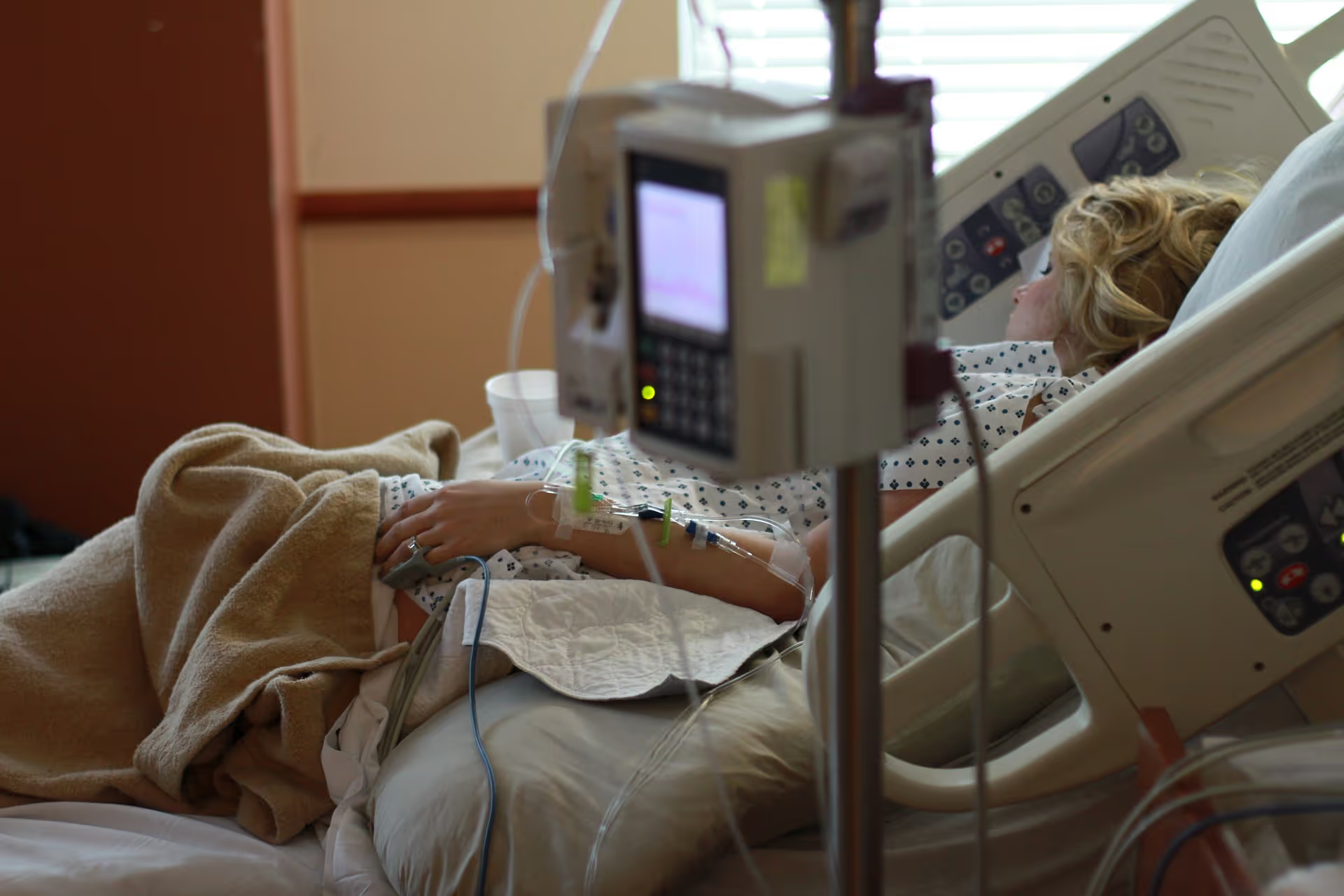
Of all the Urinary Tract Infections (UTIs) acquired in U.S hospitals, about 75 percent are associated with a urinary catheter. Catheter infection is associated with poor care and a failure to properly clean and change medical materials.
Catheters should only be used for appropriate indications and should be removed as soon as possible. Too often, healthcare providers neglect basic hospital infection prevention guidelines, which may result in serious injuries.
Hospital and nursing negligence has been a concerning issue in the recent past, with preventable surgical errors and preventable mistakes hitting all-time highs. When basic protocols are ignored or improper training at hospitals leads to injury, both medical staff and management can be held liable for damages that result from urinary or vascular catheter infection.
Central line-associated bloodstream infections (CLABSIs) result in thousands of injuries and deaths each year and catheter-associated UTIs cost patients and the American healthcare system billions.
Joe Lyon is highly-rated Medical Malpractice Lawyer and Hospital Negligence Attorney reviewing cases of catheter infection for injured plaintiffs nationwide.
Central Line & Vascular Catheter Infection
As opposed the more frequent urinary catheter infections (UTIs), a central line or central venous catheter infection results when central lines are not properly changed or maintained. Central lines are different from IVs because central lines access major veins close to the heart and can remain in place for weeks or months, and can be more likely to cause serious infection.
A central line-associated bloodstream infection (CLABSI) is a serious infection that occurs when bacteria or viruses enter the bloodstream through the central line. Healthcare providers must follow a strict protocol when inserting the line to make sure the line remains sterile. Infection control practices are critical each time the line or dressing is changed.
Types of Vascular Catheter Infection
- Coagulase-negative staphylococci
- Staphylococcus aureus
- Stenotrophomonas
- Pseudomonas
- Enterococci
- Candida
- Staphylococci
Catheter-Associated UTI
A urinary tract infection (UTI) is an infection in the urinary system, which includes the bladder and the kidneys. When bacteria and germs are introduced to the system in a hospital setting, a serious infection can occur. The blunt truth is patients with urinary catheters have a much higher chance of developing a urinary tract infection than people who don’t have a catheter.
Bacteria can travel along a catheter and cause infection in the bladder and kidney. Bacteria may enter the urinary tract when the catheter is being put in or while the catheter remains in the bladder. A urinary catheter is a thin tube placed in the bladder to drain urine, and is commonly used if:
- A patient is not able to urinate on their own
- Physicians want to measure the amount of urine made during a period of time
- A patient is undergoing some type of surgery
- Doctors order tests of the kidneys and bladder
Urinary Tract Infection Symptoms
Typical symptoms of a urinary tract infection include:
- Burning or pain in lower abdomen
- Fever
- Cloudy or Bloody urine
- Burning during urination
- An increase in the frequency of urination after catheter is removed
- Strong urine odor
- Urine leakage around catheter
- Pain or discomfort in lower back
- Unexplained fatigue
- Vomiting
Catheter Infection Prevention
Prevention and prompt treatment of a CAUTI are essential because an untreated UTI can lead to a more serious kidney infection, and elder patients with catheters may already have conditions that compromise immune systems, making them more vulnerable to future infections.
Healthcare providers and nurses should follow recommended central line insertion and CLABSI prevention practices to prevent infection, which can include:
- Careful hand hygiene
- Applying skin antiseptic
- Ensure skin prep agent dries before inserting central line
- Use sterile gloves, sterile gown, cap, mask
- Remove central line as soon as it is no longer needed
- Choose the best insertion site to minimize infections
- Prepare the insertion site with alcohol
- Immediately replace dressings that are wet or soiled
- Perform routine dressing changes
Hospital Infection Lawsuits
A catheter-associated urinary tract infection (CAUTI) is one of the more common infections a person can contract in a hospital setting, according to the American Association of Critical-Care Nurses.
It is estimated that between 15 and 25 percent of hospitalized patients receive urinary catheters during their hospital stay, and risk a catheter-associated UTI (CAUTI) by prolonged use of the device.
Healthcare facilities and hospitals have a duty to educate healthcare personnel about indications for central lines, proper procedures for insertion and maintenance, and infection prevention.
Hospitals may be liable if they fail to properly train employees, provide a checklist to clinicians to ensure adherence to safe practice, reeducate personnel at regular intervals about central line insertion, ensure efficient access to supplies for central line insertion and maintenance, and use measures to ensure compliance with recommended practices.
Experienced. Compassionate. Consumer Advocates
The Lyon Firm is a Cincinnati, Ohio-based law firm, representing individuals nationwide in class action, product liability, and toxic exposure litigation.

Handling Complex Data Privacy & Cyber Security Cases
Request A Free Consultation Now

.avif)
Why are these cases important?
When management or individuals fail to provide a sufficient level of care, victims may seek legal recourse and file suit against the negligent parties. Medical malpractice lawsuits improve the quality of healthcare by holding physicians and hospitals responsible when they fall below a professional standard of care.
Questions about Medical Malpractice Cases

Catheters inserted into the bladder may promote nosocomial urinary tract infection (UTI) by allowing direct inoculation of microrganisms into the bladder during their insertion or during post-placement manipulation of the catheter or its drainage apparatus.
Hospitals, medical staff, nurses and doctors are responsible for providing proper patient care. When management or individuals fail to provide a sufficient level of care, victims may seek legal recourse and file suit against the negligent parties.
Without medical malpractice laws, medical mistakes would go without consequence, patients would be uncompensated for preventable injuries, and medical providers would have less incentive to improve the medical system to prevent future injuries.
Despite the reports discussed above, frivolous claims brought by medical malpractice attorneys and runaway juries have been blamed as causing a medical crisis. There is no medical malpractice crisis, it is simply propaganda created by the U.S. Chamber of Commerce and large insurance companies to pollute the American jury pool and change the law in a manner that is favorable to them and adverse to the average American. And sadly, it has worked.
Currently, 90 percent of juries side with the physician over the patient at trial. As a result, insurance companies are bolder than ever and refuse at times to settle even the most meritorious of cases knowing that the chances of the patient finding a fair and impartial jury is extremely low, especially in more conservative parties of the country such as Hamilton County, Ohio.
The Deficit Reduction Act of 2005 required that conditions be identified that (a) are costly and occur at high rates, (b) are assigned as cases to the Diagnosis-Related Group, and (c) could have ultimately been prevented with appropriate care. These hospital-acquired conditions occur as negligence on the part of hospital staff and often result in a multitude of medical malpractice lawsuits.
Conditions that meet the three requirements for identification:
Many hospitals and physicians are taking proactive approaches to resolve viable medical malpractice claims by approaching patients who do not have legal counsel. The “family meeting” presentation will include deterring patients from seeking legal counsel. This is a very concerning development in the course of medical liability and risk management.
We strongly advise patients not to engage in “family meeting” settlement negotiations without an experienced Cincinnati medical malpractice lawyer present. Hospitals and physicians have lawyers who are specialized in medical malpractice claims advising them on how to approach the case, and it is only fair that the patient is afforded the same benefit of qualified counsel.
The “family meeting” practice of settling hospital negligence cases without an attorney does not benefit the patient in most cases, but almost always benefits the negligent hospital.
Do not be deterred by a hospital representative implying that the case will be compromised if you seek counsel. While attorney fees will need to be paid, those costs should not be a deterrent. The Lyon Firm adopts a lower contingency fee structure and offers hourly rates for cases that can be resolved without litigation.
If the parties wish to resolve the matter, having qualified counsel on both sides is beneficial to the process. The goal should be a settlement where both parties are satisfied, not a case where the hospital pays substantially less than the fair value of the claim.
There are numerous issues that need to be considered before settling a medical malpractice case, and you should know what the fair value of the claim is before accepting a settlement.
The hospital knows the fair value having been involved in other cases. You as the patient should work with counsel who has successfully worked on other cases and can advise on the appropriate risk of future litigation and settlement value.
If a hospital is approaching you or a family member about a settlement without a Cincinnati Medical Malpractice lawyer, please call (513) 381-2333 for a free consultation.
Our Firm will help you find the answers. The Firm has the experience, resources and dedication to take on difficult and emotional cases and help our clients obtain the justice for the wrong they have suffered.
Experience: Joe Lyon is an experienced Cincinnati Medical Malpractice Lawyer. The Lyon Firm has over 20 years of experience and success representing individuals and plaintiffs in all fifty states, and in a variety of complex civil litigation matters. Medical malpractice lawsuits can be complex and require industry experts to determine the root cause of an accident or injury. Mr. Lyon has worked with experts nationwide to assist individuals understand why an injury occurred and what can be done to improve their lives in the future. Some cases may go to a jury trial, though many others can be settled out of court.
Medical Malpractice Lawsuits
Request a Free Consultation
Taking the first step doesn’t have to be complicated. In just a few minutes, you can share the basics of your case, and our team will guide you from there:
- It begins with a few simple questions about your situation.
- From there, a member of our legal team reviews your case.
- Together, we’ll chart the path forward, helping you take the next step toward resolution.
