

Galveston Docks Asbestos Lawsuit
Representing plaintiffs in Galveston, Texas asbestos exposure, mesothelioma, and lung cancer claims.


.avif)


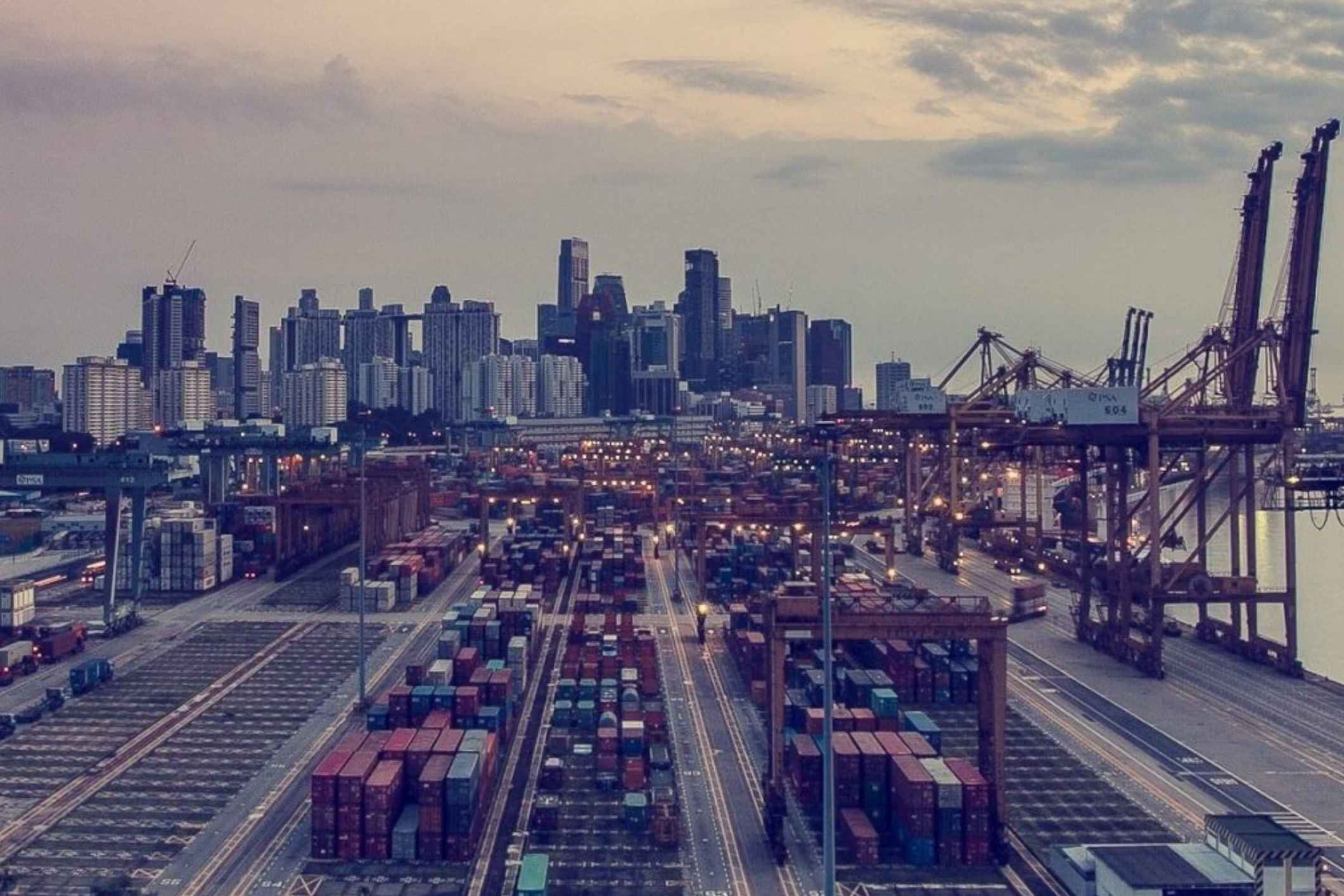
For more than a century, Galveston workers have been among those in the U.S. workforce with an elevated risk of shipyard asbestos exposure. If you or a loved one later developed mesothelioma or another asbestos-related illness, a Galveston docks asbestos lawsuit may provide a path to pursue compensation.
Former Galveston shipyard workers have been diagnosed with mesothelioma, asbestosis, and other asbestos-related illnesses, sometimes 40 years or more after their last day on the job.
Joe Lyon is a highly rated asbestos lawyer representing plaintiffs nationwide in a wide variety of toxic tort and mesothelioma claims.
If you or a loved one worked at a Galveston shipyard or on the docks and later received a diagnosis, call The Lyon Firm at (513) 381-2333 or contact us online for a free, confidential consultation.
"In a desperate life altering crisis, Joe Lyon quietly entered my life. My husband was losing battle with mesothelioma. Joe came respectfully, professionally, kindly and beneficially towards our family. I felt he was Heaven sent. It has been an honor to know and work with Joe."
— Marlene Beal | Client of The Lyon Firm
Galveston Dock Workers Asbestos Exposure
Galveston's waterfront exposed workers to asbestos for most of the twentieth century, on the wharves, inside cargo holds, and across the ship repair yards on Pelican Island.
Where the exposure happened:
Todd Galveston Drydocks, Pelican Island
Todd acquired Galveston Dry Dock & Construction in 1934 and took over Gray's Iron Works in 1943 at the request of the U.S. Maritime Commission. Nearly 100 vessels were built or repaired at the yard before Todd closed it in 1990.
Conversion work beginning in the mid-1960s meant stripping out deteriorated insulation and installing new lagging on boilers, steam lines, and turbines. The Port of Galveston bought the property in 1993, and Gulf Copper operates the site today.
Kane Shipbuilding
Founded in 1892 as Kane Boiler Works, the yard repaired vessels for decades and expanded during World War II to build deck barges and coastal tankers, adding a second yard off 37th Street. Kane closed during the 1970s, before federal asbestos regulation took hold, meaning the company relied on asbestos insulation across its full operating history.
The Port of Galveston Piers
Longshoremen moved raw asbestos ore, bagged fiber, insulated machinery, gaskets, valve packing, and brake components. Port of Galveston asbestos exposure often occurred while loading and unloading cargo, handling damaged bags of asbestos fiber, and working around insulated ship equipment.
Galveston Shipyard Asbestos Exposure
Shipyard work ranks among the most asbestos-intensive occupations of the twentieth century, and mesothelioma incidence tracks that history.
Mesothelioma develops in the lining of the lungs, abdomen, or heart. Asbestos is its only established cause. Fibers released during insulation work embed in the pleura and stay there permanently, and disease follows 20 to 50 years later.
Why shipyard exposure was so concentrated:
- Engine rooms, boiler rooms, bilges, and ballast tanks had almost no ventilation
- A pipefitter cutting asbestos block insulation worked inside a cloud of dust with nowhere to disperse
- Everyone in the compartment breathed the same air, including welders, electricians, machinists, painters, and cleanup crews with no asbestos duties of their own
- Repair and conversion work disturbed insulation that had been degrading in place for decades
- Fibers rode home on coveralls, into cars and through front doors
That last route reached families. Spouses who shook out and laundered work clothes have been diagnosed with mesothelioma without ever setting foot in a yard.
Which Galveston Trades Faced the Highest Exposure?
Almost anybody in the shipbuilding industry in the twentieth century could be at risk. Tons of asbestos-insulated material in enclosed shipboard spaces created a hazard workers could not see.
Asbestos was used almost everywhere, including heavily in boiler rooms, engine rooms, and sleeping quarters. The material served as insulation, pipe covering, and an additive in the paint that covered ships. It is estimated that in some years about 1 in 500 shipyard workers were handling and installing asbestos insulation on a daily basis.
Exposure at Galveston shipyards was not limited to time spent aboard ships. Workers loading and unloading materials at ports and dry docks could have been heavily exposed. The boxes, crates, pallets, and packing materials used to move products sometimes contained asbestos fibers.
Studies Confirm Shipyard Workers Have Higher Asbestos Health Problems
Epidemiological research has documented elevated cancer and respiratory disease rates among shipyard populations since the 1970s.
- New England Journal of Medicine, 1978. A case-control study of the high lung cancer rate among men in coastal Georgia found increased risk tied to World War II shipyard employment, with a smoking-adjusted relative risk of 1.6 and a compounding relationship between shipyard work and cigarette use.
- County-level mortality analysis, 1950 to 1969. More than three-fourths of U.S. counties with wartime shipyards showed elevated lung and laryngeal cancer mortality, with the excess most pronounced in the South, the region that includes Galveston County.
- Cancer Research, 1980. An investigation into a four-fold rise in mesothelioma incidence among men in coastal Tidewater, Virginia, between 1972 and 1978 found that three-fourths of the 61 identified cases had worked in shipbuilding, nearly all beginning before 1950.
- Ulster Medical Society. Reported an asbestosis mortality rate among shipyard workers many times higher than other reviewed occupations.
- Occupational & Environmental Medicine, 2007. A study covering 4,700 men and women who built and maintained ships recorded excess deaths from mesothelioma and respiratory cancer attributed to asbestos fibers in the yards.
Galveston County sits inside the population these studies describe.
Why Did Shipyards Use Asbestos?
Asbestos was inexpensive, abundant, fireproof, and able to withstand the heat, pressure, and vibration of a ship's engineering spaces.
Fire at sea kills, and naval architects specified asbestos for that reason above all others. The material offered:
- Resistance to flame in engine rooms and boiler rooms
- Insulation for steam systems running at high pressure and temperature
- Resistance to saltwater corrosion
- Versatility, since it could be sprayed, woven, packed, or troweled into any shape a compartment required
- Low cost and ready supply through the entire wartime buildup
The U.S. Navy authorized more than 300 asbestos-containing products for shipbuilding through the 1970s.
Asbestos dust built up in ship holds, exposing everyone who entered them. When the fibers are disturbed, they become more dangerous. Galveston and Kane Shipbuilding workers may have unknowingly inhaled fibers that then embedded in the tissue surrounding the lungs.
Industry documents from the 1930s and 1940s show that manufacturers understood asbestosis and cancer risk among exposed workers, and that record has anchored liability findings in asbestos litigation for decades. Yards kept installing the material into the 1980s. Workers received no warnings, no respirators, and no monitoring.
Removal has been under way on many vessels for years. The material remains aboard others, and the problem persists.
Navy Shipyard Asbestos
At the height of World War II, the estimated number of naval shipyard workers could have been as high as 1.7 million. Because asbestos was standard in the shipbuilding industry at the time, military veterans, particularly Navy veterans, have been especially hard hit by exposure-related diseases.
Many veterans are eligible for disability compensation handled by the U.S. Department of Veterans Affairs. Veterans must prove that the condition resulted from asbestos exposure during active service, which requires service records and medical documentation. A second route runs alongside the VA claim.
Military veterans and former shipyard workers in Texas can file lawsuits against negligent companies, including the manufacturers of asbestos-containing products. An estimated 30 percent of all mesothelioma lawsuits are filed by military veterans.
The Dangers of Shipyard Asbestos
The dangers of asbestos inhalation have been known for several decades, though the full extent of the damage to the lives and families of former workers has yet to be seen. Many former Galveston workers are treated for mesothelioma, asbestosis, lung cancer, and other respiratory diseases as a result of past working conditions.
Because of the long latency period of diseases caused by asbestos products, former shipyard workers in Texas are still being diagnosed with illnesses caused by exposure many years ago. Mesothelioma and asbestosis can take up to 50 years after exposure to produce any physical effects.
Shipyard Workers Asbestos Exposure
Depending on the Texas shipyard, workers performed tasks on any number and variety of vessels. Researchers suggest the worst exposure occurred in engine rooms, mess halls, and on painted decks. Further exposure occurred in shipways and dry docks. The following jobs also put shipyard workers in direct contact with asbestos:
- Shipfitters
- Machinists
- Pipefitters and plumbers
- Electricians
- Boilermakers
- Painters
Tasks known to expose shipyard workers to high levels of asbestos:
- Painting
- Welding
- Insulating
- Regular maintenance, repairs, overhauls, and decommissions
- Off-loading cargo
- Material delivery
- Unpacking pallets and crates
- Boiler and pipe work
- On-board machining
Shipyard Workers: Welding and Painting
Combined with asbestos exposure, welding and painting may be the most hazardous jobs of all. During welding operations, hazardous vapors are produced from the heating of base metals.
Other fumes are released from metal coatings, finishes, and welding rods. Dangerous exposures increase greatly if welding is performed in a confined space. Metals welded in shipbuilding operations that may become airborne and cause acute and chronic lung diseases include:
- Cadmium
- Iron oxides
- Zinc oxides, released from zinc-enriched paints and galvanized steel
- Chromium, released when welding stainless steel or around certain paints
- Manganese, present in welding rods
- Beryllium
Painting inside a ship's hull is often performed in confined spaces and tanks, concentrating toxic fumes. The following materials may have been used by shipyard painters:
- Lead-based paints
- Anti-fouling paint
- Anti-rust paint
- Zinc chloride primer paints
- Copper-bottom paints
- Solvents
- Pigments
Diseases Related to Asbestos
Asbestos causes a defined group of malignant and non-malignant diseases, nearly all with latency periods measured in decades.
- Mesothelioma. Cancer of the pleural, peritoneal, or pericardial lining. Asbestos is the only established cause, and latency runs 20 to 50 years.
- Lung cancer. Risk compounds substantially for exposed workers with a smoking history.
- Asbestosis. Permanent scarring of lung tissue that produces breathlessness and restrictive readings on pulmonary function testing.
- Pleural plaques and diffuse pleural thickening. Often the first radiographic evidence that exposure occurred, sometimes found incidentally on imaging ordered for another reason.
- Laryngeal and ovarian cancer. Both recognized by the International Agency for Research on Cancer as causally linked to asbestos.
- Other cancers under continuing study, including esophageal, colorectal, and pharyngeal.
Early physical effects reported by former shipyard and dock workers:
- Breathlessness during routine activity
- A dry cough lasting months
- Chest pain or tightness
- Recurring respiratory infections
- Prolonged tiredness
Any former Galveston shipyard or dock worker with these findings should tell the treating physician about the exposure history, since that detail changes what a pulmonologist looks for on imaging. Thoracic and mesothelioma care in the region is available through UTMB in Galveston and the cancer centers in the Houston medical center.
Call The Lyon Firm at (513) 381-2333 to discuss a Galveston asbestos claim. Consultations are free and confidential.
Who Is Eligible to File a Galveston Docks Asbestos Lawsuit?
Eligibility rests on three elements: a diagnosed asbestos-related disease, a documented history of exposure, and a filing deadline that has not run.
People with potential claims include:
- Former employees of Todd Galveston Drydocks, Kane Shipbuilding, Gulf Marine Ways, Kelso Marine, Galveston Shipbuilding Company, and West Gulf Marine Works
- Trades who worked the yards, including pipefitters, insulators, boilermakers, welders, machinists, electricians, riggers, sandblasters, painters, and general laborers
- Longshoremen and stevedores who handled cargo at the Port of Galveston piers
- Navy veterans and merchant mariners who served aboard vessels repaired or converted at Galveston
- Contractors and vendors who performed work inside the yards without being employed by them
- Household members exposed to fibers brought home on work clothing
- Surviving spouses, children, parents, and estate representatives, who may bring wrongful death and survival claims under Texas law
Employment records, union records, Social Security earnings statements, and coworker affidavits establish the work history. The firm handles that reconstruction. A diagnosis and a general recollection of where the work occurred are enough to begin.
"By the 1940s, companies knew asbestos was deadly. They had the research. They ignored the evidence. And they put workers in danger anyway. We've made it our mission to hold them responsible."
— Joseph Lyon, Attorney | The Lyon Firm
What Texas Laws Apply to a Galveston Asbestos Lawsuit?
Texas requires a physician's report meeting statutory medical criteria before an asbestos claim proceeds, and the deadline to file runs two years from diagnosis.
Chapter 90 of the Texas Civil Practice and Remedies Code governs asbestos claims. A claimant must serve every defendant with:
- A report from a physician board certified in pulmonary medicine, occupational medicine, internal medicine, oncology, or pathology
- A statement of the diagnosis, confirmed to a reasonable degree of medical probability as caused in part by asbestos exposure
- For non-malignant claims, chest imaging read by a certified B-reader under the ILO classification system
- For non-malignant claims, pulmonary function testing and verification that at least 10 years elapsed between first exposure and diagnosis
Chapter 90 also directs the MDL pretrial court to expedite cases brought by living claimants diagnosed with malignant mesothelioma or other malignant asbestos-related cancer. Texas asbestos cases are transferred to a designated MDL pretrial court for coordinated proceedings before returning for trial.
Section 16.003 sets a two-year limitations period for personal injury claims. The discovery rule applies to latent occupational disease, so the period generally begins at diagnosis instead of at the date of exposure decades earlier.
Are Galveston Dock Workers Covered by the Longshore Act?
Yes. The Longshore and Harbor Workers' Compensation Act covers longshoremen, shipbuilders, ship repairers, and harbor construction workers injured on or adjacent to navigable waters, which includes the Port of Galveston piers and the Pelican Island yards.
What the Act does and does not cover:
- Pays medical costs and partial wage replacement without proof of fault
- Bars most direct suits against the employer
- Leaves manufacturers and suppliers of asbestos-containing products fully exposed to suit
- Permits a negligence claim against a vessel owner under Section 905(b)
- Operates separately from asbestos trust funds, which accept claims on their own track
Seamen and vessel crew members fall outside the LHWCA and proceed under the Jones Act. Determining which framework applies depends on job duties and work location, and the answer affects which defendants can be named.
Experienced. Compassionate. Consumer Advocates
The Lyon Firm is a Cincinnati, Ohio-based law firm, representing individuals nationwide in class action, product liability, and toxic exposure litigation.

.avif)
Why Choose The Lyon Firm for a Galveston Asbestos Case?
Asbestos claims run against defendants that changed hands decades ago, rely on employment records from the 1950s and 1960s, and require expert testimony to trace fibers back to a specific product and a specific yard. The Lyon Firm has the experience and resources to build them.
- Experience. Joe Lyon has 19 years representing individuals and plaintiffs in all fifty states in complex civil litigation. Asbestos cases require industry experts to identify the source of exposure, and Mr. Lyon has worked with experts nationwide to establish where and how contact occurred. Some cases proceed to a jury trial. Many others resolve out of court.
- Resources. The firm handles the record reconstruction these claims depend on, including employment and union histories, product identification, trust fund filings, and coordination with treating physicians and medical experts.
- Results. Mr. Lyon has obtained numerous seven- and six-figure asbestos settlements for workers and their families.
Studies show that plaintiffs represented by attorneys recover substantially more than those who pursue claims alone. A Martindale-Nolo survey found that hiring a lawyer can nearly triple compensation, even after fees.
If you or a loved one worked at a Galveston shipyard or on the docks and later received a mesothelioma, lung cancer, or asbestosis diagnosis, call The Lyon Firm at (513) 381-2333 or contact our asbestos attorneys online.
Consultations are free and confidential, and the firm takes these cases on a contingency basis, meaning no fee unless there is a recovery.
Questions about Galveston Docks Asbestos Exposure

Asbestos is a naturally occurring mineral that was first utilized in the early 1900s for its insulating abilities, fireproof properties, and versatility. It has been estimated that over 30 million tons of asbestos was used in the American economy in industrial yards, homes, schools, shipyards, and other workplaces.
The natural breakdown of asbestos products and subsequent sawing or cutting of the asbestos creates dust and fibers that are inhaled and can lead to mesothelioma and other severe forms of lung cancer.
When asbestos breaks down over time or with use, the fibers can become airborne, presenting a risk of inhaling or ingesting the toxin. Asbestos is a cancer-causing agent, and those heavily exposed can develop scarring in the lungs and later develop lung cancer and mesothelioma.
Asbestos was widely used in piping, insulation, electrical components, machine parts, packaging, flooring, ceiling tiles, roofing, and many building materials.
If you were exposed to asbestos at your workplace and have developed cancer or a related illness, you may qualify for compensation. Eligibility depends on your diagnosis, your exposure history, and the filing deadline that applies to your claim.
Asbestos was cheap, durable, fire-resistant, and light, and it was thought to be the ideal insulating material before research showed it to be hazardous to health.
Asbestos cases are complex and require industry experts to trace the source of exposure. Proving that occupational exposure was a cause of lung cancer or mesothelioma is the work of The Lyon Firm, and the firm has experience reaching asbestos settlements on behalf of former workers and their families.
Asbestos Verdicts & Settlements
Estate of Steve Thomas v. AK Steel Corporation, et al.
Summary: PHILADELPHIA COUNTY, Pennsylvania – Co-counsel represented the surviving spouse of a steel mill worker who developed mesothelioma after years of asbestos exposure on the job. The case resulted in a settlement exceeding $2.7 million.
Estate of William P. Bush v. AK Steel Corporation, et al.
Summary: MADISON COUNTY, Illinois – Co-counsel represented the family of a steel mill worker who suffered asbestos exposure that later led to mesothelioma. The case resulted in a settlement exceeding $2.3 million.
Asbestos Lawsuits
Request a Free Consultation
Taking the first step doesn’t have to be complicated. In just a few minutes, you can share the basics of your case, and our team will guide you from there:
- It begins with a few simple questions about your situation.
- From there, a member of our legal team reviews your case.
- Together, we’ll chart the path forward, helping you take the next step toward resolution.
