
Nuflos Complaints: What Consumers Should Know About Automatic Refills
October 7, 2026


If you believe your personal works have been used to train an AI model without your permission, you may have grounds for a copyright infringement claim. The Lyon Firm's AI copyright infringement lawyers are actively investigating cases against major tech companies on behalf of artists and publishers nationwide.
Our legal team offers free, confidential consultations to help you understand your rights and options. Contact an AI copyright infringement attorney at The Lyon Firm today.
Multiple plaintiffs, including bestselling authors and news outlets, have filed class action AI Copyright Infringement claims against OpenAI for copying books and other copyright-protected materials without consent. In the filed complaint, publishers posed questions to ChatGPT relating to certain copyrighted works, and received a response that suggests the AI model was given the material at some point. Other plaintiffs have claimed Nvidia has taken YouTube content and used it for similar purposes.
Plaintiffs from the Daily News, Chicago Tribune Company, LLC, Orlando Sentinel Communications Company, LLC, Sun-Sentinel Company, LLC, San Jose Mercury-News, LLC, DP Media Network, LLC, ORB Publishing, LLC, and Northwest Publications filed a class action AI Copyright Infringement Lawsuit that claimed Microsoft and OpenAI used millions of their articles without permission and without payment.
Plaintiffs claim they have spent billions of dollars to generate these articles, and the AI companies have taken this work with impunity, sometimes republishing articles verbatim, and are offering no compensation.
AI software like ChatGPT is trained with datasets, which include almost everything available on the internet. Unfortunately, a lot of the content available on the internet is protected by copyright law, and republishing it or using it in certain manners could constitute a violation of the Copyright Act.
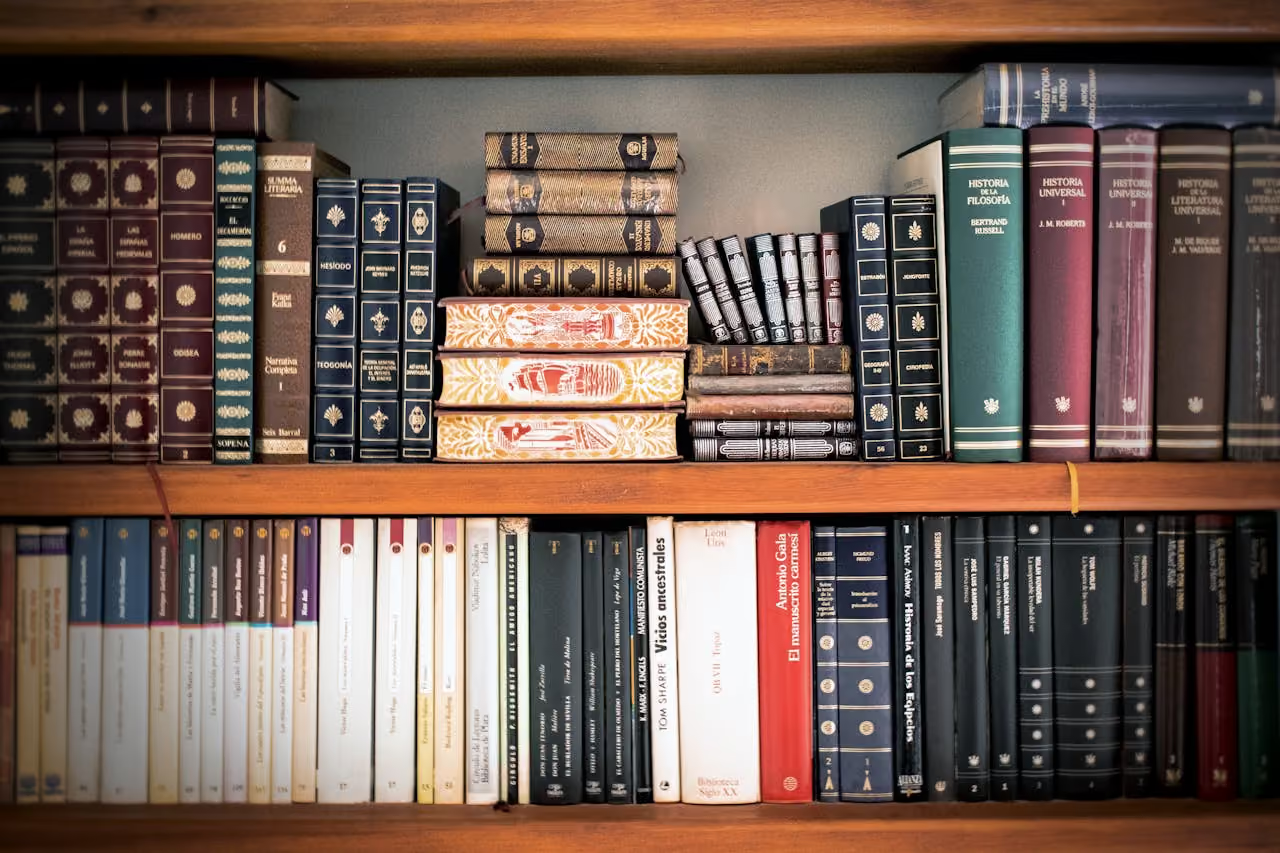
Individual authors have filed separate AI copyright lawsuits after discovering that their copyrighted works of fiction have been copied without permission and fed into AI chatbots (large language models) designed to provide realistic responses to various user prompts and queries. It is believed that tens of thousands of copyrighted books and texts have been fed into these systems. These large language model (LLM) algorithms are now a boon for Big Tech and it is hard to believe they are stopping without a fight.
There is significant support to save certain creative industries, and protect their interests, and at the same time, the tech companies have said they are limited in what they can feed their AI models, and any compromise will risk seeing the systems handicapped forever.
The Lyon Firm is investigating AI Copyright Infringement Lawsuits on behalf of publishers and individual plaintiffs nationwide. To learn more about current AI copyright lawsuits, or to discuss filing your own claim.
AI Intellectual Property Lawyers in these matters say they are presenting straightforward copyright infringement cases based on law that is over a hundred years old. Our legal team sees opportunities for individual artists and publishers to file class action claims in order to recover past and future economic damages.
Authors and music publishers protect their content by applying for copyright, which has been standard practice for many decades. Plaintiffs see no reason why intellectual property rights should be compromised by new AI models, simply because they have the ability to manipulate vast quantities of available data.
Plaintiffs in these cases claim they never authorized OpenAI or other AI systems like Copilot and Bard to make copies of their books, make derivative works, publicly display their work, or distribute copies of their work. All those rights of authorship should belong exclusively to publishers and individual authors under existing copyright law. The plaintiffs in the Open AI copyright infringement class action say the company used their materials without consent, without credit, and without compensation.
The corporate defendants in these cases argue that they require high-quality content. But despite admitting that the companies need copyrighted content to create a reliable and realistic AI model, the defendants in AI copyright infringement lawsuits argue they are still operating within the boundaries of copyright law. Perplexingly, they believe they are operating within the “fair use” realm by using the copyrighted materials without permission and without paying for the privilege of using this content.
Personal privacy advocates say Big Tech simply knew they were entering a legal nightmare but did so anyway, believing that they might still come out on top financially if they acted first and fought the legal battle later. Some believe they banking on the courts siding with their “fair use” argument to save the generative AI industry as a whole.
AI copyright disputes are unlike traditional intellectual property cases. They blend complex technology with unsettled law, creating enormous uncertainty for creators, companies, and consumers. That's why it is important to seek experienced and creative counsel. Working with our lawyers can guarantee careful analysis of whether infringement has occurred, and full protection of existing copyrights and trademarks.
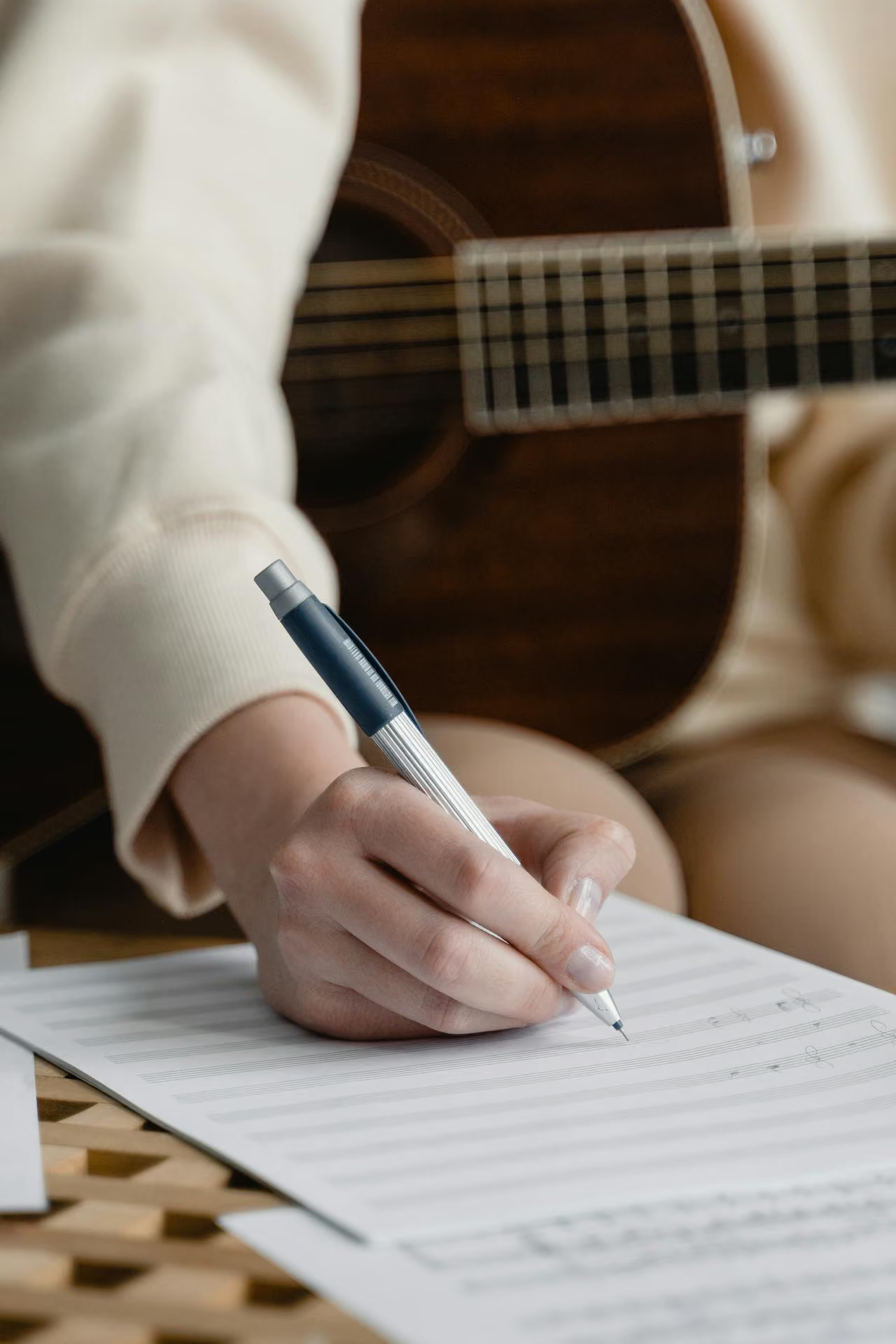
Few industries are as vulnerable to AI disruption as music. Advanced platforms now create songs that replicate popular voices and styles with alarming precision.
One issue worth considering is AI voice cloning. Musicians worry that digital replicas of their voices can be sold without permission, depriving them of royalties and eroding artistic control. Another concern is melody replication. If AI-generated tracks resemble existing compositions too closely, they may trigger infringement claims, similar to past disputes over unauthorized sampling.
Record labels are already lobbying for stronger protections. Courts will need to strike a balance between artistic innovation and safeguarding musicians’ livelihoods.
The Authors Guild, along with several bestselling novelists, has sued AI developers, claiming their books were unlawfully included in training datasets. They argue that AI-generated text not only draws from their works but also competes with them in the marketplace.
Publishers share similar concerns. If AI systems churn out novels that mimic the style of well-known authors, it could blur the line between authentic literature and machine imitation, threatening both revenue and reputation.
Our team of lawyers are not convinced that Big Tech has the right to use whatever data they please without consequences. We would like to hear from individuals and publishers who believe their copyrighted work may have been illegally used by generative AI software, and we can further determine if you have a good case.
Joe Lyon is currently involved in numerous data privacy and data theft claims in all fifty states. He has the experience, the resources and the willingness to take on some of the largest tech companies in the country and fight for your AI intellectual property rights. Call for a free and confidential consultation.
What Types of Work Are Protected?
Any original creative work fixed in a tangible medium may qualify for copyright protection. This includes novels, short stories, screenplays, poetry, song lyrics, musical compositions, photographs, illustrations, paintings, journalism, blog content, and software code. If an AI company scraped your website, included your book in a training dataset, or used your music to teach an AI model to replicate sound and style, you may have a viable AI copyright infringement claim.
Who Can Be Sued in an AI Copyright Case?
AI copyright attorneys are currently pursuing claims against some of the largest technology companies in the world, including OpenAI, Microsoft, Google, Meta, Stability AI, and Midjourney. Both developers who built the AI systems and platforms that commercially distribute AI-generated content may be held liable.
What Compensation Can You Recover?
Plaintiffs in AI copyright infringement lawsuits may recover actual damages under the Copyright Act, and in some cases attorney's fees.
Can AI-created works receive copyright?
Not if they are fully machine-generated. However, if a person directs or edits the process, there may be grounds for protection.
Is training on copyrighted books, music, or art illegal?
That is the central legal battle. Some courts may view it as fair use while others may see it as large-scale infringement.
The Lyon Firm is a Cincinnati, Ohio-based law firm, representing individuals nationwide in class action, product liability, and toxic exposure litigation.

Taking the first step doesn’t have to be complicated. In just a few minutes, you can share the basics of your case, and our team will guide you from there: