Metabolic Meals Auto-Renewal Investigation
September 24, 2026


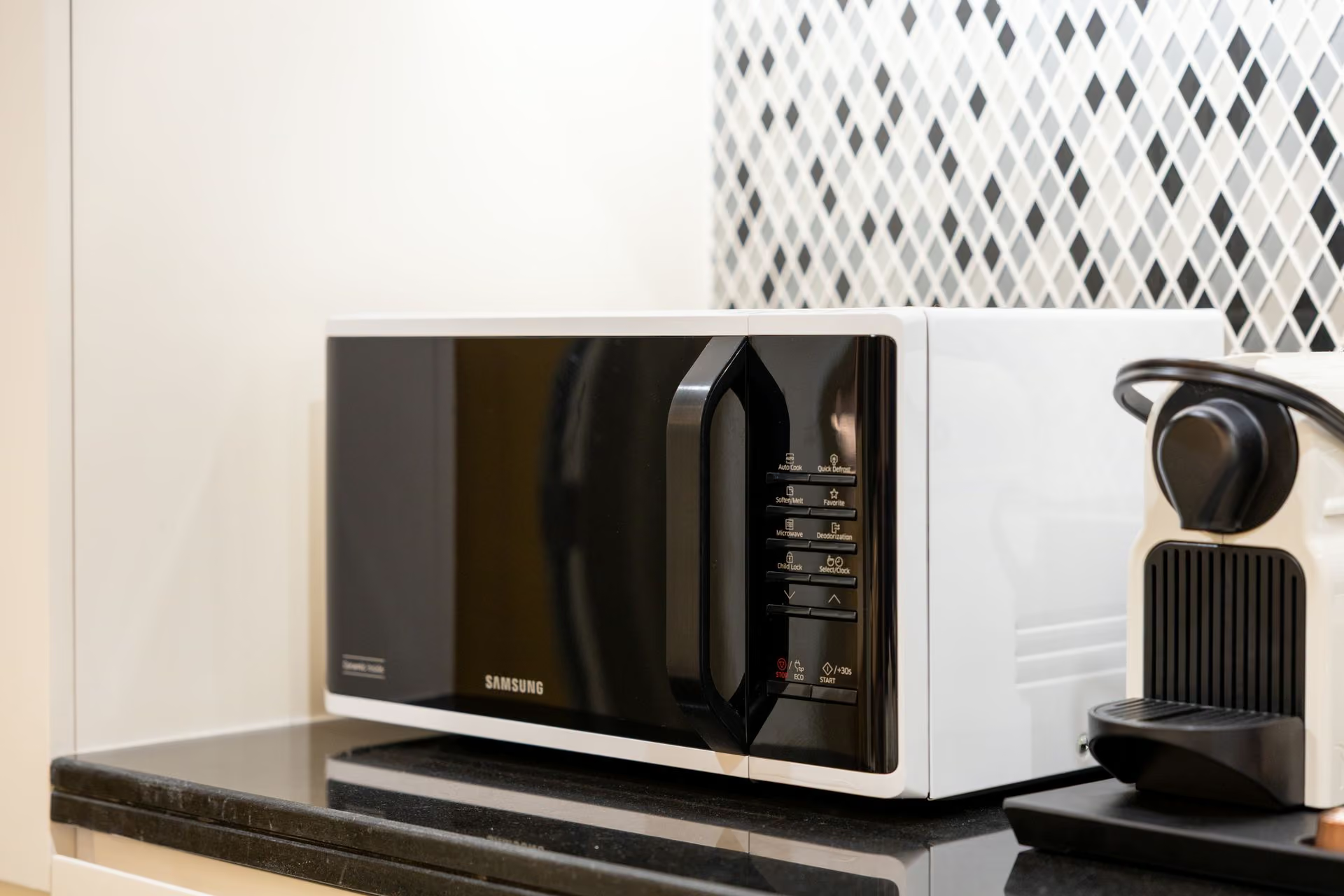
Everyday convenience and fast foods like frozen meals and reusable plastic storage containers often carry labels like "microwavable" or "microwave safe." Those oft-used terms would clearly lead many of us to assume the packaging can be heated exactly as directed without introducing unexpected toxins and contaminants into the food. A string of recently filed consumer protection lawsuits, however, challenges that assumption.
Plaintiffs in these cases argue that certain plastic containers can shed microplastics and nanoplastics when heated, and that food companies may fail to disclose those risks while continuing to market the products as microwavable.
There may be legal issues if a manufacturer tells consumers a product is suitable for microwave heating but in fact there are undisclosed health risks involved. Contact our consumer protection and toxic tort lawyers to learn more about deceptive marketing claims and to discuss your legal options.
Microplastics, the central health issue in play here, are plastic fragments smaller than five millimeters in at least one dimension. Nanoplastics are smaller still, generally under one micrometer, and both can form when a larger piece of plastic breaks down or sheds particles during ordinary use.
These new claims originate from a 2023 study published in Environmental Science & Technology which tested several plastic food containers and a reusable pouch under different storage and heating scenarios, using water and a 3 percent acetic acid solution as food simulants. In the study, microwave heating produced the highest particle release of any condition examined. Some microwaved containers released as many as 4.22 million microplastic particles and 2.11 billion nanoplastic particles per square centimeter of plastic surface after three minutes of microwave heating.
Notably, the polyethylene-based food pouch tested in the study released even more particles than the polypropylene containers. The study did not examine Campbell's soup packaging or the exact products named in current litigation described below. It does, however, supply general laboratory evidence that plastic type, temperature, heating method, and product design all influence how many particles are released under certain high-heat conditions.
Researchers continue to study what this all means for human health. It is hard to imagine what the consequences are, but we do know microplastics have been detected in human organs and other biological samples. Research has explored possible links to changes and inflammation in our gut microbiome. A 2025 systematic review noted shifts in gut microbial composition and function in studies of microplastic exposure, while stressing the need for more human-relevant data and standardized measurement methods.
Detection of these unwanted substances alone does not prove harm. The health impacts of typical dietary exposure remain an open scientific question. The FDA's current position is that available evidence does not show that the levels of microplastics or nanoplastics found in foods pose a risk to human health. The agency also notes there is insufficient data to quantify how much material migrates from plastic packaging into food, and that standardized plastics detection methods are still lacking.
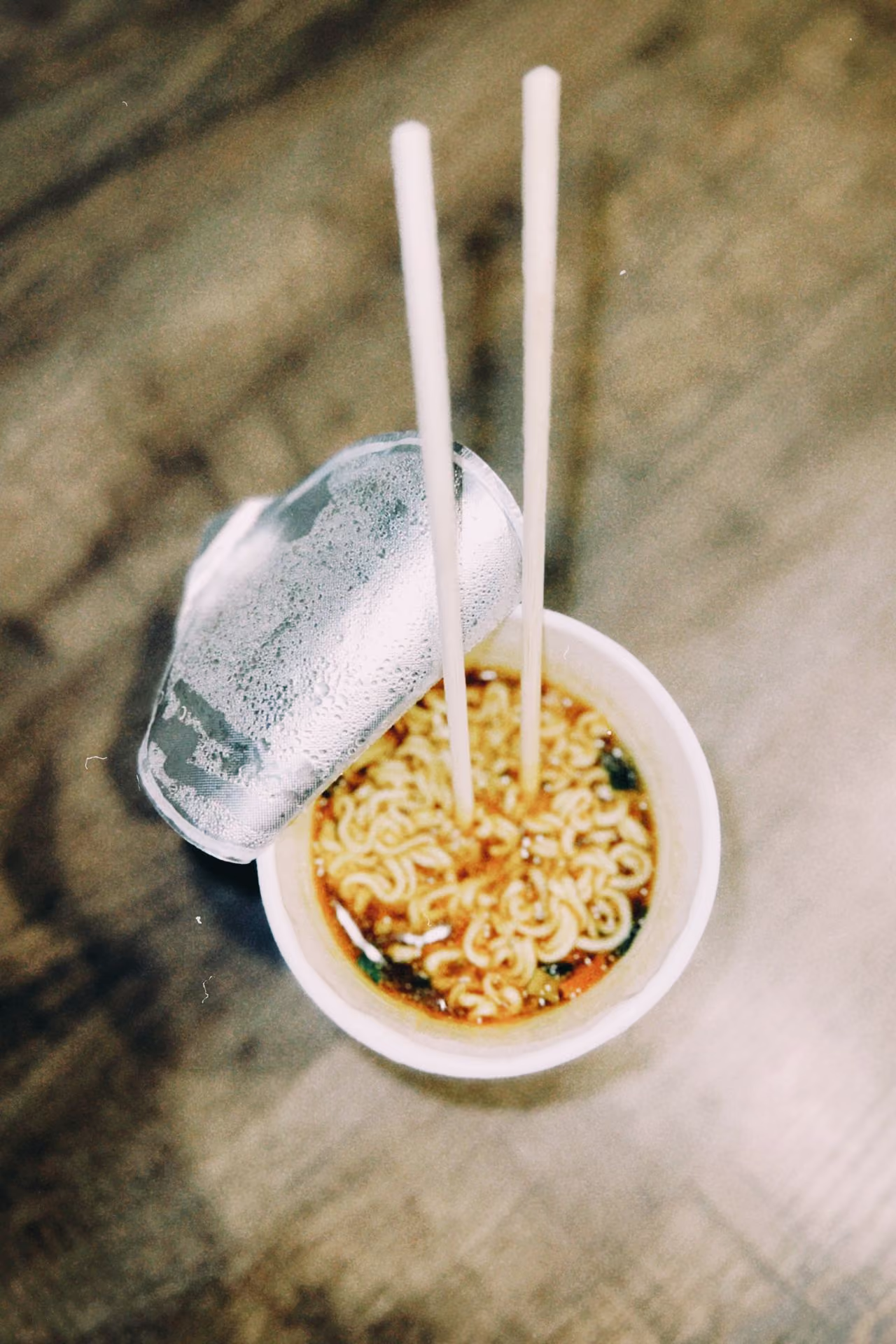
In Garvey v. The Campbell's Company, No. 3:26-cv-03097 (N.D. Cal., filed April 10, 2026), the plaintiff alleges that certain Campbell's soup products labeled "Microwavable" use polypropylene packaging and lids that may release microplastics when heated to a certain degree.
The complaint further asserts that reasonable consumers interpret the "microwavable" claim to mean the products can be heated in their original packaging without an undisclosed safety risk. These are allegations only. No court has ruled on the merits, and the complaint does not prove that Campbell's plastic packaging creates a health risk.
The plaintiff goes on to claim Campbell's knew or should have known about plastic particle release yet failed to inform consumers, even though microwave heating is the obvious way to use the product.
If you purchased Campbell's microwavable soup, or a similar product marketed as safe to heat in its original packaging, and you're wondering whether you have a claim, The Lyon Firm can review your purchase and explain your options at no cost.
Campbell's is not the first company targeted. In 2025, Linda Cheslow filed a proposed class action against S.C. Johnson & Son, Inc., claiming certain Ziploc bags and containers marketed as "Microwave Safe" and freezer-suitable could release microplastics under heat or freezing conditions. The case asserted claims under California's consumer protection statutes and unjust enrichment.
The parties stipulated to a voluntary dismissal in August 2025. That dismissal addressed pleading requirements, not the underlying scientific question of whether Ziploc products actually release harmful levels of microplastics under normal use. The dismissal is not a finding that Ziploc products are unsafe, nor that the plaintiff's claims were false. It does illustrate a recurring challenge in showing that a specific product releases meaningful quantities of particles under real-world use, not merely that plastic can shed particles in laboratory conditions.
These cases question how reasonable consumers understand food labeling and how the average consumer is going to interpret basic packaging. Plaintiffs argue that the terms "Microwavable" and "Microwave Safe" create a very clear expectation of safety under the advertised conditions. If heating the product as directed allegedly introduces plastics or another undisclosed risk, the marketing representation could be misleading.
Lab data show that some plastic food-contact materials can release microplastics and nanoplastics, especially under microwave heating. Release rates will vary widely by polymer type, packaging design, temperature, time, and contents. We also realize that measurement methods are still evolving, and the health implications of typical exposure levels remain under active investigation. FDA's current position reflects those uncertainties but it is safe to say that any newly-perceived safety issue requires time to completely work out all the potential harms.
Cases that involve microplastics or misleading product labeling are all related to practice areas we cover. These suits include possible violations of advertising law and product safety regulations, two areas of interest for our firm.
The Lyon Firm has 20 years of experience representing consumers in deceptive labeling and product safety matters nationwide. We know how to determine if a company's marketing claims cross the line into being legally deceptive, and we stay current on how this area of litigation develops. Our attorneys review cases individually and do not charge fees unless we recover compensation on your behalf.
If you bought a food product or container marketed as microwavable or microwave safe and believe the labeling may have been misleading, contact The Lyon Firm today for a free, confidential evaluation of your options.
The Lyon Firm is a Cincinnati, Ohio-based law firm, representing individuals nationwide in class action, product liability, and toxic exposure litigation.

Taking the first step doesn’t have to be complicated. In just a few minutes, you can share the basics of your case, and our team will guide you from there: