

Concussion | Catastrophic Head Injuries
Cincinnati Catastrophic Injury Lawyer With Nationwide Success


.avif)


Cincinnati Personal Injury Lawyer
A concussion may be called a “mild” traumatic brain injury (TBI), but for many victims, the consequences are anything but minor. These injuries can lead to long-term headaches, memory issues, concentration problems, mood swings, and reduced quality of life. When a concussion results from another party’s negligence, whether in a car crash, workplace accident, sports setting, or unsafe premises, the injured individual may have grounds to pursue a concussion lawsuit.
What Is a Concussion Lawsuit?
A concussion lawsuit is a legal claim seeking compensation for damages related to a brain injury. The claim typically arises when negligence or misconduct contributes to an accident or failure to protect against foreseeable risks. These cases can be brought under personal injury law, workers’ compensation, or even product liability, depending on the circumstances.
Common defendants in concussion lawsuits include:
- Drivers responsible for car or truck accidents
- Employers who fail to provide safe working conditions
- Schools, coaches, or sports leagues that ignore concussion protocols
- Property owners who allow hazardous conditions
- Manufacturers of defective safety equipment
It is estimated by the US National Institutes of Health (NIH )that more than 1 million mild traumatic brain injuries occur nationwide each year.
The American Association of Neurological Surgeons (AANS) emphasizes that even mild concussions should not be taken lightly. Neurosurgeons and other brain-injury experts say there is no such thing as a “minor concussion.”
Those who have had a concussion in the past are also at risk of having another one and may find that it takes longer to recover if they have another concussion. Some studies have found that the risk for a second injury is greatest in the 10 days following an initial concussion.
If a loved one has suffered from a CTE brain injury or a preventable head injury, contact a Cincinnati concussion lawyer to discuss who may be liable for medical costs and damages.
Common Causes of Concussions
Concussions can be caused by falls, car crashes, VA claims, or recreational activities like bike riding, skateboarding or skiing. Sports remain a major risk for the younger population. According to the NIH, more than half of concussions occur in children—often when playing organized athletics.
According to the University of Pittsburgh’s Brain Trauma Research Center, more than 300,000 sports-related concussions occur annually in the US.
Concussions are also a significant problem for military veterans. Because service men and women are already under a considerable amount of stress, it can take much longer for their body to recover completely.
NCAA and NFL football players are among individuals with a high proportion of brain injuries like concussions, ALS and Football Head Injuries.
How Concussions Damage the Brain
The skull protects the brain against penetrating trauma, but it cannot absorb all the impact of a violent force. An abrupt blow to the head, can cause the brain to make contact with the inner side of the skull. There is a potential for tearing blood vessels, pulling of nerve fibers and bruising of the brain.
In severe cases, the brain tissue begins to swell.
Brain swelling after a concussion can amplify the severity of the injury. Brain swelling in minor head trauma is more significant in small children than in adults.
Legal Elements: Proving a Concussion Case
To succeed in a concussion lawsuit, the injured party generally must show:
- Duty of Care – The defendant had a legal duty to act safely or prevent foreseeable harm.
- Breach of Duty – That duty was violated through negligence, recklessness, or wrongful action.
- Causation – The breach directly caused the concussion.
- Damages – The victim suffered real losses, such as medical bills, lost income, or pain and suffering.
Concussion Symptoms
The signs and symptoms of a concussion can be subtle. Typical symptoms after a concussive brain injury are headache, loss of memory and confusion. Symptoms can last for days, weeks or even longer.
People with concussions often cannot remember what happened immediately before or after the injury. A concussion can affect judgment, reflexes, speech, balance and muscle coordination.
Signs and symptoms of concussion may include:
- Headache or a feeling of pressure in the head
- Temporary loss of consciousness
- Confusion or feeling as if in a fog
- Amnesia surrounding the traumatic event
- Dizziness
- Ringing in the ears
- Nausea
- Vomiting
- Slurred speech
- Delayed response to questions
- Appearing dazed
- Fatigue
- Seizures
- Vision or eye disturbances, such as pupils that are bigger than normal (dilated pupils) or pupils of unequal sizes
- Obvious difficulty with mental function or physical coordination
Post Concussion Syndrome
Body-related symptoms, such as headache and dizziness, tend to fade fairly quickly, but thinking-related symptoms, including problems with memory and paying attention can linger. This is called post-concussion syndrome.
Some concussion symptoms may not be noticed for days or months after the injury, or until the person resumes their everyday life. Sometimes, people don’t recognize or are reticent to admit they are having problems.
In most people, post-concussion syndrome symptoms occur within the first 10 days and go away within 3 months, though they can persist for more than a year. The condition commonly impacts a person’s ability to think and remember, properly move around, sleep soundly, and even influences a person’s mood and emotions. According to the CDC, some symptoms that may be delayed after injury include:
- Concentration and memory complaints
- Irritability and other personality changes
- Sensitivity to light and noise
- Sleep disturbances
- Anxiety
- Psychological adjustment problems and depression
- Disorders of taste and smell
Second-Impact Syndrome
Second Impact Syndrome (SIS) typically involves somebody suffering post-concussive symptoms following a head injury. SIS can occur with any two events involving head trauma.
A patient who sustains an initial concussion may develop cerebral edema, accounting for loss of consciousness, memory impairment, disorientation and headache. However, when the patient sustains a “second impact,” it may lead to brain herniation, which can be fatal.
Although it is rare, if SIS occurs, young, healthy patients may die within a few minutes. When SIS is not fatal, the long-term effects are similar to those of severe traumatic brain injury which include the following:
- Muscle spasms
- Emotional instability
- Hallucinations
Compensation for Victims & Concussion Lawyer
According to studies, repeated brain injuries, including concussions occurring over a number of weeks to years, can result in neurologic and cognitive deficit. Experts and your Ohio concussion lawyer agree that all concussions necessitate evaluation by a physician.
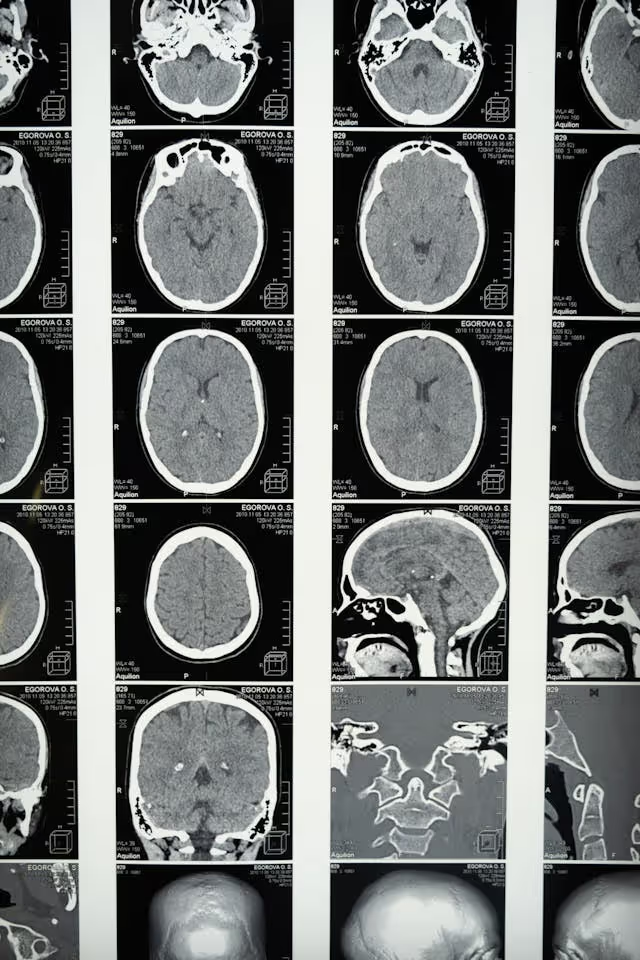
A thorough physical exam should be performed with special attention to the neurological exam. If there is suspicion of a serious brain injury, immediate CT scan of the head is needed.
Types of Concussion Lawsuits
Sports-Related Concussions
Athletes injured in school or professional settings may bring claims if coaches, trainers, or organizations failed to follow return-to-play protocols or ignored warning signs.
Workplace Concussions
Falls, equipment accidents, and unsafe working environments can cause serious head trauma. Victims may be entitled to workers’ compensation benefits, and in some cases, third-party liability claims.
Motor Vehicle Accidents
Car and truck collisions are a leading cause of concussions. These claims often involve insurance disputes over the seriousness of the injury and long-term damages.
Premises Liability
Slip-and-fall accidents on unsafe property—such as wet floors, poorly maintained stairs, or inadequate lighting—can also lead to concussion claims.
Experienced. Compassionate. Consumer Advocates
The Lyon Firm is a Cincinnati, Ohio-based law firm, representing individuals nationwide in class action, product liability, and toxic exposure litigation.

.avif)
Compensation in Concussion Lawsuits
Successful claims may provide compensation for:
- Emergency medical treatment and hospital bills
- Rehabilitation and therapy costs
- Lost wages and reduced earning capacity
- Pain and suffering, including cognitive and emotional impact
- Future medical needs for post-concussion syndrome or chronic traumatic encephalopathy (CTE)
Catastrophic Injury Lawsuits
Request a Free Consultation
Taking the first step doesn’t have to be complicated. In just a few minutes, you can share the basics of your case, and our team will guide you from there:
- It begins with a few simple questions about your situation.
- From there, a member of our legal team reviews your case.
- Together, we’ll chart the path forward, helping you take the next step toward resolution.
