

Toxic Chemical Spill and Evacuation Lawsuit
Exposed or evacuated? Know your legal options after a chemical train spill.


.avif)


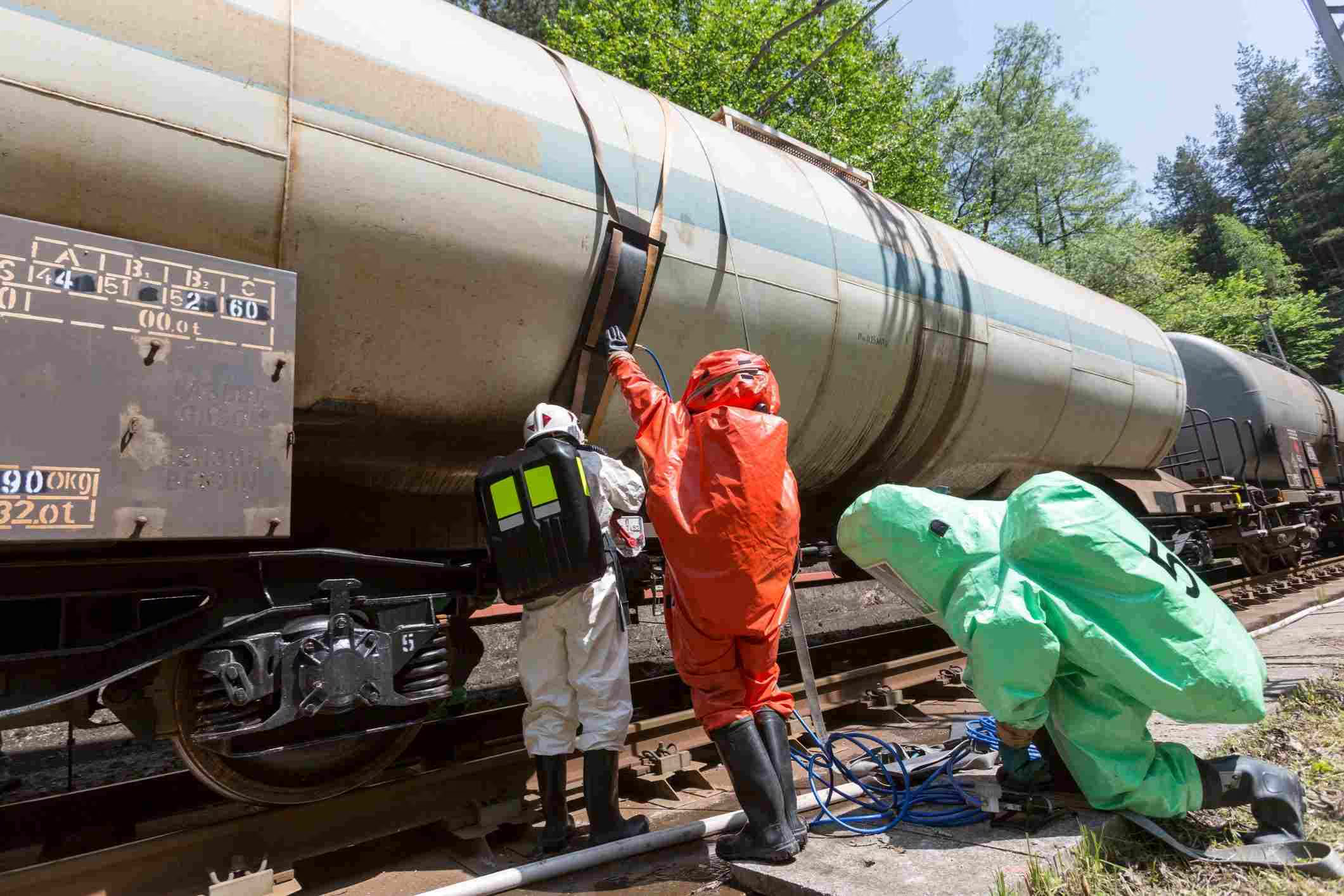
Most of us don’t spend much time thinking about the rail lines or industrial sites near our homes until something goes wrong. But when a siren sounds, or a neighbor knocks to say there is a mandatory evacuation, your life changes in an instant. Suddenly, you are forced to leave your home and your routine behind, often without knowing when the air will be safe enough for your family to return.

If you have experienced this, you know that the disruption doesn’t end when the evacuation order is lifted. A lawsuit is a way for families to address the real costs of these events. Whether it was a toxic chemical spill train derailment, or a leak from a nearby storage tank, companies have a responsibility to keep their hazardous materials contained.
At The Lyon Firm, we believe you shouldn’t have to deal with the fallout of a company’s mistake on your own. We focus on holding large corporations accountable when their negligence forces people out of their homes. If your life has been interrupted by a chemical leak, call us at (513) 381-2333 or fill out our online form today. We offer private, no-cost consultations to help you decide on the best path forward.
I’m incredibly grateful to Joseph Lyon and The Lyon Firm. From the start, Joseph was honest, clear, and always professional. He kept me informed and made sure I understood every step. I felt supported and knew I was in good hands. His dedication and care truly made a difference. I couldn’t have asked for better representation.
– Issa D. | Client
What Is a Toxic Train Spill?
A toxic train spill occurs when a railcar carrying hazardous chemicals leaks, ruptures, or fails, releasing dangerous substances into the surrounding area. This can happen during a derailment or collision, but it can also happen without a crash at all. Valves fail. Tanks corrode. Seals give out. A train can be sitting still and still release chemicals into the air, soil, or nearby water.
When a leak begins, the danger is not always visible. Some chemicals form clouds that drift quietly with the wind. Others seep into the ground and spread beneath homes, schools, and businesses before anyone knows they are there.
In many cases, residents learn something is wrong only when emergency alerts instruct them to evacuate immediately.
What a Toxic Chemical Spill Train Can Release Into a Community
Freight trains across the country move hazardous materials every day. Railcars are marked with bright, color-coded placards that signal the type of chemical inside and the risk it poses. These materials often include:
- Industrial acids: Used in metal processing and industrial cleaning, these substances can burn skin, severely damage the lungs, and contaminate soil and groundwater on contact. Some spills involve acids that leave behind lingering residue, creating ongoing risks even after the initial leak is contained.
- Toxic and volatile gases: Chemicals such as chlorine and ammonia, which are commonly used in water treatment and agricultural operations, act as powerful respiratory irritants. Exposure can burn the eyes, throat, and lungs, and even brief contact may be dangerous. Because these gases can travel with the wind, the danger often extends far beyond the immediate spill site.
- Flammable and reactive liquids: Trains frequently transport substances like vinyl chloride, benzene, butyl acrylate, petroleum products, and other industrial solvents. Vinyl chloride, a chemical used in plastics manufacturing, is classified as a known carcinogen, while benzene has been linked to leukemia and other serious blood disorders. Butyl acrylate, often used in paints and adhesives, can irritate the skin and respiratory system.
How Toxic Spills Happen
Most people think of a massive “fire and twisted metal” derailment when they hear about a train spill. While those do happen, leaks can be much more subtle. A community can be placed at risk without any crash at all.
Allegations in a toxic chemical spill evacuation lawsuit:
- Equipment failure: Over time, metal corrodes, seals wear down, and small cracks form. A single failing valve can allow gas to escape gradually while a train is parked or moving through a populated area.
- Human error: A cap that is not fully secured, a missed gauge reading, or an inspection rushed to meet a schedule can allow a leak to develop unnoticed. These mistakes may not cause immediate alarms, but can still lead to large-scale evacuations once the leak is discovered.
- Deferred or inadequate maintenance: Railcars often stay in service for decades. When inspections are delayed or repairs are postponed to reduce costs, aging equipment becomes more likely to fail. Communities may be exposed to chemicals simply because a tank car was allowed to remain in service past its safe lifespan.
- Loading and transfer incidents: Chemicals can spill during loading or unloading at industrial yards, storage facilities, or transfer points before a train ever leaves the station. A spill at these locations can release toxic fumes that drift into nearby neighborhoods, triggering shelter-in-place orders or evacuations.
It’s hard to know what questions to ask When a chemical release forces you from your home. But you don’t need to have everything figured out before reaching out.
At The Lyon Firm, we look at what happened and whether the situation you lived through is something the law can address. For clear answers from lawyers who can guide you through a toxic chemical spill evacuation lawsuit, call (513) 381-2333 or fill out our online form today.
How Do I Know If I Qualify for a Toxic Chemical Leak Evacuation Lawsuit?
You may have a legal claim if the spill or leak disrupted your life in any of the following ways:
- You were under a mandatory chemical spill evacuation order: Police or emergency management required you to leave your home, sometimes with little notice and no clear timeline for return.
- You were told to shelter in place: Being instructed to stay indoors with windows and vents sealed because the air outside was unsafe is also a form of displacement.
- You had to pay out of pocket to relocate: Hotel stays, temporary rentals, meals, pet boarding, missed work, and transportation expenses add up quickly. These were forced by the conditions created by the chemical release.
- Your business was forced to close or limit operations: Evacuation zones, road closures, and safety orders can shut down stores, offices, and job sites. Lost revenue and interrupted contracts may form the basis of a claim, even if the business itself was not physically damaged.
- You experienced health symptoms after the release: Coughing, burning eyes, headaches, nausea, dizziness, or skin irritation are often dismissed as “temporary,” but they can signal chemical exposure. Many people also require medical monitoring to make sure symptoms do not worsen over time.
- Your property was affected by contamination concerns: Even when homes appear untouched, chemical residue in the water can raise serious questions about safety and long-term property value.
In many toxic exposure cases, the evacuation itself is central to the claim. Being displaced from your home and left to absorb sudden financial losses is not something families should have to shoulder alone when a company’s actions caused the danger.
Types of Compensation Available in a Toxic Chemical Spill Evacuation Lawsuit
No amount of money can erase the fear caused by a toxic chemical spill and evacuation, but compensation can help you rebuild and cover the costs you shouldn’t have had to bear. In these cases, you may be entitled to:
- Out-of-Pocket Costs: Expenses like hotel stays or temporary storage while you were evacuated can be reimbursed.
- Medical Bills: Treatment for chemical exposure, including hospital visits, breathing treatments, skin burns, or ongoing health monitoring, can be covered. Future medical care may also be included if doctors recommend long-term monitoring.
- Property Damage: Property devaluation caused by contamination can be part of your claim.
- Lost Wages and Business Income: If you couldn’t get to work or your business lost customers due to evacuation orders, you may be entitled to reimbursement for lost income.
Hiring a lawyer can make a real difference. In one study, more than 9 out of 10 people with legal representation received a settlement, often far higher than those who went it alone. When your home is on the line, having the right advocate can change everything.
Recent Examples of Toxic Train Spills
History shows that these “accidents” happen far more often than they should. In the U.S., a train spills hazardous materials roughly once every two months. Some recent examples include:
East Palestine, Ohio (2023)
Perhaps the most widely known recent incident, a derailment caused a massive fire and a “controlled burn” of vinyl chloride. Thousands of residents were evacuated, and the community continues to deal with health concerns and soil contamination years later.
Whitestown, Ohio (2024)
A train didn’t even have to derail to create a crisis. A railcar began leaking styrene gas while stationary, prompting a large-scale evacuation of everyone within several miles.
Styrene is a toxic and flammable chemical used to make plastics and rubber, and exposure can cause headaches, nausea, respiratory issues, and long-term organ damage.
Western Cincinnati suburb, Ohio (2025)
Residents in hundreds of homes were evacuated after a railcar’s pressure release valve leaked styrene, a chemical used in plastic and rubber production. Schools in the area were temporarily closed, and officials tested water and air quality to ensure safety.
No hospitalizations were reported, and the leak was quickly stabilized, and the railcar was safely moved. Federal and local authorities began an investigation into the incident, likely linked to a stabilizer inside the railcar becoming ineffective.
Experienced. Compassionate. Consumer Advocates
The Lyon Firm is a Cincinnati, Ohio-based law firm, representing individuals nationwide in class action, product liability, and toxic exposure litigation.

.avif)
Why Hire The Lyon Firm?
When you are up against a massive railroad or a global chemical company, you need a firm that has been there before. The Lyon Firm has represented thousands of people in all 50 states. We’ve gone toe-to-toe with some of the largest corporations in the world, recovering millions for our clients.
If you’ve lived through a chemical nightmare, don’t wait for the companies to “do the right thing.” They have their lawyers and you should have yours.
Call The Lyon Firm today at (513) 381-2333 or fill out our online form for a free consultation.
Handling Complex Data Privacy & Cyber Security Cases
Request A Free Consultation Now

Toxic Chemical Spill Train FAQs

While physical illness is a major part of many cases, the act of being forced from your home and the expenses you paid to stay safe are all valid reasons to seek legal help.
We work on a “contingency fee” basis. This means you don’t pay us unless we win your case. We take on the financial risk so you can focus on your family.
Some cases are handled individually, while others may be combined into a class action or mass tort if many people in the same area were affected in similar ways. Whether your claim qualifies depends on certain factors, such as where the spill happened, the impact on your health or property, and the number of people exposed.
In general, you have a limited time to file a claim, called the statute of limitations, which varies by state, the type of harm suffered, and the claim you are bringing forward (personal injury, property damage, etc.). A lawyer can help determine the exact timeline for your situation and make sure your rights are protected.
Toxic Exposure Lawsuits
Request a Free Consultation
Taking the first step doesn’t have to be complicated. In just a few minutes, you can share the basics of your case, and our team will guide you from there:
- It begins with a few simple questions about your situation.
- From there, a member of our legal team reviews your case.
- Together, we’ll chart the path forward, helping you take the next step toward resolution.
